
← Back
03/02/1657 • 5 views

Meireki Fire of 1657: Devastating blaze razes Edo, killing thousands
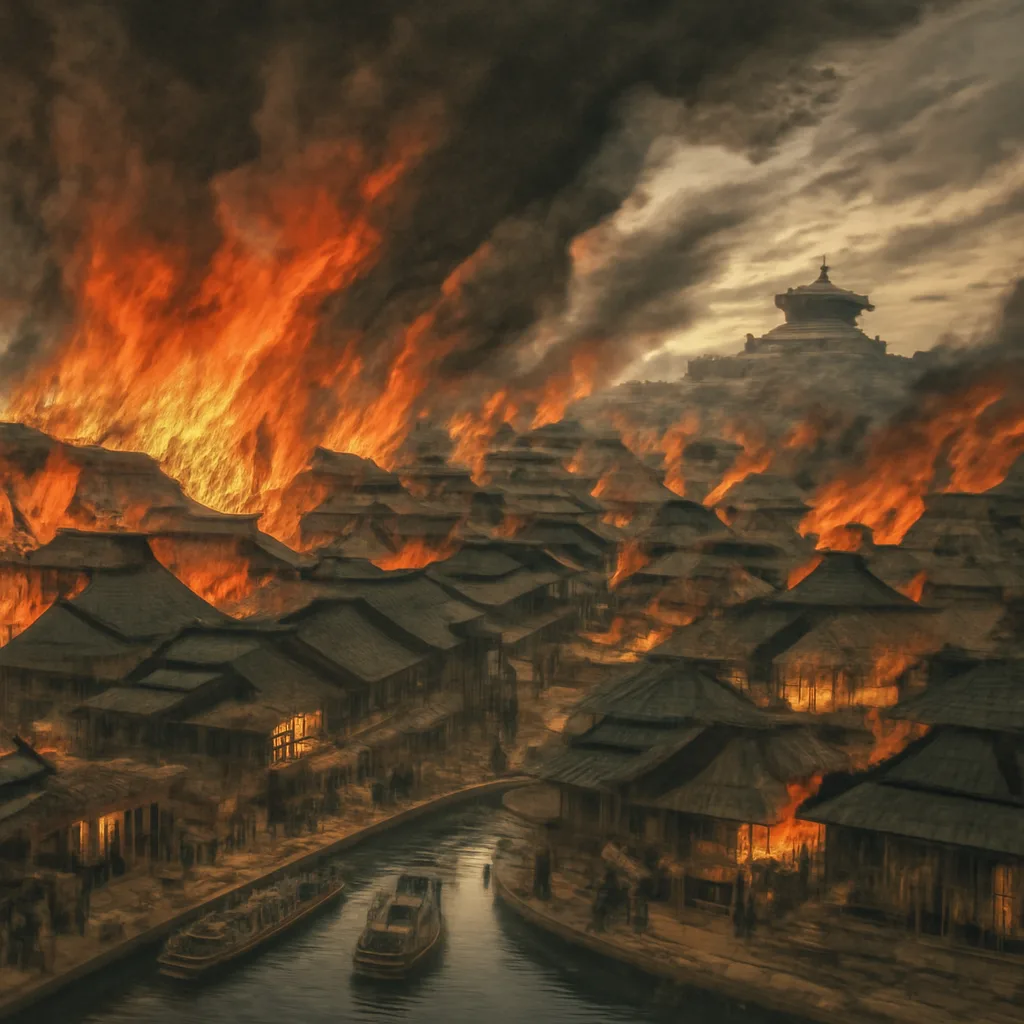
Wide view of 17th-century Edo in flames: densely packed wooden houses and temple roofs burning, smoke filling the sky, small boats on a river in foreground with some carrying fleeing people and belongings.

On March 2, 1657, the Great Fire of Meireki swept through Edo (modern Tokyo), destroying large parts of the city and causing an estimated tens of thousands of deaths and displacements; contemporaneous accounts and later estimates vary widely.


Overview
The Great Fire of Meireki (also called the Furisode Fire) began on March 2, 1657, in Edo, the Tokugawa shogunate’s administrative center. Fueled by densely packed wooden buildings, narrow streets, strong winds and a severe shortage of firebreaks, the conflagration spread rapidly through the city. It destroyed large swaths of residences, temples and commercial districts and caused catastrophic human and material losses.

Extent and casualties
Contemporary and later sources disagree on exact figures. Official bakufu (shogunate) records and some later estimates place the death toll in the tens of thousands; a commonly cited figure is about 100,000 casualties, but modern historians caution that this may be an overestimate reflecting imprecise record-keeping and political motives in the aftermath. Other scholarship suggests a lower but still enormous number—many thousands dead and a significant portion of Edo’s population displaced. In addition to deaths, the fire left vast numbers homeless and disrupted commerce, administration and transport.

Course of the fire
The blaze reportedly began in the Honjo district and, propelled by strong winds from the east and by tinder-dry conditions following a period of cold weather, swept westward across Edo. Firefighting in seventeenth-century Japanese cities relied on bucket chains, small hand engines, and organized neighborhood brigades, but Edo’s size, population density and the ferocity of the fire overwhelmed those measures. Important areas—including castle-town neighborhoods housing samurai, merchants and artisans—were consumed, and many temples and shrines were destroyed or damaged.

Political and social consequences
The Meireki fire had immediate and long-term effects. The Tokugawa authorities undertook large-scale rebuilding and urban planning measures to reduce future fire risk: widening streets, creating firebreaks, relocating some residents (including the less powerful classes) and imposing building regulations. The disaster altered demographic patterns within Edo and strained the shogunate’s finances, as rebuilding imperial residences, temples and infrastructure required substantial resources.

Cultural memory and historiography
The fire entered Edo’s cultural memory and was reflected in contemporary diaries, temple records and later artistic and literary depictions. Over time the event acquired various names—Meireki no Taika (Great Fire of Meireki) and Furisode Fire among them—and its scale was sometimes amplified in retellings. Modern historians examine a range of sources and apply critical methods to estimate casualties and to understand the fire’s role in urban development, governance and social disruption under early Tokugawa rule.

Uncertainties and sources
Precise casualty and damage figures remain uncertain. Surviving documents include official bakufu reports, local registries, temple and parish records, personal diaries and later chronicles; each source type has limitations and biases. Scholars cross-reference these materials, but reconstruction of exact numbers is difficult because of incomplete records, population movement, and political incentives to either minimize or emphasize losses.

Legacy
The Meireki fire prompted substantive changes to Edo’s urban layout and governance aimed at mitigating fire risk, shaping the city’s subsequent growth. It also stands as a reminder of the vulnerability of premodern cities to conflagration and of how disaster can accelerate administrative and social reform.

Share this

Email Share on X Facebook Reddit

Did this surprise you?