
11/27/1973 • 4 views
Nationwide Gasoline Shortages Hit U.S. in Late November 1973
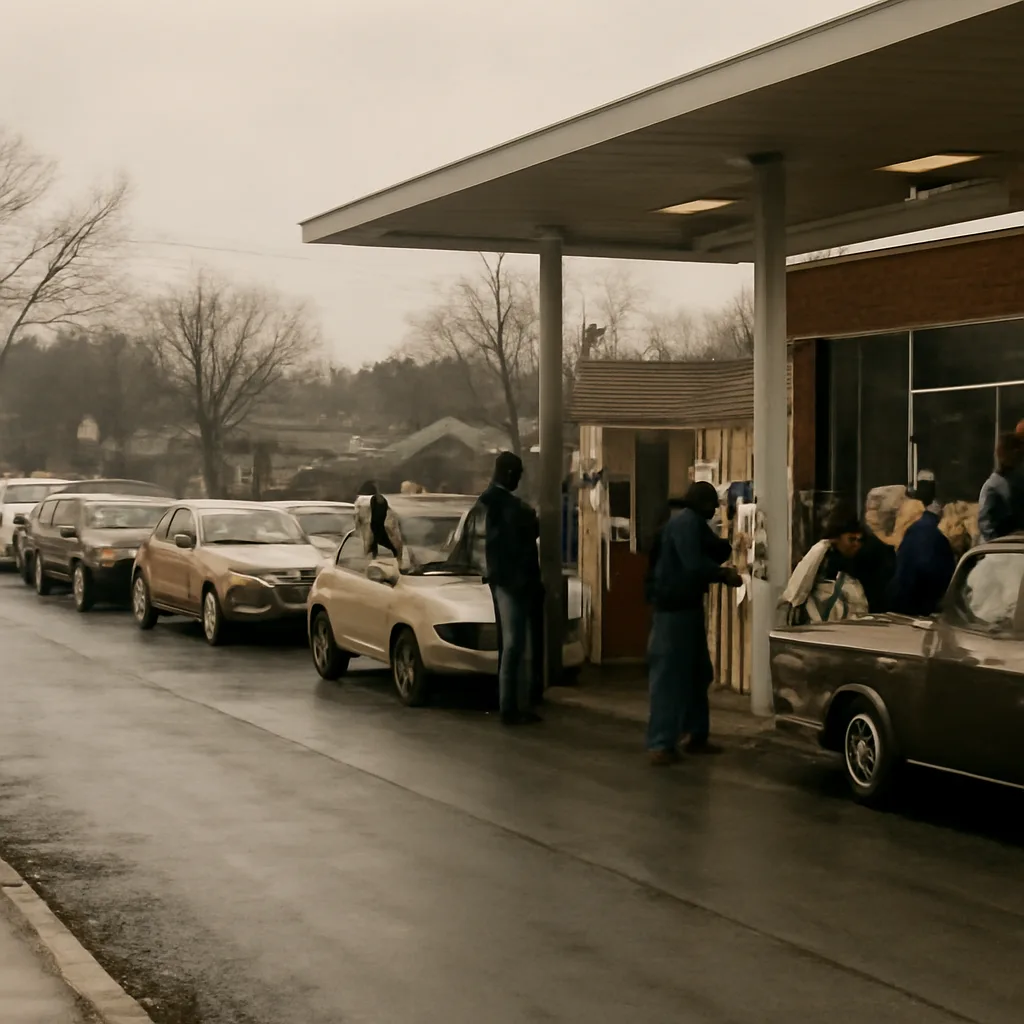
In late November 1973 the United States faced widespread gasoline shortages and long lines at service stations after an oil embargo and supply disruptions led to fuel rationing, price controls and heightened public concern.
In November 1973 the United States experienced widespread gasoline shortages that produced long lines at service stations, temporary station closures and new federal and state measures to conserve fuel. The shortages were part of a broader energy crisis sparked earlier that year by an embargo on oil exports by several key Middle Eastern suppliers and exacerbated by domestic price controls and distribution bottlenecks.
Immediate causes
The primary international trigger was the 1973–74 Arab oil embargo, declared in October 1973 by members of the Organization of Arab Petroleum Exporting Countries (OAPEC) in response to U.S. support for Israel during the Yom Kippur War. The embargo reduced the flow of crude oil and refined products to Western nations, including the United States. On top of constrained imports, U.S. federal price controls on domestic crude and gasoline limited market adjustments, and some refineries were operating below capacity. Distribution systems designed for steady availability were strained as panic buying and hoarding intensified shortages at retail pumps.
Government and industry responses
Federal, state and local authorities implemented short-term measures to manage the crisis. The Nixon administration introduced voluntary gasoline rationing guidelines in October and promoted conservation measures, while several states imposed odd-even license plate rules limiting days drivers could buy fuel. The federal government also debated and began planning longer-term energy policy changes to reduce reliance on imported oil, a process that later produced legislation and institutional changes through the mid-1970s.
Public impact
For many Americans the shortages altered daily life: commuters faced longer trips to find open stations, businesses dependent on road transport confronted higher costs and logistical delays, and some communities experienced anxieties about broader economic disruption. Media coverage emphasized images of long lines and pump closures, feeding public urgency for policy action.
Context and consequences
The November shortages were a consequential episode in a year-long energy shock. Policymakers took the crisis as evidence that the United States needed a more coherent energy strategy. In subsequent years, federal responses included the creation of the Strategic Petroleum Reserve (authorized in 1975), reforms to pricing and regulatory frameworks for oil and gas, and initiatives aimed at conservation and alternative energy. The 1973–74 crisis also influenced public attitudes toward fuel consumption, vehicle efficiency and national security considerations tied to energy supply.
Uncertainties and scholarly perspective
Scholars note that while the embargo was the principal external driver, domestic regulatory choices—especially price controls—amplified shortages by reducing incentives for increased production and efficient distribution. The relative weight of international versus domestic factors remains subject to analysis, but both contributed to the visible pump-line crises of November 1973.
Why it matters
The gasoline shortages of November 1973 crystallized U.S. vulnerability to oil supply disruptions and prompted policy shifts with long-term effects on energy strategy, economic regulation and public expectations about fuel availability. The episode remains a reference point in discussions of energy security and the trade-offs among market signals, regulation and emergency measures.