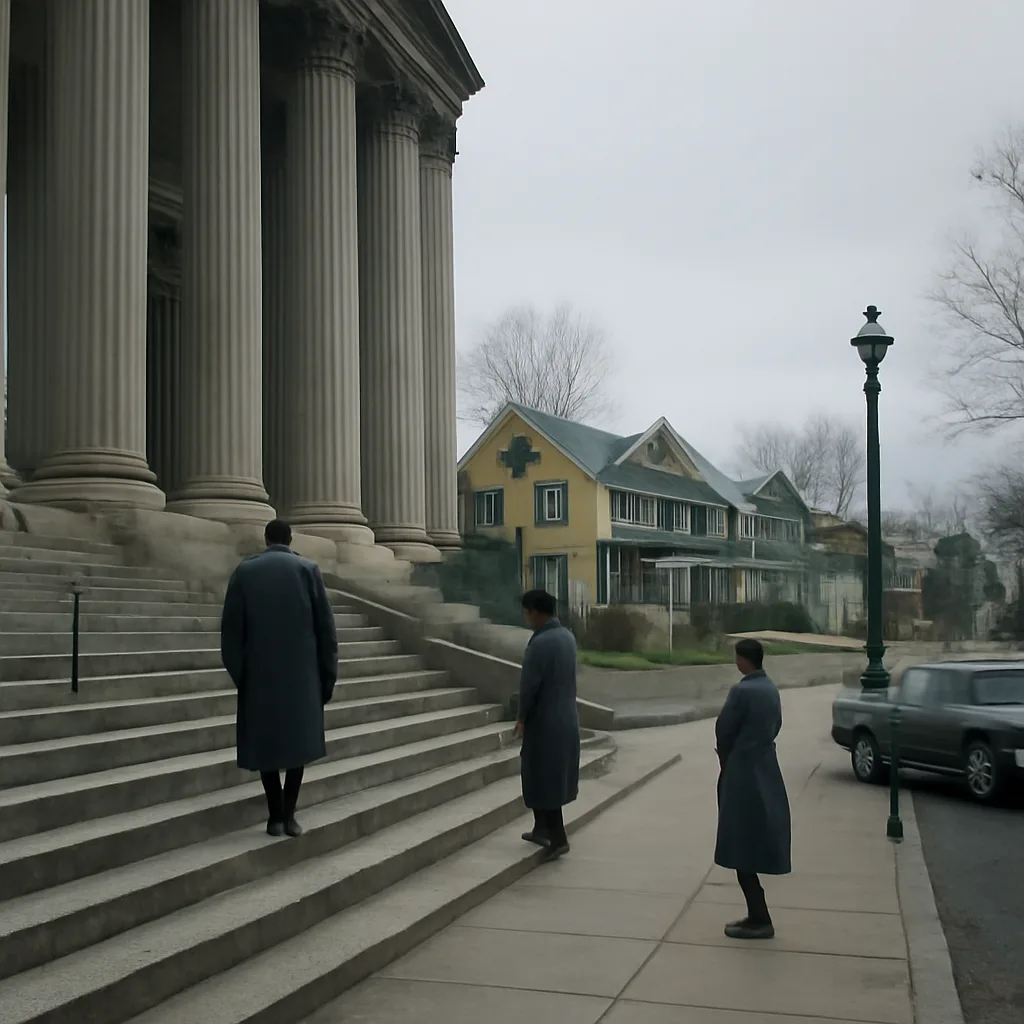
Supreme Court Ends State Bans on Interracial Marriage
On January 16, 1967, the U.S. Supreme Court ruled in Loving v. Virginia that state laws prohibiting interracial marriage were unconstitutional, striking down anti-miscegenation statutes nationwide and affirming marriage as a fundamental right.
On January 16, 1967, the United States Supreme Court issued its decision in Loving v. Virginia, holding that state laws banning interracial marriage violated the Equal Protection and Due Process Clauses of the Fourteenth Amendment. The case arose after Richard Loving, a white man, and Mildred Jeter Loving, a Black woman, married in Washington, D.C., in 1958 and returned to their home in Caroline County, Virginia. There Virginia authorities charged them under the state’s anti-miscegenation statute; a criminal conviction followed and the Lovings were given a year in prison, suspended on the condition they leave the state.
The Lovings challenged their conviction in state courts and then in federal court. The Supreme Court’s unanimous opinion, authored by Chief Justice Earl Warren, rejected the justification that anti-miscegenation laws served a legitimate racial classification purpose. The Court found that such statutes were designed to maintain White Supremacy and that distinctions based solely on race were subject to the most rigorous constitutional scrutiny. The decision held that marriage is one of the “basic civil rights of man,” and that the freedom to marry cannot be restricted by invidious racial classifications.
Legally, the ruling invalidated remaining state statutes that prohibited marriages between White persons and persons of other races. The decision relied on both the Equal Protection Clause—finding that the laws were expressly based on racial classifications—and the Due Process Clause—affirming marriage as a fundamental right protected from unjustified state interference. Although some states had already begun to repeal anti-miscegenation statutes in the 1950s and 1960s, Loving v. Virginia produced a binding constitutional rule applicable nationwide.
The decision had immediate and long-term effects. Practically, it allowed interracial couples to marry throughout the United States without fear of criminal prosecution under state law. Socially and culturally, it marked a significant legal milestone in the civil rights era, signaling a federal repudiation of laws that explicitly enforced racial separation in intimate relationships. The ruling was not the end of social resistance or discrimination faced by interracial couples, but it removed a major legal barrier and provided a constitutional foundation for broader challenges to race-based restrictions.
Historical context is important: the decision came amid the broader civil rights movement, following major federal rulings and legislation confronting racial segregation and discrimination. Loving v. Virginia built on constitutional principles established in earlier cases while focusing specifically on the intersection of marriage, personal liberty, and racial classification.
The case’s facts and the Court’s reasoning have been widely documented in legal scholarship and contemporary reporting. The Lovings later returned to Virginia after the decision and lived privately; they are commonly cited in discussions of marriage equality and civil rights jurisprudence. Legal scholars continue to cite Loving in debates about fundamental rights and equal protection, including in later cases concerning marriage and personal autonomy.