
← Back
02/10/1913 • 6 views

Titanic Officially Declared Lost
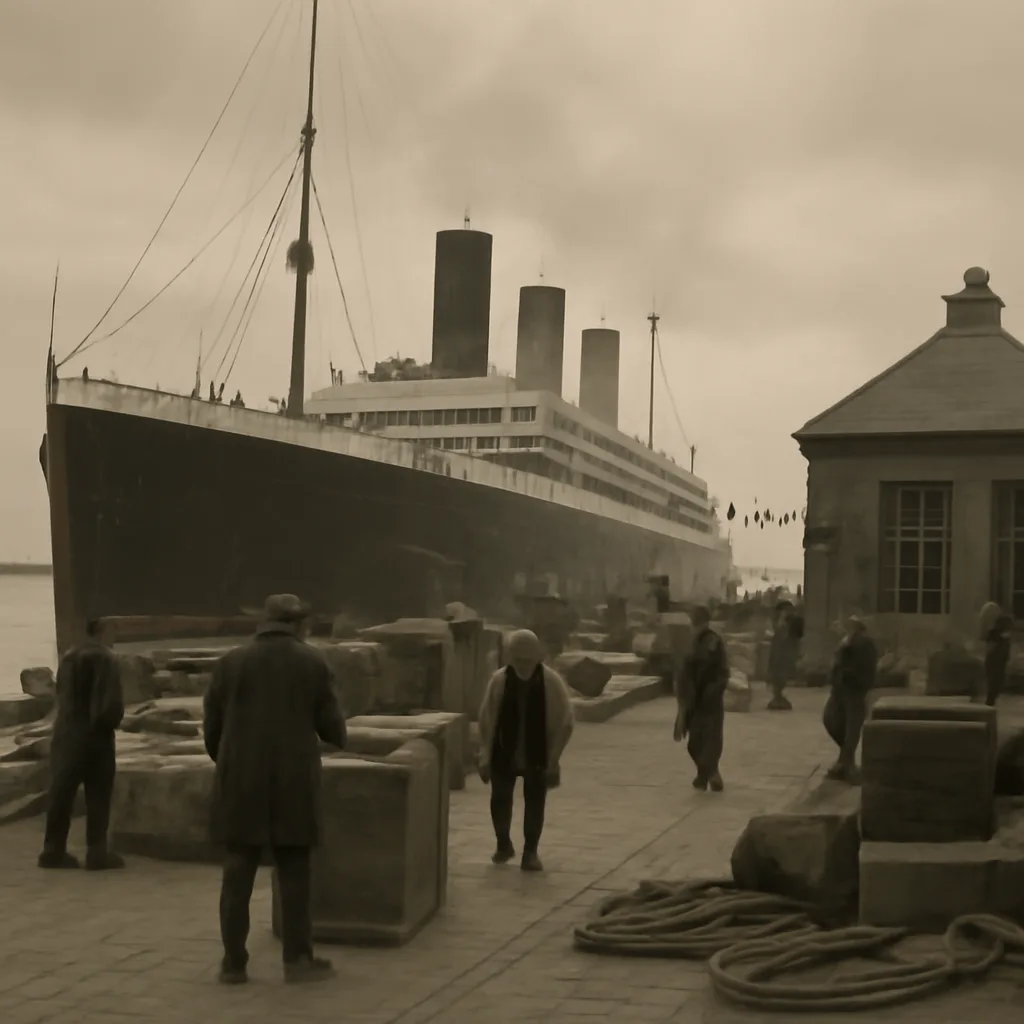
Historic steam liner moored at dockside, early 1910s, with dockworkers and wooden crates in foreground; a somber, overcast sky.

On 10 February 1913 authorities formally declared the RMS Titanic lost, nearly a year after her sinking on 15 April 1912, closing a period of recovery and inquiry while leaving many legal and financial matters unresolved.


On 15 April 1912 the British passenger liner RMS Titanic struck an iceberg and sank in the North Atlantic, resulting in the deaths of more than 1,500 people. In the months that followed, inquiries, salvage efforts and legal proceedings addressed questions of responsibility, vessel ownership and the disposition of wreckage. On 10 February 1913 authorities officially declared the Titanic lost, a formal recognition that completed administrative and legal processes tied to the disaster.

Why a formal declaration mattered
A legal finding that a ship is lost has practical consequences: it enables insurers to pay out claims, allows owners and businesses to settle contracts, and clears the way for estate and liability determinations. For families of victims, for shipping companies and for underwriters, the 1913 declaration marked the end of uncertainty about whether the vessel might be recovered intact or repaired. It also crystallized the Titanic’s status as a maritime and cultural tragedy.

Context of inquiries and investigations
Following the sinking, both the British Wreck Commissioner’s inquiry and a U.S. Senate investigation examined causes and accountability. Those investigations—completed in 1912—identified factors such as speed in icy waters, insufficient lifeboats, and shortcomings in lookout and wireless practices. The formal loss declaration in February 1913 followed these probes and the gradual settlement of insurance and contractual concerns, rather than introducing new technical findings.

Salvage and technical considerations
At the time, deep-water salvage technology was rudimentary. The depth and remoteness of the site, approximately 370 miles (600 km) south-southeast of Newfoundland, made recovery of a large passenger liner infeasible with 1912–13 capabilities. Reports and negotiations considered the removal of valuables and matters of wreck ownership, but practical recovery of the ship itself was not realistic under contemporaneous technological limits. This practical reality underpinned the decision to treat Titanic as a total loss.

Legal and financial outcomes
The formal loss declaration facilitated insurance settlements and claims against the White Star Line and other parties. Insurers and the ship’s owners reached agreements to distribute compensation to claimants, though many families received limited restitution compared with loss of life and personal property. The declaration also helped resolve questions about the ship’s registry and contractual obligations connected to the voyage and to third parties.

Legacy
Declaring the Titanic lost in February 1913 closed an administrative chapter but did not end public fascination, scrutiny of maritime safety, or legal wrangling. The disaster spurred substantive safety reforms, including changes to lifeboat requirements, ice patrols in the North Atlantic and improvements in wireless communication protocols. Over the following decades, the Titanic became a symbol in public memory and a subject of continued investigation; a century later, the wreck was located on the seafloor in 1985, confirming that it remained beyond reach to contemporary salvors.

Uncertainties and disputes
While the fact of the February 1913 loss declaration is part of the historical record, nuances remain about the precise administrative documents and timelines across jurisdictions. Different courts and insurance bodies completed proceedings on staggered schedules, so some settlements and legal closures occurred at different moments. Historians rely on surviving inquiry reports, court records and contemporary news accounts to reconstruct the sequence of events and legal outcomes.

Share this

Email Share on X Facebook Reddit

Did this surprise you?