
← Back
07/02/1976 • 5 views

Supreme Court Reinstates Capital Punishment Nationwide
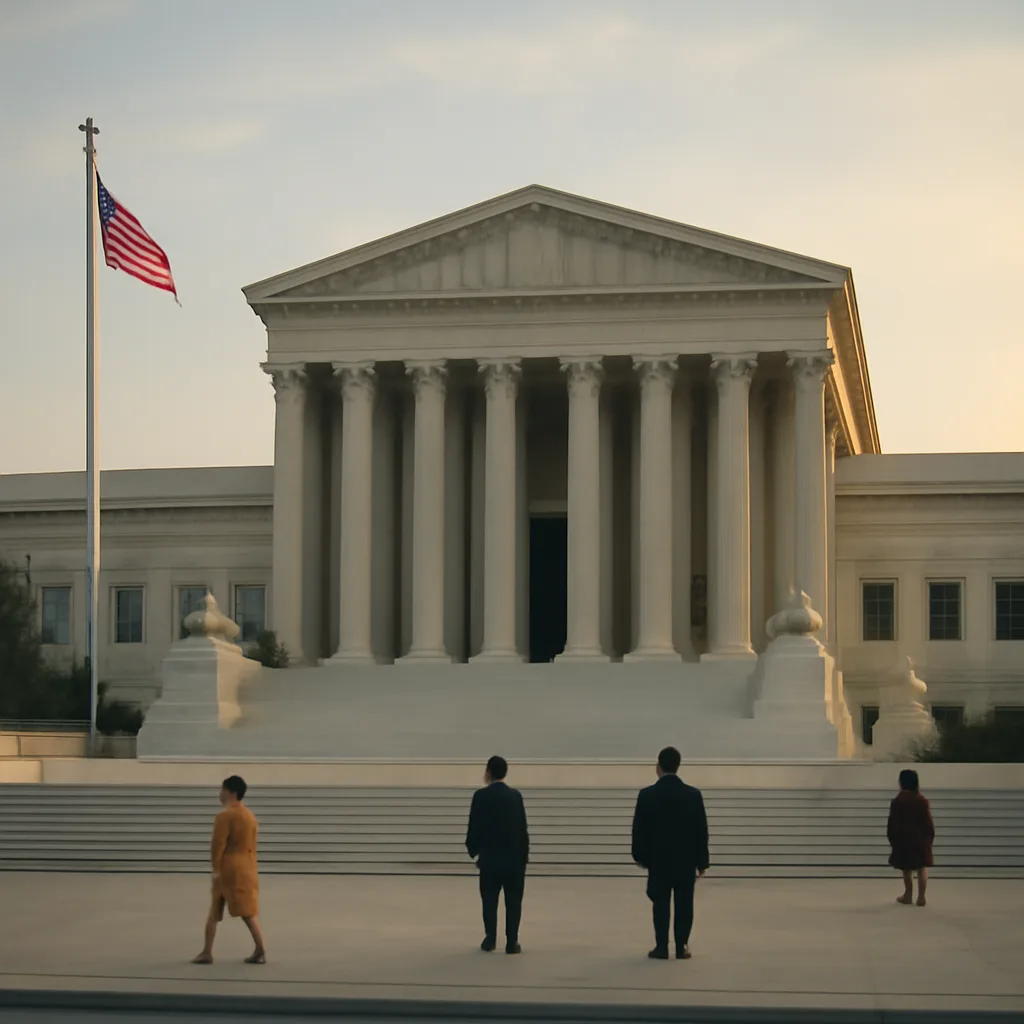
Exterior of the United States Supreme Court building at dawn, marble steps and columns visible, American flag at half-staff.

On July 2, 1976, the U.S. Supreme Court upheld new death-penalty statutes, effectively allowing capital punishment to resume after a de facto nationwide moratorium following earlier rulings.


On July 2, 1976, the U.S. Supreme Court issued a decision that permitted the resumption of capital punishment across the United States by upholding revised state death-penalty statutes. The ruling followed a period of legal and political debate sparked by earlier Court decisions that had called into question the constitutionality of existing capital sentencing procedures.

Background
In 1972, the Supreme Court's decision in Furman v. Georgia found that the way the death penalty was being administered in several jurisdictions constituted cruel and unusual punishment under the Eighth and Fourteenth Amendments. That ruling did not categorically prohibit capital punishment, but it invalidated many existing statutes and produced a de facto national halt to executions while legislatures and courts worked to address the Court’s concerns.

State Responses and New Statutes
Between 1972 and 1976, many states revised their criminal codes to create new procedures intended to reduce arbitrary or discriminatory imposition of the death penalty. Typical reforms included bifurcated trials (separating the guilt phase from the sentencing phase), the introduction of guided jury instructions, and statutorily enumerated aggravating and mitigating factors for juries to consider.

The 1976 Decision
On July 2, 1976, the Supreme Court reviewed several of these revised statutes and concluded that the procedural safeguards adopted by many states adequately addressed the constitutional problems identified in Furman. By upholding those revised frameworks, the Court allowed capital punishment statutes that met the Court’s standards to stand, which had the practical effect of reinstating the death penalty where states had enacted compliant laws.

Immediate Effects
The decision did not automatically trigger executions everywhere; rather, it authorized states with new, constitutionally acceptable sentencing procedures to resume capital prosecutions and, in time, carry out executions under those statutes. The pace at which executions resumed varied by state, influenced by local political choices, additional litigation, and procedural requirements.

Legal and Social Context
The 1976 ruling marked a turning point in death-penalty jurisprudence. It reflected the Court’s effort to balance constitutional protections against cruel and unusual punishment with state authority to impose capital sentences when guided by structured legal standards. The decision also intensified public debate over the morality, fairness, and application of capital punishment—debates that have continued in subsequent decades and have produced further litigation, legislative changes, and varying patterns of use across states.

Legacy
The 1976 ruling re-established a legal framework under which the death penalty could operate, shaping subsequent case law about sentencing procedures, mitigation evidence, and proportionality review. It set the stage for later decisions refining Eighth Amendment standards and for ongoing state-level variation in the use of capital punishment. Historians and legal scholars continue to view the period from 1972 to 1976 as pivotal in the modern history of the American death penalty.

Note on sources and accuracy
This summary synthesizes well-documented legal developments of the era. Where details of specific state statutes or subsequent case law are relevant, readers should consult primary sources—court decisions and legislative texts—for exact language and case holdings.

Share this

Email Share on X Facebook Reddit

Did this surprise you?