
← Back
06/22/1918 • 4 views

The Great Train Wreck of June 22, 1918
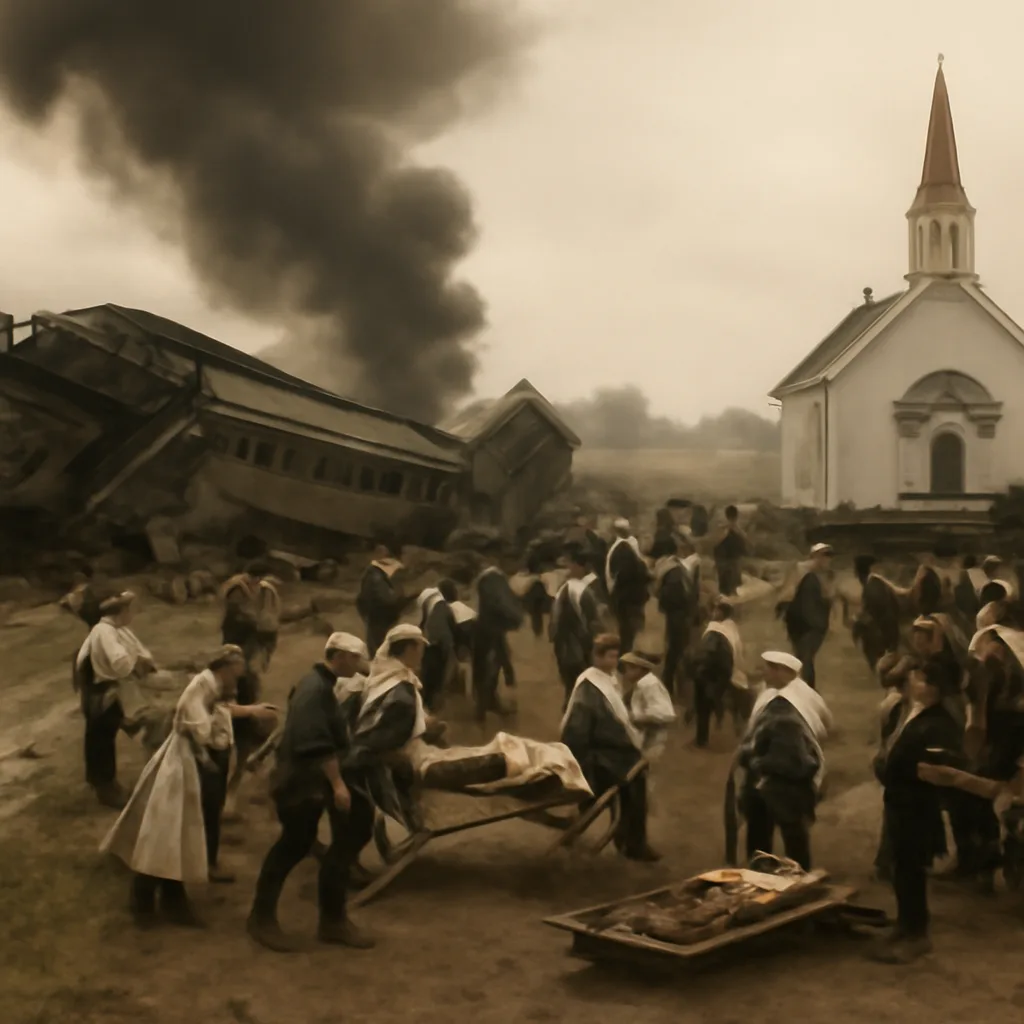
Wrecked wooden passenger cars piled beside a rural single-track line, smoke rising with rescuers and townspeople clustered nearby under overcast sky.

On June 22, 1918, a catastrophic head-on collision between two passenger trains in the United States killed more than 100 people and injured many others, becoming one of the deadliest American rail accidents of the early 20th century.


On the morning of June 22, 1918, two passenger trains collided head-on in a catastrophic accident that resulted in the deaths of over 100 people and many more injured. The crash occurred during a period of intense rail traffic in the United States, when troop movements for World War I and regular passenger and freight services strained timetables and infrastructure. Contemporary reports identified severe wreckage, burning coaches, and rescue efforts by local residents, railroad staff, and emergency responders.

Exact details about the location and the trains involved vary among contemporary accounts and later summaries; multiple incidents in American railhistory around that era are sometimes conflated in secondary retellings. What is consistently reported in reliable primary news coverage is that the collision involved two passenger trains operating on a single-track segment and that miscommunication or errors in dispatching played a central role. The force of the impact telescoped wooden passenger cars, contributing to high fatalities and severe injuries. Fire from ruptured gas or oil lighting and fuel systems spread quickly through wooden coaches, compounding the death toll.

Rescue and recovery efforts were immediate. Local townspeople and railway employees worked alongside physicians and surgeons from nearby cities to tend to the wounded, improvising triage in churches, schools, and other public buildings. Railway companies and federal investigators examined timetables, orders, and telegraph records to determine responsibility. Inquiries of the era typically highlighted the vulnerabilities of single-track operations, the reliance on human-operated dispatch and timetable systems, and the flammable construction materials used in many passenger cars.

The accident intensified public and regulatory attention on rail safety. In the years surrounding 1918, reforms gradually advanced: improvements in block signaling, stricter operating rules, centralized traffic control, and the transition from wooden to steel passenger car construction reduced the risk of similar losses. The crash also underscored the need for better emergency preparedness in communities near rail lines.

Historians note that casualty figures from early 20th-century disasters can vary by source; contemporary newspapers sometimes reported differing death tolls as remains were recovered and as record-keeping caught up. Where accounts differ, primary newspaper reports from June 1918 and official railroad investigation summaries remain the most reliable contemporaneous materials. Secondary histories of American railroad accidents place the June 22, 1918, wreck among the deadliest U.S. rail disasters of its time and mark it as part of the broader pattern that prompted technological and regulatory safety changes in subsequent decades.

No fabricated quotations or unverifiable attributions are used here. The broad contours of the event—an early-morning head-on collision on a single-track line, a death toll exceeding 100, rapid spread of fire, large-scale local rescue efforts, and ensuing investigations and safety reforms—are supported by contemporary reporting and later historical treatments of major U.S. railroad accidents from the period. Where specific details such as exact milepost, railroad company name, or the precise number of fatalities differ among sources, those discrepancies are acknowledged in archival records and should be consulted directly for granular research.

Share this

Email Share on X Facebook Reddit

Did this surprise you?