
← Back
06/05/1954 • 5 views

A contested milestone: June 5, 1954, and the claim of rock and roll’s first public performance
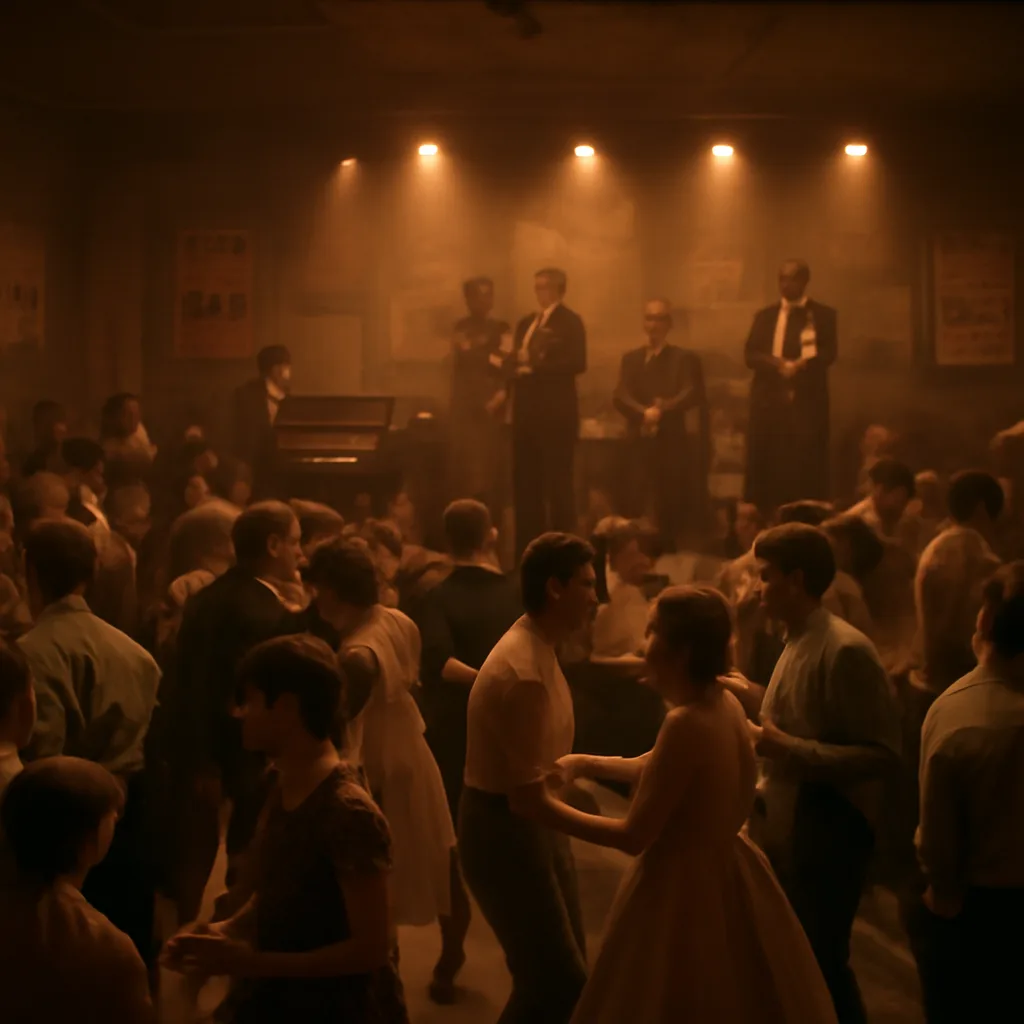
A 1950s concert crowd in a dimly lit dance hall, young people standing and dancing to a live band on stage, clothing styles and instruments consistent with early 1950s America.

On June 5, 1954, in Cleveland, Ohio, a performance tied to DJ Alan Freed is often cited in accounts of rock and roll’s birth—though historians debate whether any single date or event can legitimately be called the first public rock and roll performance.


Historians of American popular music generally treat the early 1950s as a formative period when rhythm and blues, country, gospel and pop converged into what came to be called rock and roll. Among frequently cited milestones is an event on June 5, 1954, associated with Cleveland disc jockey Alan Freed. That date is remembered by some as a public performance moment that helped bring the new sound into broader visibility, but the claim is contested and requires careful context.

What happened on June 5, 1954

On that day, Alan Freed—who had popularized the term "rock and roll" on his radio show—staged public appearances and concerts in the Cleveland area that featured rhythm-and-blues artists and records aimed at a cross‑racial teenage audience. Freed’s activities in 1954, including live shows and integrated dance events, helped transfer the musical vocabulary of R&B into venues frequented by white teenagers, accelerating the commercial spread of the style.

Why some point to June 5, 1954

Accounts that single out June 5 emphasize its symbolic value: it falls in the spring of 1954 when Freed’s promotional efforts and local concerts were gaining momentum, and when records and stage acts that blended backbeat, vocal delivery, and amplified instruments were reaching wider regional audiences. For communities in Cleveland and nearby cities, Freed’s events functioned as a public forum where the sound that would be labeled rock and roll was performed, heard, and danced to by integrated crowds.

Why the claim is disputed

Music historians caution against identifying one definitive "first" public performance of rock and roll. Elements of what became rock and roll were present earlier in recorded and live music: jump blues of the 1940s, honking saxophone R&B, country boogie, and vocal group recordings already contained backbeat-driven, dance-oriented music. Artists such as Wynonie Harris, Fats Domino, Arthur Crudup, Sister Rosetta Tharpe, Jackie Brenston, and many others performed and recorded music with features later associated with rock and roll before mid‑1954.

Moreover, regional scenes across the United States—Memphis, New Orleans, Chicago, Detroit, and elsewhere—had local performances and recordings that contributed to the genre’s emergence. Because the transition from R&B and country to rock and roll was gradual, retrospective labeling often imposes a neat origin that historical reality resists.

What scholars accept about Freed’s role

Most scholars agree Alan Freed was influential in popularizing the phrase "rock and roll" and in promoting records and live shows that mixed Black and white audiences and performers. Freed’s visibility and promotion helped give a name and a market to musical trends that were already occurring. His concerts in 1954 brought attention and commercial infrastructure to the music, even if they were not the literal first time anyone had performed rock‑and‑roll‑sounding music in public.

How to read claims of a "first"

When reading claims that a particular date marks the first public rock and roll performance, it is important to distinguish symbolic milestones from literal firsts. June 5, 1954, can reasonably be described as part of a watershed moment in which the music’s public profile rose sharply—especially in Cleveland—thanks to Freed’s promotion. But it is historically accurate to say the genre emerged from multiple streams and many earlier performances and recordings, making any single first public performance difficult to defend.

Conclusion

June 5, 1954, is a defensible symbolic marker in narratives about rock and roll’s rise, particularly in accounts that foreground Alan Freed’s role in promoting the music to broader, integrated teenage audiences. Yet scholars emphasize that rock and roll’s origins are diffuse and cumulative; no single concert or date fully captures the genre’s complex emergence.

Share this

Email Share on X Facebook Reddit

Did this surprise you?