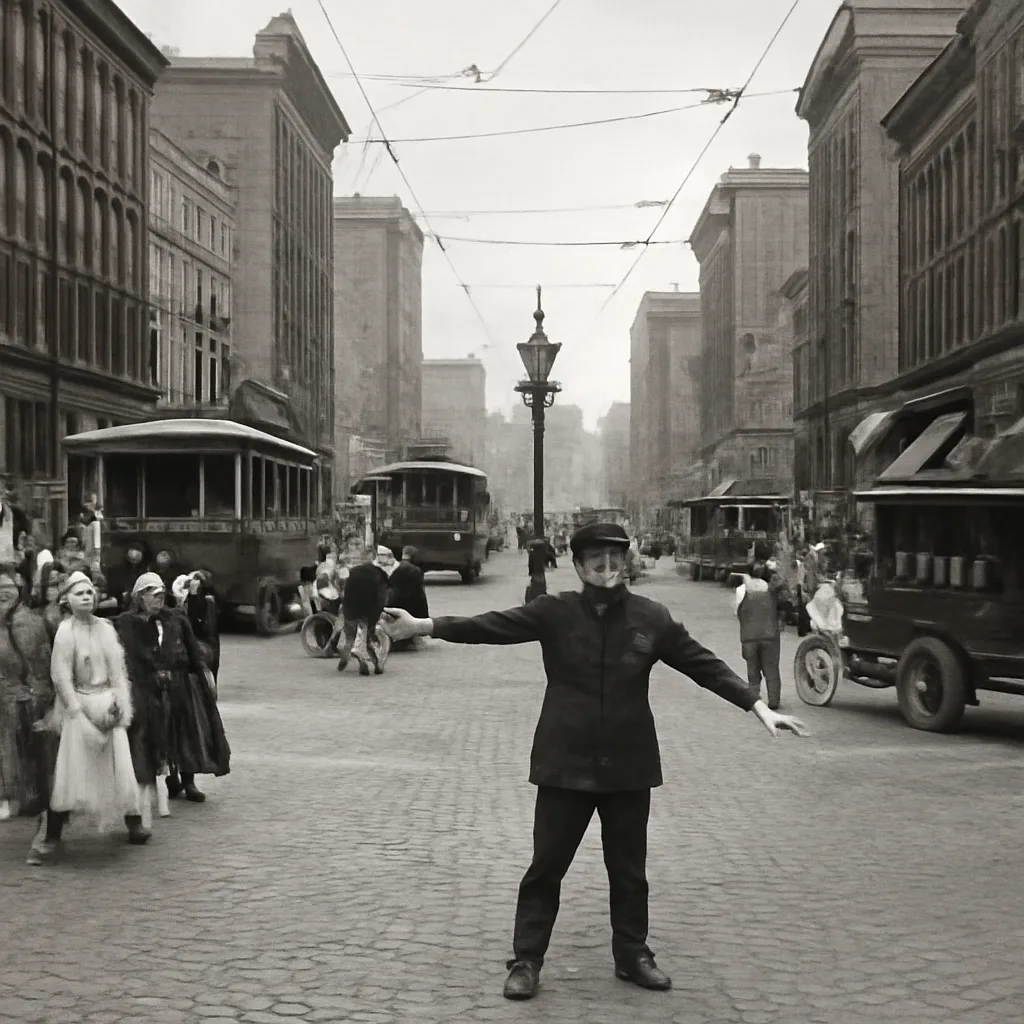
First Electric Traffic Light Malfunctions, Paralyzes Cleveland Intersection
On June 5, 1914, Cleveland’s newly installed electric traffic signal failed during rush hour, causing confusion among motorists, streetcar operators, and pedestrians and prompting a quick return to manual traffic control.
On June 5, 1914, Cleveland experienced one of the earliest recorded failures of an electric traffic signal. The city had installed an experimental electric traffic light at a busy downtown intersection as part of a broader effort in American cities to manage increasing horse, pedestrian, streetcar, and automobile traffic. The device—intended to replace or supplement police officers directing traffic—malfunctioned during a peak period, producing confusion that required immediate human intervention.
Background
By the 1910s, urban traffic in U.S. cities was becoming more complex. Automobiles were more common, streetcar networks were heavily used, and existing traffic control relied largely on mounted, walking, or stationed police officers. Innovations in electric signaling promised a more standardized way to regulate movements at intersections. Early electric traffic signals varied widely in design and operation; some were semaphore arms or colored lights, and many were experimental prototypes installed by local authorities or private inventors.
The 1914 Incident
Contemporary newspaper accounts from Cleveland describe a sudden failure of a new electric signal at a central intersection on June 5, 1914. During rush conditions the apparatus reportedly stopped functioning or gave conflicting indications—such as changing unpredictably or failing to show a clear stop/go signal—leading to stalled streetcars, hesitant motorists, and pedestrians unsure when to cross. Traffic officers and nearby police quickly moved in to direct vehicles and restore order, effectively reverting to manual traffic control until the signal could be repaired or removed.
Consequences and Response
The malfunction highlighted both the promise and the pitfalls of early mechanized traffic control. While electric signals offered a way to regulate traffic without dedicating officers to every busy corner, mechanical or electrical unreliability could create hazardous situations. Cities that experimented with such technology took these events seriously: engineers and city officials investigated causes—ranging from electrical faults to design shortcomings—and made incremental improvements.
Broader Context
This Cleveland incident fits into a larger pattern of early twentieth-century experimentation with traffic control. The first known electric traffic light in the United States was installed in Cleveland in 1914 (some sources cite late 1913 installations elsewhere), and other cities such as Detroit, New York, and London were also testing various signaling systems. Failures and near-misses were part of the learning curve that led to standardized, more reliable designs in subsequent decades, including improvements in signal visibility, timing, and later, automated controllers and fail-safes.
Historiographical notes
Details about specific malfunctions can be unevenly reported in period newspapers, which sometimes emphasized drama in daily reporting. While Cleveland’s June 5, 1914, malfunction is documented in contemporary accounts, the precise technical cause is not consistently described across sources. Scholars of urban transportation note that early signals suffered from electrical supply issues, exposure to weather, rudimentary control mechanisms, and the absence of standardized color conventions or timing protocols—factors that could produce the kind of confusion reported in 1914.
Legacy
Incidents like the June 5 malfunction underscored the need for reliable, tested systems and contributed to the evolution of traffic engineering as a municipal discipline. Over the following decades, cities adopted standardized color signals, improved control devices, and practices for emergency manual override—measures aimed at preventing the type of chaos witnessed during early failures. The 1914 event remains a representative episode in the broader story of how modern traffic control developed from experimental beginnings into essential urban infrastructure.