
← Back
03/16/1884 • 5 views

America's First Roller Coaster Debuts at Coney Island, 1884
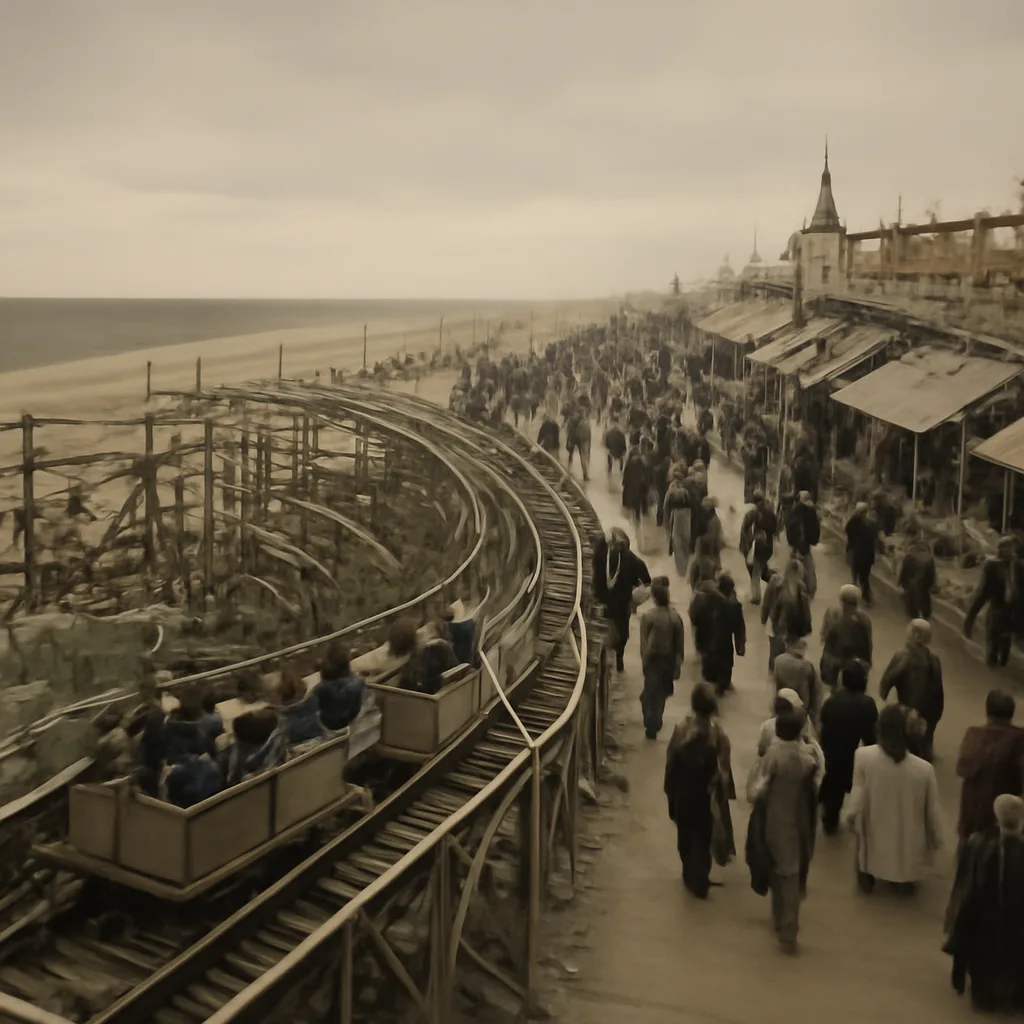
Wooden seaside amusement ride structure and patrons at Coney Island in the 1880s, showing a low wooden track and simple bench cars; period clothing visible but no identifiable faces.

On March 16, 1884, the first credited roller coaster in the United States opened at Coney Island’s West Brighton resort, introducing a gravity-driven amusement ride that would evolve into a hallmark of modern parks.


On March 16, 1884, a novel amusement attraction opened at the Sea Lion Park (then commonly referred to as part of Coney Island’s resort circuit) that is widely credited as the first roller coaster in the United States. The ride, known colloquially at the time as a "switchback railway" or early scenic railway, marked a transition from earlier gravity rides and pleasure railway experiments into a purpose-built leisure attraction designed to carry paying passengers along undulating tracks for thrills and views.

Origins and design

The immediate precedent for the 1884 ride lay in a range of European and American antecedents: Russian ice slides of the 17th–19th centuries and the earlier 19th-century scenic railways and gravity railways built for parks and exhibition grounds. In the U.S., promoters and engineers adapted these ideas into a wooden, track-guided car system that relied on gravity and the initial mechanical haul to move cars along rising and falling grades. Early American versions emphasized scenic or novelty aspects as much as speed—passengers would ride to enjoy the sensation of descent and the coastal setting rather than to pursue record-breaking velocity.

Coney Island and the popularization of amusements

Coney Island, Brooklyn, had by the 1880s become a major seaside leisure destination for New Yorkers, with competing entrepreneurs developing rides, promenades, and concessions. Sea Lion Park, opened in 1895 by Paul Boyton, later overshadowed earlier small attractions, but reports and contemporary accounts identify a gravity-driven railway that began operating in the mid-1880s at Coney Island as the first American roller coaster-type ride. Documentation from trade papers, newspapers, and park guides of the era collectively support the 1884 date as the widely cited opening of what would be recognized as the first U.S. roller coaster.

Operation and experience

Early rides were constructed of timber, with flanged wheels running on paired wooden rails or guides. Cars were often simple bench-style vehicles seating multiple passengers. Lift mechanisms were rudimentary: some rides required attendants or animals to place cars on an initial elevated section, while others used steam-driven winches or gravity to position cars for their first descent. Safety devices and standards familiar to later amusement parks were largely absent; operators relied on mechanical robustness and attendant oversight. The ride experience combined modest speeds, repeated undulations, and the novelty of being carried along a guided track—enough to draw paying customers and news coverage.

Legacy and evolution

The success of early Coney Island attractions spurred designers and inventors to refine track layout, car design, and mechanized lifts. By the late 19th and early 20th centuries, innovations such as upstops (to keep cars on the track during negative-G moments), improved braking systems, and more elaborate wooden structures produced the classic American wooden roller coaster. The crowds and competition at seaside resorts like Coney Island created a testing ground for continuous innovation: what began in the 1880s as a novelty quickly became central to the identity of amusement parks.

Historiographical notes

Attribution of a single "first" roller coaster can invite dispute because the category evolved from multiple parallel developments (ice slides, scenic railways, gravity railways). The March 16, 1884 date is widely cited in secondary sources as the opening of the first roller coaster-like ride in the United States at Coney Island, but scholars and primary accounts sometimes vary in terminology and exact location. Where contemporary sources differ, historians generally treat the 1884 Coney Island attraction as the effective starting point for the American roller coaster tradition rather than as an uncontested singular invention.

Today’s perspective

From that early gravity-driven ride in 1884 grew a global industry and cultural phenomenon: wooden and steel coasters in increasing sizes and technical complexity, safety regulations, and a devoted enthusiast culture. The basic premise—rail-guided vehicles using gravity and engineered profiles to produce thrills—remains the conceptual through line from the 1884 installation to modern roller coasters.

Share this

Email Share on X Facebook Reddit

Did this surprise you?