
← Back
06/28/1914 • 4 views

Assassination of Archduke Franz Ferdinand Sparks Crisis That Leads to World War I
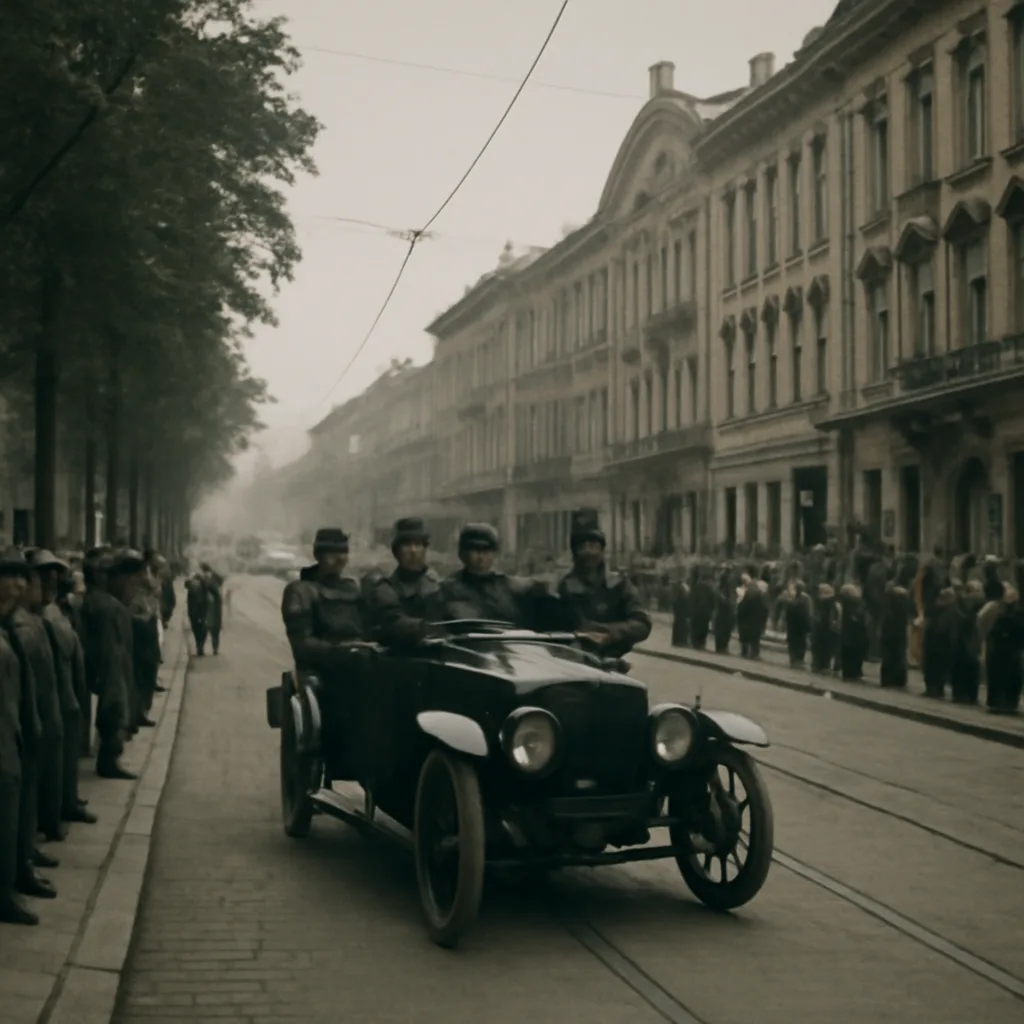
Early 20th-century Sarajevo street scene showing a horse-drawn motorcade on a widened tram-lined street with onlookers; period Austro-Hungarian architecture and shopfronts visible.

On 28 June 1914, Archduke Franz Ferdinand of Austria and his wife Sophie were assassinated in Sarajevo, an event that precipitated diplomatic escalations and mobilizations across Europe, ultimately triggering World War I.


On 28 June 1914, Archduke Franz Ferdinand, heir presumptive to the Austro-Hungarian throne, and his wife Sophie were shot and killed in Sarajevo. The couple had been visiting the Bosnian capital—recently annexed by Austria-Hungary in 1908—to observe military maneuvers and perform official duties. Their deaths were carried out by Gavrilo Princip, a Bosnian Serb nationalist associated with the group Young Bosnia; he and several co-conspirators had connections to members of the Serbian organization known as the Black Hand, though the precise level of direct Serbian government involvement remains debated among historians.

The assassination occurred against a backdrop of longstanding tensions: competing nationalisms in the Balkans, Austro-Hungarian fears of Slavic separatism, Serbian aspirations for greater influence or unification of South Slavs, and a system of alliance commitments binding the great powers of Europe. Austria-Hungary, after securing a measure of diplomatic backing from Germany, issued an ultimatum to Serbia on 23 July 1914 with demands that infringed on Serbian sovereignty. Serbia accepted most provisions but balked at several that would have allowed Austro-Hungarian participation in internal Serbian affairs. Austria-Hungary used the partial rejection as justification to declare war on Serbia on 28 July 1914.

What followed was a rapid escalation tied to interlocking alliances, mobilization timetables, and military plans. Russia began partial mobilization in defense of Serbia; Germany declared war on Russia on 1 August and on Russia’s ally France on 3 August. Germany’s invasion of neutral Belgium to reach France prompted Britain to declare war on Germany on 4 August. Within weeks, the conflict widened beyond the Balkans into a general European war involving colonial empires and, eventually, nations across multiple continents.

The assassination did not, by itself, make war inevitable; rather it functioned as the immediate catalyst that exposed and activated deeper structural causes: rivalry among great powers, arms races, rigid alliance commitments, and nationalist movements. Historians continue to debate the relative weight of these factors and the extent to which individual decisions by leaders, miscommunications, and mobilization timetables accelerated the slide to war.

The human toll and geopolitical consequences were immense. The war that followed lasted until 1918, reshaped maps and empires, and set conditions that contributed to further conflict in the 20th century. The assassination of Franz Ferdinand remains one of the most cited trigger events in modern history—a focal point for examining how assassination, diplomacy, alliances, and national ambitions combined to produce a continental and global conflagration.

Share this

Email Share on X Facebook Reddit

Did this surprise you?