
← Back
06/28/1932 • 4 views

1932 Sulfanilamide Poisonings Prompt First Documented U.S. Consumer Product Recall
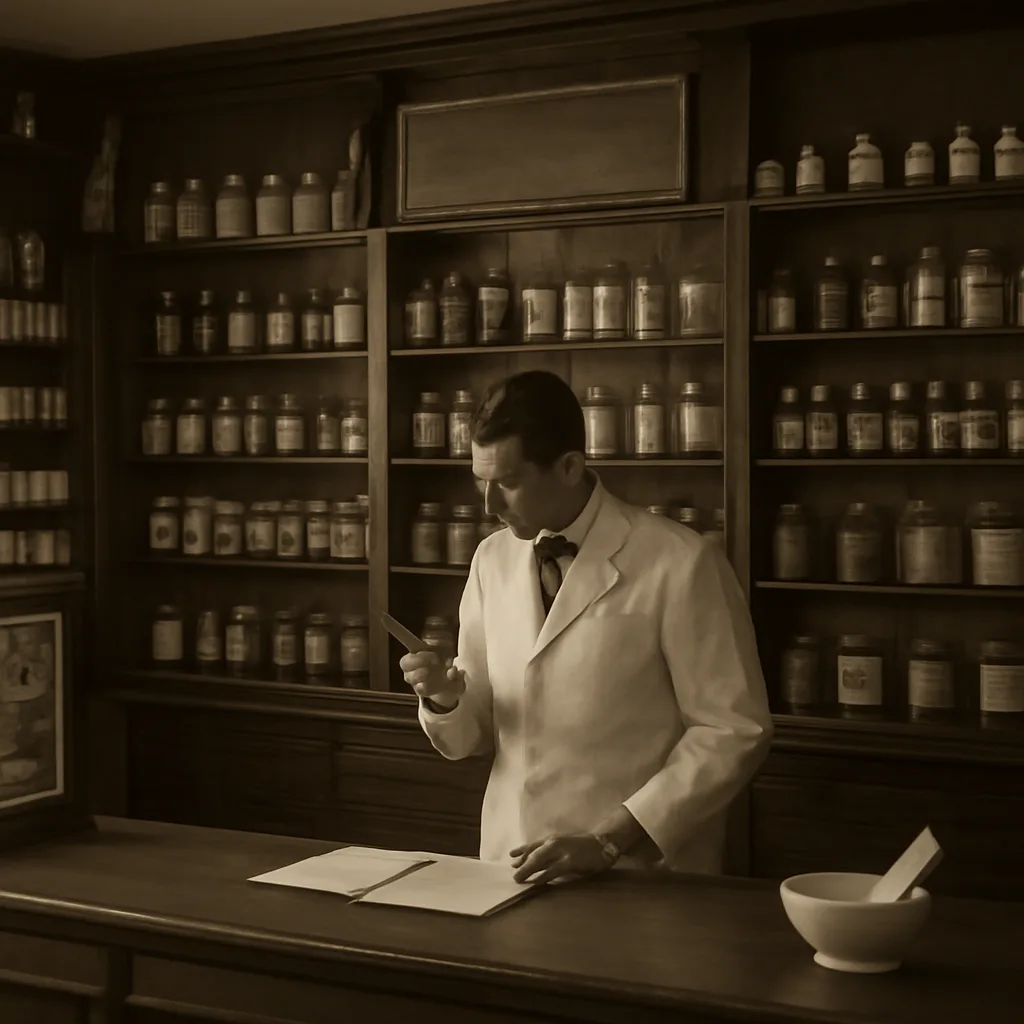
Early 1930s pharmacy interior with shelves of glass medicine bottles and boxed elixirs, a pharmacist examining a bottle; period clothing and furnishings.

In late June 1932, mass poisonings from an improperly formulated sulfanilamide elixir led to the first widely documented U.S. consumer product recall and spurred legal and regulatory changes to protect the public from toxic products.


On June 28, 1932, events tied to a pharmaceutical preparation began a chain of discovery that would become the first widely documented consumer product recall in the United States. The incident involved an elixir formulation of sulfanilamide—an early antibacterial agent—manufactured by the S. E. Massengill Company of Tennessee. The company used diethylene glycol as a solvent to dissolve sulfanilamide powder and produce a sweet-tasting “elixir” intended for oral use. Diethylene glycol is toxic to humans; in that era its hazard in medicinal formulations was not widely recognized.

In the weeks following distribution, physicians and local health officials recorded multiple acute poisonings and deaths, predominantly among children and elderly patients who had taken the preparation. Reports of vomiting, abdominal pain, kidney failure and convulsions accumulated as cases appeared across several states. The outbreak gained public attention as corroborated fatalities mounted and authorities traced many of the cases to the same brand of sulfanilamide elixir.

Faced with mounting evidence of harm, state health authorities and the U.S. Food and Drug Administration (FDA) moved to remove remaining supplies from circulation. The action to stop further sales and to retrieve the product from pharmacy shelves and manufacturers’ inventories is generally described in contemporary accounts as the first broadly recognized consumer product recall in U.S. history, insofar as it involved coordinated public-health intervention to halt distribution of a commercially sold, mass-marketed product causing acute toxicity.

The human cost was significant: dozens of deaths were attributed to the elixir nationwide. The public outcry and the evident limitations of existing federal law contributed directly to legislative reform. At the time, the primary federal statute governing drugs and foods was the Pure Food and Drug Act of 1906, which had limited authority over product safety testing and did not require premarket proof of safety. The sulfanilamide tragedy helped galvanize Congress to pass the 1938 Federal Food, Drug, and Cosmetic (FD&C) Act, which gave the federal government explicit authority to require evidence of safety for new drugs before marketing and to better regulate labeling, manufacturing, and distribution.

The 1932 sulfanilamide case is historically significant for several interconnected reasons: it demonstrated the public-health dangers of inadequately tested formulations; it showed how a single hazardous ingredient (diethylene glycol) could be introduced inadvertently into consumer products; and it illustrated the need for more robust federal oversight. Contemporary press accounts, state health reports, and later historical analyses consistently identify the episode as a critical catalyst for regulatory strengthening.

Scholars and regulatory historians note that while recalls and product withdrawals had occurred in narrower or more localized contexts earlier, the sulfanilamide incident stands out for its scale, its clear linkage to a manufactured consumer medicinal product, and its role in prompting national legislation. Because historical terminology and record-keeping vary, some sources may describe other earlier withdrawals, but the 1932 sulfanilamide poisonings are the first widely cited example that led to systematic, government-led removal of a hazardous consumer product and subsequent statutory reform.

The legacy of the 1932 incident persists in modern regulatory practice: requirements for premarket safety testing, adverse event reporting, and the legal framework empowering recalls trace part of their origin to the crisis provoked by the sulfanilamide elixir. The episode remains an early and stark lesson in the need for scientific evaluation and regulatory oversight of products marketed to the public.

Share this

Email Share on X Facebook Reddit

Did this surprise you?