
← Back
06/28/1970 • 4 views

First Pride March in New York City Marks Stonewall Anniversary, June 28, 1970
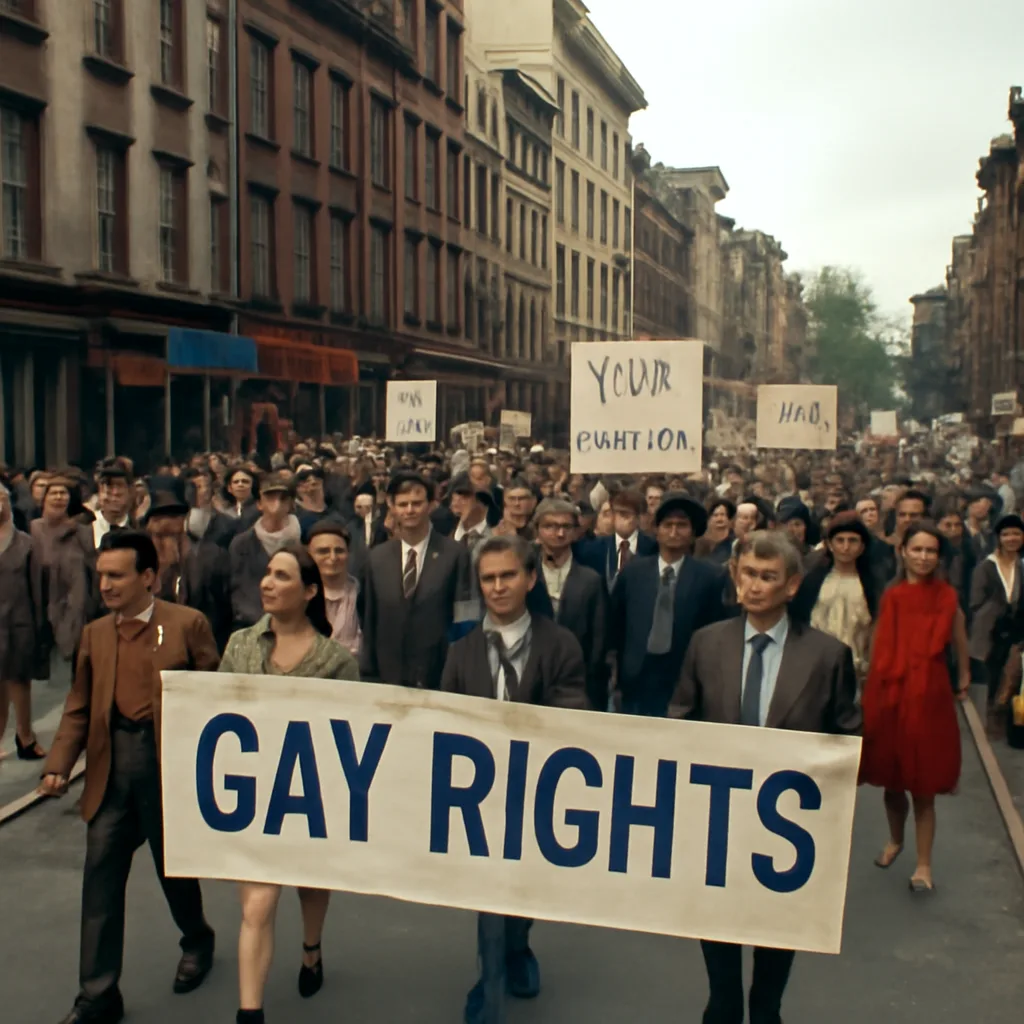
Crowd of marchers and onlookers on a city street near Christopher Street in Greenwich Village, New York City, circa June 1970; signs and banners visible, period clothing from late 1960s–1970, buildings and storefronts in background.

On June 28, 1970, thousands took to the streets of New York City for the first Christopher Street Liberation Day march, commemorating the Stonewall uprising and demanding gay rights. The event laid groundwork for annual Pride commemorations worldwide.


On June 28, 1970, New York City hosted one of the earliest organized public demonstrations for gay rights in the United States: the Christopher Street Liberation Day march. Occurring on the first anniversary of the June 1969 Stonewall uprising at the Stonewall Inn in Greenwich Village, the march brought together several hundred to a few thousand participants by most contemporary accounts, including gay men and women, drag performers, members of emerging activist groups, and allies. The demonstration is widely regarded as a foundational moment in the development of modern Pride events.

Origins and organizers

The march grew out of activist energy following Stonewall. Key early organizations involved in planning included the Gay Liberation Front (GLF), the Gay Activists Alliance (GAA), and local community groups and activists who sought a public, visible response to police harassment and legal discrimination. Organizers framed the event as a protest and a commemoration: to remember those who resisted during the Stonewall confrontations and to press for civil rights, legal protections, and social acceptance.

Route and participation

The event was commonly called the Christopher Street Liberation Day march because it began on Christopher Street, adjacent to the Stonewall site. Participants marched through Greenwich Village and along routes leading to Central Park for rallies and speeches. Estimates of attendance vary by source; contemporary press and later historians give figures ranging from several hundred to several thousand. The march featured a mix of protest signs, banners, and visible forms of gender expression that challenged prevailing social norms.

Goals and messages

Unlike some earlier demonstrations that had been more cautious or focused on assimilation, the Christopher Street march emphasized visibility and direct political demands. Participants protested police harassment, discriminatory laws, and social stigma, and they called for equal rights, protection from arrest and employment discrimination, and recognition of dignity and identity. The event combined celebratory elements with confrontational politics, reflecting divisions and debates within the early movement about tactics and goals.

Impact and legacy

The Christopher Street Liberation Day march is widely credited with initiating an annual tradition of Pride marches and parades in the United States and internationally. Within a few years similar demonstrations appeared in other cities, and organizers began holding annual events each June to mark the Stonewall anniversary. Over subsequent decades, Pride evolved in many places into a broad mixture of political protest, community celebration, and cultural festival, with variations in tone and focus across time and location.

Historiographical notes and caveats

Numbers, precise roles of specific organizers, and descriptions of individual participants are topics where contemporary reports and later scholarship sometimes differ. Different groups involved in early planning had distinct perspectives and sometimes competed over messaging and leadership. While Stonewall is often cited as the catalyst for this march and for the modern Pride movement, historians also note preceding protests, organizing, and networks of gay and lesbian activism that contributed to the emergence of a larger movement.

Significance today

June 28, 1970, is remembered as a turning point that helped transform local resistance into visible, coordinated public demonstrations for lesbian, gay, bisexual, transgender, and queer rights. The Christopher Street Liberation Day march established the practice of marking the Stonewall anniversary with public marches, a practice that endures globally as Pride events each June, though the form and focus of those events continue to evolve.

Share this

Email Share on X Facebook Reddit

Did this surprise you?