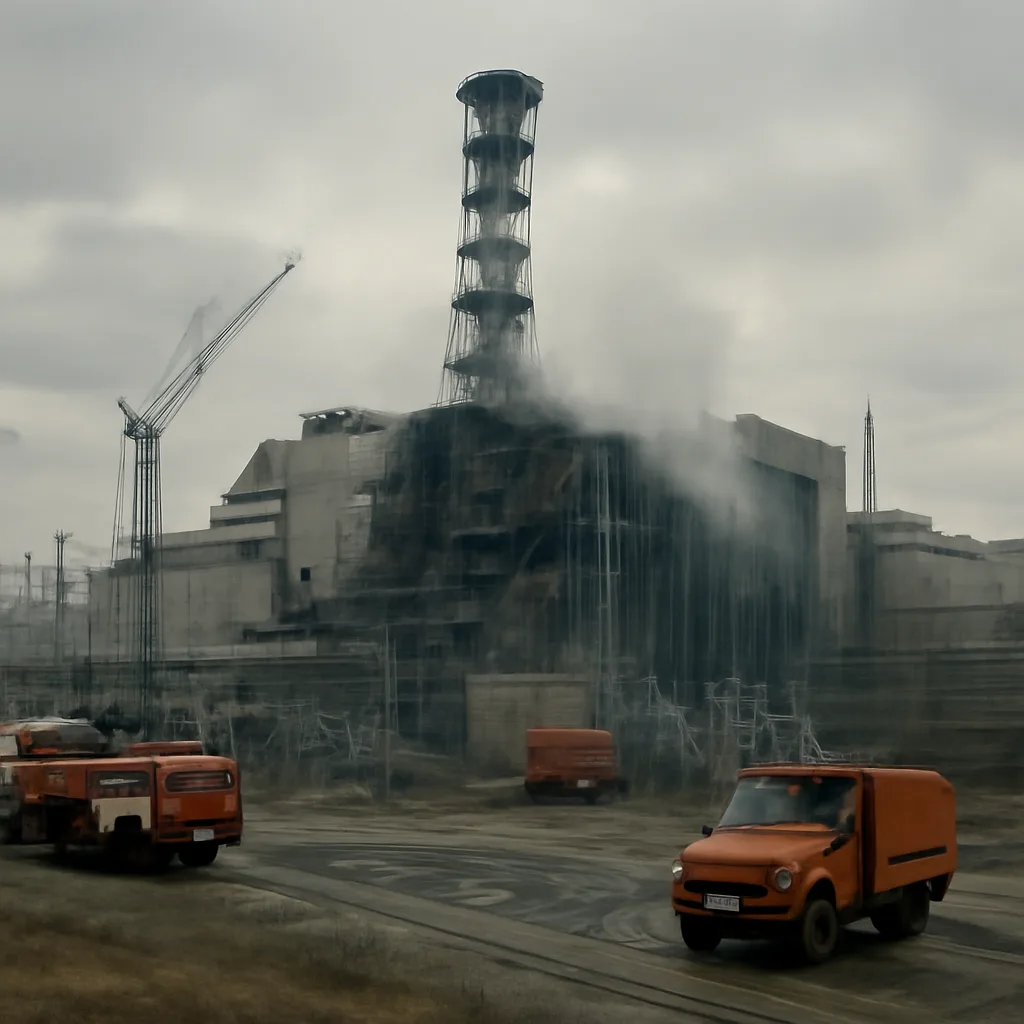
Chernobyl Disaster: Reactor Explosion at Pripyat, April 26, 1986
On April 26, 1986, a late-night test at the No. 4 reactor of the Chernobyl Nuclear Power Plant near Pripyat, Ukraine, led to a catastrophic explosion and fire that released large quantities of radioactive material across the surrounding region and much of Europe.
On the night of April 25–26, 1986, operators at the Chernobyl Nuclear Power Plant (V.I. Lenin Nuclear Power Station) conducted a safety test on Reactor No. 4 that ended with an uncontrolled power surge. At 01:23 a.m. on April 26, the reactor experienced a series of steam explosions and a graphite fire that ruptured the reactor core and destroyed the reactor building. The explosion and ensuing fire released significant quantities of radioactive isotopes — including iodine-131, cesium-137 and other fission products — into the atmosphere.
Immediate effects and responses
Emergency workers, plant staff and fire crews were the first responders. Many were exposed to high doses of ionizing radiation during efforts to extinguish fires, secure the site and limit further releases. The Soviet authorities initially delayed public disclosure and evacuation; the nearby city of Pripyat (population about 49,000) was not evacuated until about 36 hours after the accident. Within weeks, authorities ordered the evacuation of tens of thousands of residents from the 30-kilometer exclusion zone.
Health and environmental impacts
Acute radiation syndrome (ARS) affected dozens of plant workers and emergency responders; 28 of the highest-exposed people died in the months following the accident from ARS and its complications, according to reports by Soviet and later international investigations. Beyond immediate casualties, long-term health effects have been the subject of extensive study and some dispute. Increased rates of thyroid cancer, especially among those exposed as children, have been consistently documented in affected regions, attributed to iodine-131 exposure. Estimates of additional cancer cases and deaths over subsequent decades vary among studies and depend on assumptions about dose, exposed populations and statistical methods.
Large areas of Ukraine, Belarus and Russia received varying levels of contamination; soil, water and biota within the exclusion zone were heavily affected. Short-lived radionuclides traveled with weather systems across Europe, prompting monitoring and restrictions on agricultural products in some countries.
Containment, cleanup and long-term management
In the weeks after the accident, Soviet authorities constructed a concrete-and-steel sarcophagus (the “Shelter”) to enclose the destroyed reactor and limit further releases. Over the following years, tens of thousands of workers, often called “liquidators,” carried out cleanup, decontamination and construction tasks under hazardous conditions. In 2016, an international project completed a New Safe Confinement — a large steel arch placed over the original sarcophagus — designed to contain radioactivity, facilitate dismantling of the old shelter and prevent further environmental release for decades.
Legacy and lessons
Chernobyl prompted national and international changes in nuclear safety culture, regulatory oversight and emergency preparedness. The accident revealed weaknesses in reactor design (the RBMK reactor type had positive void coefficient and other safety issues) and in operational decision-making, and it accelerated cooperation on nuclear safety among states and international organizations. The disaster left an enduring environmental, social and economic legacy: the depopulation of the exclusion zone, long-term land-use restrictions, ongoing monitoring and health programs, and continuing debate and research into the full scale of its human and ecological consequences.
Historical context and documentation
The accident occurred in the Ukrainian Soviet Socialist Republic within the USSR. Much of what is known comes from Soviet reports, subsequent investigations by Ukrainian and international bodies (including the IAEA), and decades of scientific research. Some details — particularly long-term health outcome estimates and exact total casualty numbers attributable to low-dose exposures — remain debated among experts and depend on model assumptions and data sets.
The Chernobyl disaster remains one of the most significant nuclear accidents in history, both for its immediate human toll and for its lasting impact on policy, science and public perceptions of nuclear energy.