
12/31/1980 • 4 views
Deadly New Year’s Eve Hotel Fire in Las Vegas Kills Dozens
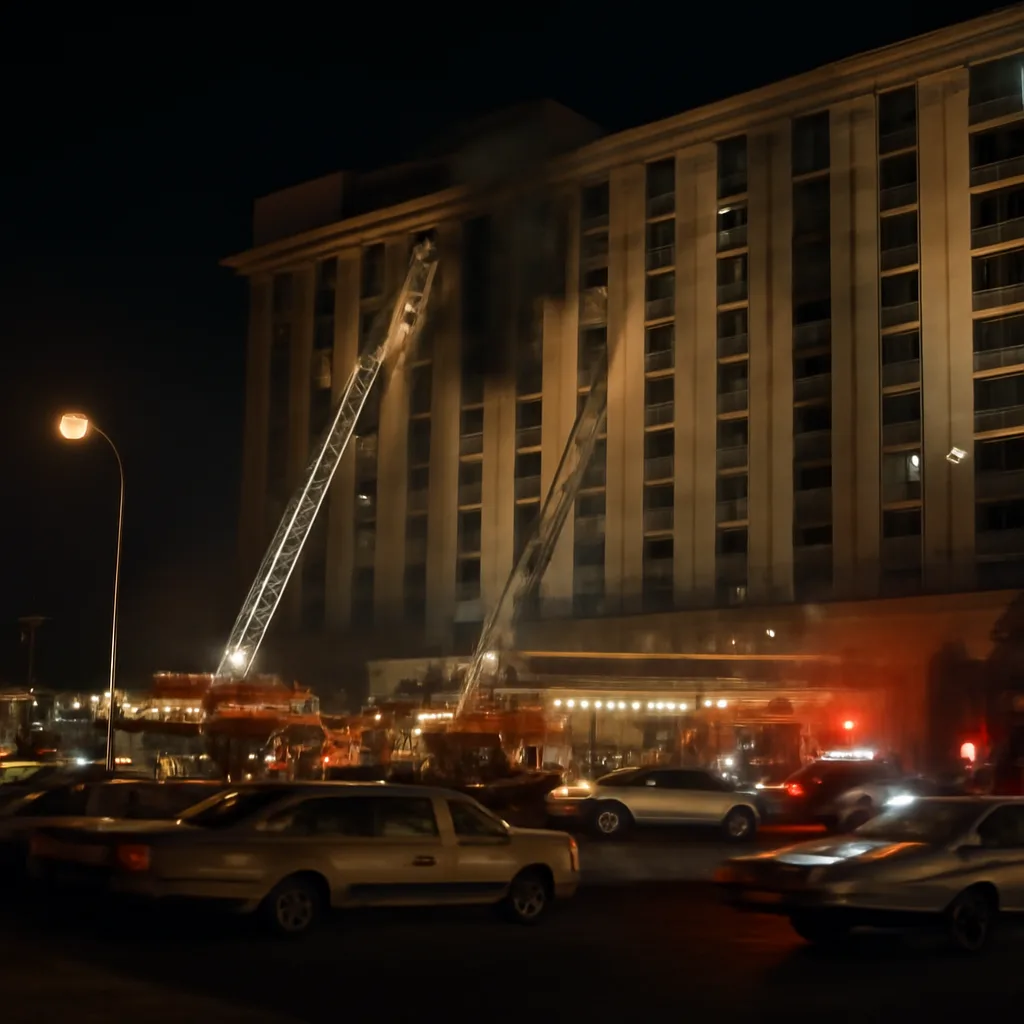
On December 31, 1980, a major fire at a Las Vegas hotel on New Year’s Eve caused dozens of fatalities and many injuries, prompting investigations into building safety and emergency response practices.
Initial reports indicated the fire spread rapidly through guestroom and corridor areas. Investigators later examined potential ignition sources, the building’s fire detection and alarm systems, the presence and accessibility of fire escapes, and interior finishes that can accelerate flame spread. Inquiries also focused on whether evacuation procedures and staff training were adequate for a high-occupancy event.
Casualty figures reported in contemporary news accounts varied as rescue and recovery continued; authorities worked to identify victims and notify families amid challenging conditions. Hospitals in the Las Vegas area received many patients suffering from smoke inhalation, burns and injuries sustained during evacuation. Local and state agencies coordinated to provide emergency medical care, temporary shelter and victim assistance.
The incident prompted local officials and industry stakeholders to re-evaluate fire safety regulations for hotels and other high-occupancy buildings. Attention centered on requirements for automatic sprinklers, centrally monitored fire alarms, clear evacuation routes, illuminated exit signage, staff emergency training and the fire resistance of interior materials. Such events historically have accelerated regulatory reviews and changes aimed at preventing similar tragedies.
Legal actions and insurance claims commonly follow fires of this scale; plaintiffs often allege negligence in maintenance, inadequate fire protection systems or failure to follow safety codes. Governmental investigations typically produce reports with recommendations for code changes, enforcement improvements and public education about fire safety in hotels.
Because contemporary accounts and official records may offer differing details about timing, casualty totals and cause, historians and safety professionals rely on multiple primary sources—fire department incident reports, coroner findings, building inspection records, newspaper coverage and court documents—to reconstruct the sequence of events and lessons learned. The legacy of such a disaster often includes regulatory changes, industry reforms and memorials to the victims.