
← Back
04/07/1937 • 6 views

First hospital blood bank in the U.S. opens in Chicago, 1937
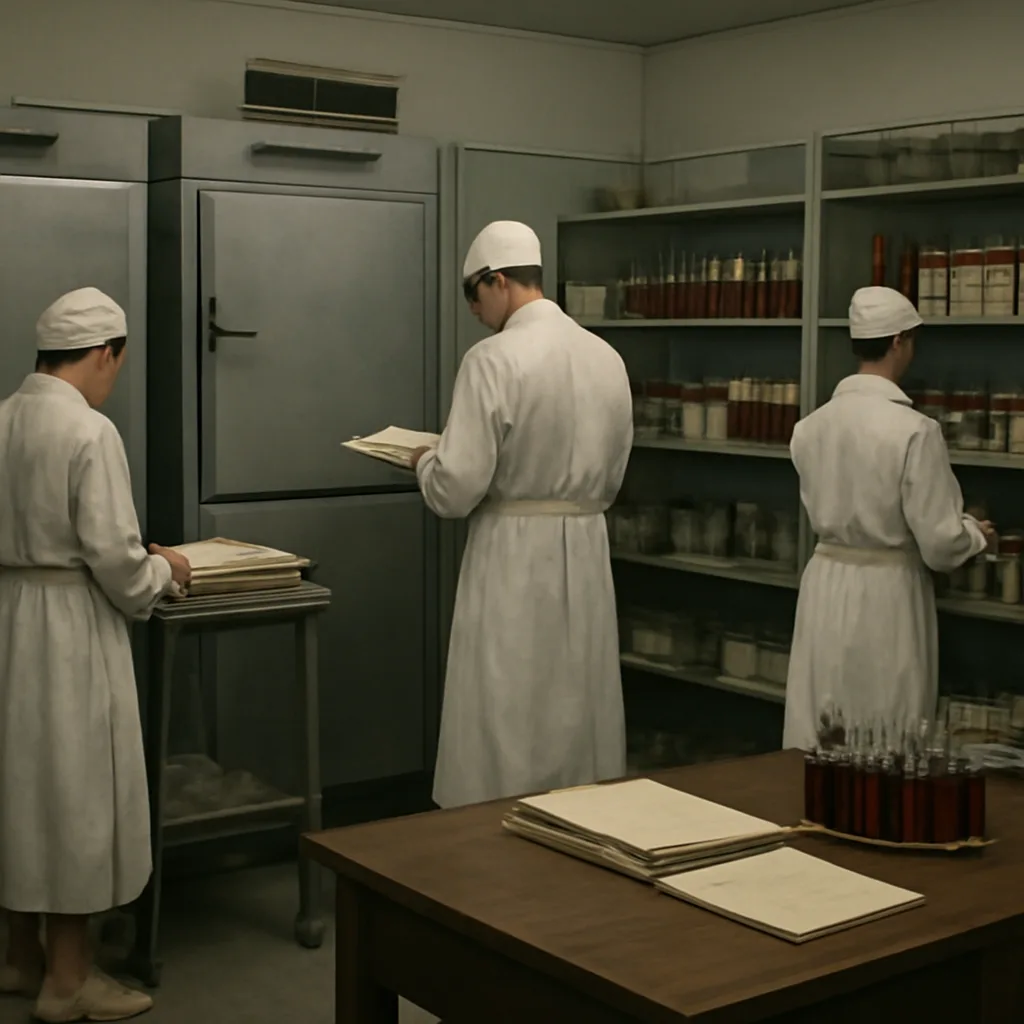
A 1930s hospital blood bank room with metal refrigeration units, glass bottles or early storage containers on shelves, a laboratory desk with paperwork and labeling, and clinicians in period medical attire working in the background.

On April 7, 1937, the Cook County Hospital in Chicago established the first documented hospital-based blood bank in the United States, introducing refrigerated storage and recordkeeping that made transfusions safer and more reliable.


On April 7, 1937, Cook County Hospital in Chicago opened what is widely recognized as the first hospital-based blood bank in the United States. The development formalized procedures for collecting, testing, refrigerating and storing human blood for transfusion within a hospital setting, reducing reliance on immediate donor-to-patient transfusions and helping make blood available on demand for surgeries, trauma care and obstetric emergencies.

Background

Before the 1930s, blood transfusions typically required direct donor-to-recipient transfer or use of fresh blood stored only briefly. Advances in anticoagulants, notably the use of sodium citrate, and improvements in refrigeration and blood-typing techniques made it feasible to collect, preserve and reuse blood. Earlier experimental and institutional efforts in the 1920s and early 1930s—both in the United States and Europe—laid the technical groundwork for hospital-based storage.

Establishment at Cook County Hospital

The blood bank at Cook County Hospital was organized to serve the hospital’s surgical and emergency needs. Staff implemented systematic procedures for blood typing, cross-matching, screening donors for visible disease, anticoagulation, and refrigerated storage. Recordkeeping and labeling practices were introduced to track donors and units, improving both patient safety and accountability. These measures allowed physicians to plan operations with assurance that compatible blood would be available.

Impact

The Cook County facility demonstrated that a hospital-based blood bank could integrate with clinical services, shortening response times in emergencies and supporting more complex surgeries. Its approach influenced other hospitals and encouraged the spread of similar services across the country. During World War II the scale and organization of blood collection and storage expanded dramatically, but the 1937 hospital model was an important precursor to mass wartime blood programs and the later civilian blood banking infrastructure.

Limitations and context

Historical accounts credit Cook County Hospital’s April 1937 opening as the first organized blood bank housed inside a U.S. hospital, but it is important to note related, earlier efforts elsewhere—such as blood stations, experimental storage programs, and university-associated laboratories—that contributed to the field. Terminology and definitions vary among sources: some earlier projects stored blood for brief periods or operated outside hospitals, so distinctions between ‘‘blood stations,’’ ‘‘mobile collection efforts,’’ and ‘‘hospital blood banks’’ can affect claims of primacy.

Legacy

The establishment of hospital blood banks introduced standards—typing, cross-matching, refrigeration, and record systems—that became foundational to modern transfusion medicine. Those practices improved patient outcomes, enabled the routine scheduling of surgeries requiring transfusion, and informed later public and military blood collection systems. By formalizing storage and testing, the 1937 hospital blood bank helped move transfusion from an improvised procedure to a standardized clinical service.

Sources and verification

This summary synthesizes widely reported historical milestones in transfusion medicine while noting that earlier experimental and non-hospital projects influenced the development. For detailed primary-source research, consult hospital archives, contemporaneous medical journals from the 1930s, and histories of transfusion medicine that discuss prewar blood storage experiments and wartime expansion.

Share this

Email Share on X Facebook Reddit

Did this surprise you?