
01/06/1690 • 1 views
The Worst Witch Panic in Scottish History Escalates: Fear, Torture, and the Invention of Evil
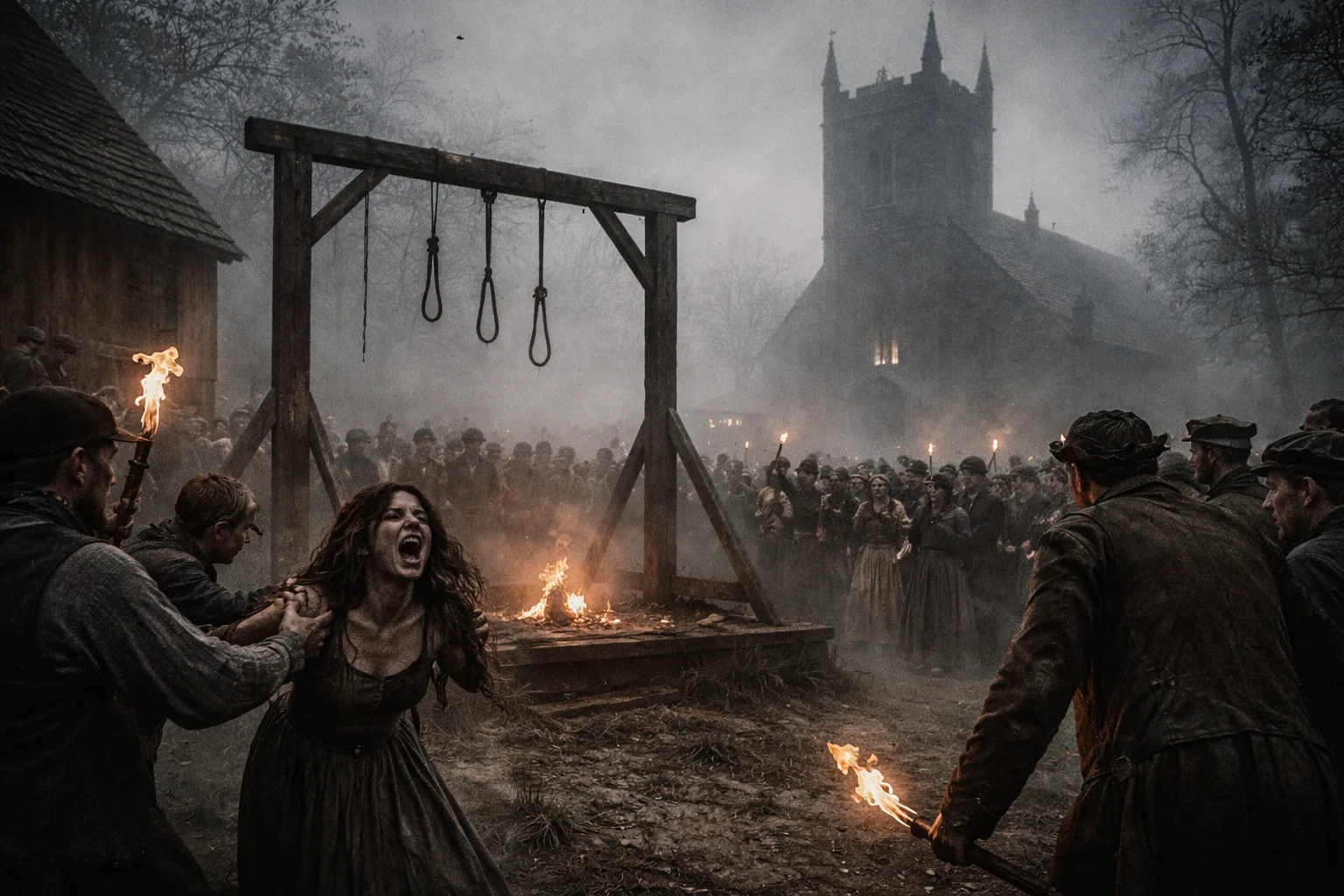
In the late 17th century, Scotland was gripped by a terror that fed on paranoia, religious extremism, and political instability.
This was not superstition at the margins of society. It was state-sanctioned hysteria.
A Nation Already Primed for Madness
Scotland had one of the highest execution rates for alleged witches in Europe. Between the 16th and 18th centuries, an estimated 3,000 to 4,000 people — most of them women — were accused. Torture was legal. Confessions were considered proof, even when extracted through starvation, sleep deprivation, or physical pain.
By the 1680s, the country was exhausted by famine, disease, religious conflict, and political upheaval following the Glorious Revolution. People didn’t need proof of evil. They needed someone to blame.
The Children Who Claimed Possession
In Paisley, several children began exhibiting violent fits, screaming obscenities, convulsing, and accusing neighbors of tormenting them through witchcraft. Ministers declared the children possessed. Physicians were ignored. What followed was a feedback loop of fear: every spasm confirmed Satan’s presence; every accusation produced another suspect.
The accused were ordinary people — servants, widows, the poor, the socially isolated. None had power. None had protection.
Confessions Written in Pain
Those accused were imprisoned and interrogated until they confessed. Some admitted to:
Signing the Devil’s book
Attending midnight sabbaths
Flying through the air
Killing livestock with curses
These confessions were not evidence of guilt. They were evidence of what interrogators demanded to hear.
Seven people were ultimately convicted. In 1697, they were strangled and burned — their bodies destroyed so completely that no remains could be venerated or remembered.
The End of the Witch Hunts — Almost
The Paisley executions are often cited as the last mass witch execution in Western Europe. Skepticism was slowly replacing superstition. The legal system began to question spectral evidence and forced confessions.
But the damage was already done.
Entire communities had been trained to view fear as truth and accusation as justice. Children had learned that attention followed terror. Authorities had learned how easily panic could be weaponized.
What the Panic Really Was
The witch hunts were never about magic.
They were about:
Controlling women
Policing nonconformity
Enforcing religious obedience
Redirecting public anger
Evil wasn’t summoned. It was manufactured — through sermons, courtrooms, and the quiet permission of neighbors who stayed silent.
By January 1690, the panic was reaching its final crescendo. Scotland was close to realizing that the Devil had never been the threat.
The real danger was how eagerly people abandoned reason when fear gave them someone to destroy.