
← Back
05/08/1958 • 7 views

First patient discharged after use of an implanted cardiac pacemaker
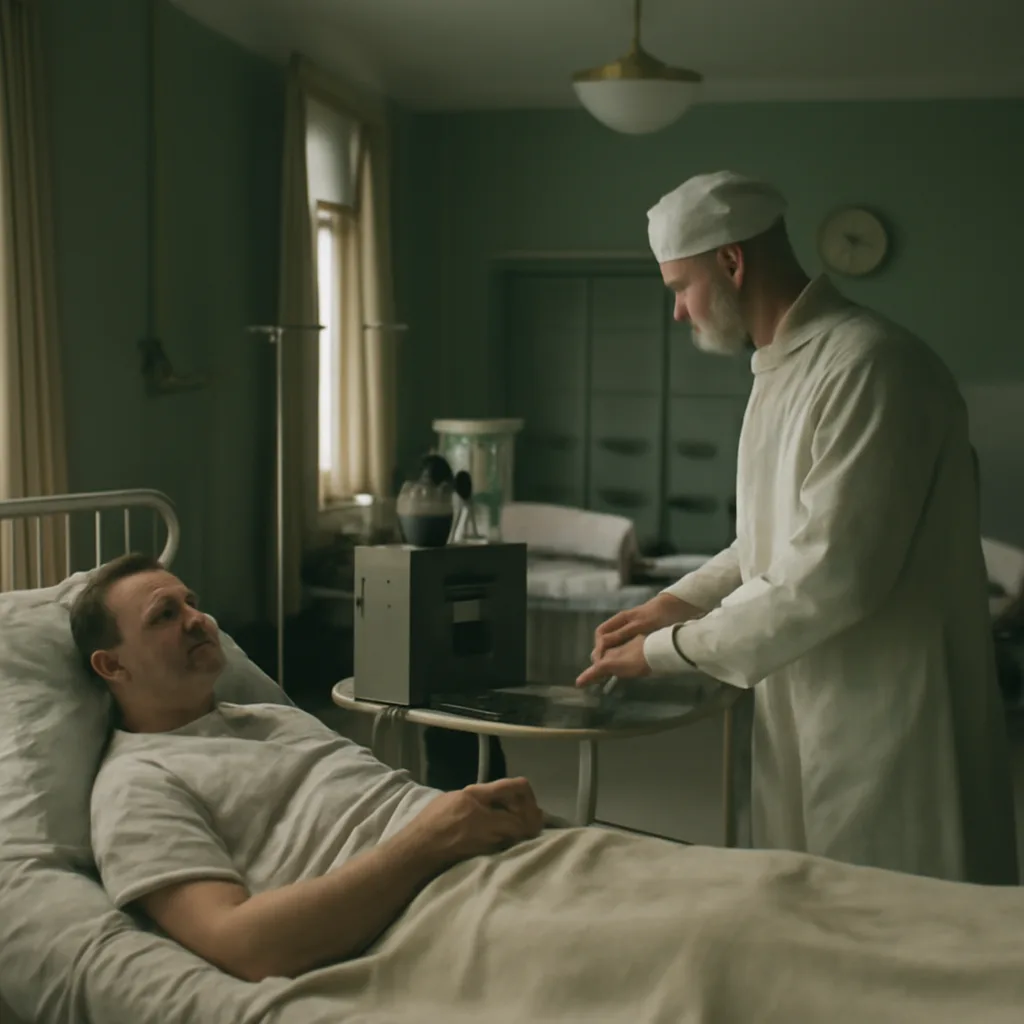
1950s hospital ward with a patient in bed and a clinician attending beside an early medical device on a trolley; vintage medical equipment visible, no identifiable faces.

On May 8, 1958, the first recorded patient to receive an implanted cardiac pacemaker was discharged from hospital after postoperative recovery, marking an early milestone in permanent cardiac pacing.


On May 8, 1958, a patient who had received an implanted cardiac pacemaker was discharged from hospital, widely recorded as the first such discharge following implantation. This event took place during the formative era of cardiac pacing when surgeons and engineers were transitioning from external, temporary devices to implanted systems intended for longer-term management of bradyarrhythmias.

Background
By the 1950s, temporary external pacemakers—external generators connected to the heart by transcutaneous or transvenous leads—were in clinical use for short-term management of severe bradycardia and heart block. The limitations of external pacing (infection risk at electrode sites, patient immobility, and unreliable long-term performance) motivated efforts to develop implantable systems. Early work combined advances in battery and electronics miniaturization with surgical techniques to place electrodes in contact with or within the heart.

The 1958 discharge
Contemporary accounts and later historical reviews identify a patient discharged on May 8, 1958, after receiving an implanted pacemaker. The device implanted in these early cases typically used a rudimentary battery and electronic circuitry housed in a metal can, with leads placed either epicardially or endocardially. Postoperative discharge indicated that the patient had recovered sufficiently from implantation and that the device had performed acceptably in the immediate postoperative period.

Significance
This discharge was significant chiefly as proof of concept: it demonstrated that an implanted pacemaker could sustain a patient outside the hospital environment, even if only temporarily by modern standards. It helped catalyze further research into more reliable leads, longer-lasting power sources (including eventual adoption of lithium-iodide cells), hermetic sealing of generators, and improved surgical techniques. Over the subsequent decades, these incremental advances transformed cardiac pacing from an experimental intervention into a routine, life-prolonging therapy for many forms of conduction disease.

Context and limitations
Historical records from the late 1950s vary in detail, and nomenclature around “first” events can differ depending on criteria (first implant, first survival, first discharge, first long-term success). Some early attempts at internal pacing were performed by multiple teams in different countries, and not all cases were uniformly documented in the medical literature. What is clear is that by May 1958, implantation had advanced to the point that at least one patient with a pacemaker was able to leave the hospital, an outcome that influenced subsequent clinical practice and device development.

Legacy
The early implanted pacemakers of the 1950s were short-lived compared with modern devices, but they set standards for multidisciplinary collaboration among surgeons, cardiologists, and engineers. Improvements in materials, electrode design, battery technology, and manufacturing over the following decades made pacemakers smaller, safer, and far more reliable. Today’s long-term durable cardiac pacing therapies trace their lineage to these early pioneering efforts and to milestones such as the 1958 hospital discharge that demonstrated practical feasibility.

Share this

Email Share on X Facebook Reddit

Did this surprise you?