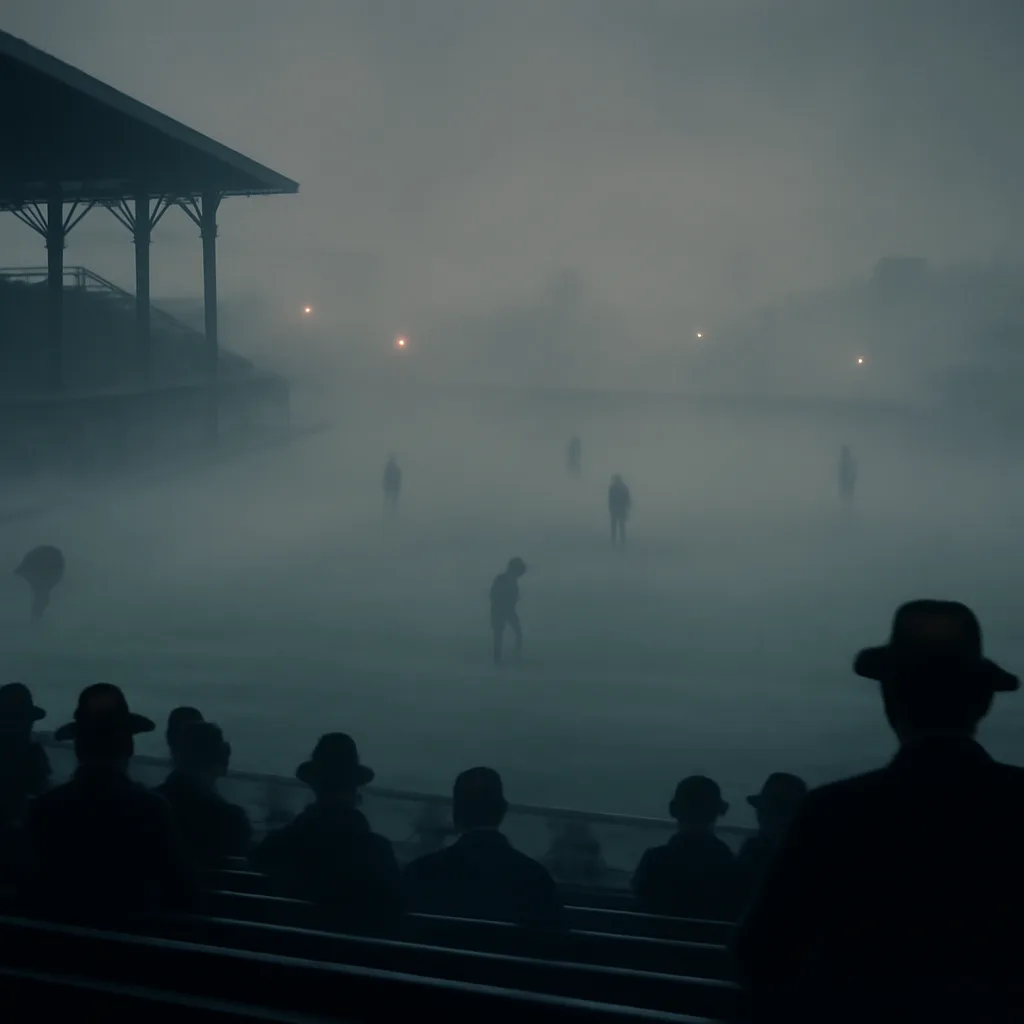
Fog So Thick Players Couldn’t See Bases in 1907 Baseball Game
On April 14, 1907, a major-league baseball game in Brooklyn was played amid such dense fog that players, umpires and spectators had extreme difficulty seeing the bases and the ball, producing one of the era’s most notorious weather-impacted contests.
On April 14, 1907, the Brooklyn Superbas (later known as the Dodgers) faced the New York Giants at Washington Park in Brooklyn under an unusually dense fog that severely impaired visibility. Contemporary newspaper accounts describe a game in which players, umpires and fans struggled to see the ball and the bases; signals and routine plays were frequently obscured. The fog was not a sudden miasma but a persistent atmospheric condition over the stadium that day, likely due to a combination of cool air and moisture coming off the nearby East River.
Umpires attempted to continue the contest despite the poor sightlines. Batters and fielders complained that pop-ups, line drives and base runners were often lost in the haze. Catchers and pitchers had trouble picking up signs and tracking pitches, and outfielders were said to misjudge fly balls. The crowd likewise reported difficulty following play; some spectators gave up trying to watch from the stands. Reports from the period make clear the primary problem was visibility rather than precipitation or a delayed start: the game proceeded, but the play quality and decisiveness were compromised.
At the time, rules and conventions about suspending or postponing play for weather were less standardized than today. Umpires had broad discretion to call games for darkness, rain or other conditions that made play unsafe or unfair. In this instance, officials chose to proceed. The decision drew criticism in press accounts, which argued the fog made accurate officiating and fair competition impossible. Some newspapers noted that certain plays were repeated or disputed because participants could not agree on what had happened.
Accounts from 1907 do not provide detailed play-by-play records comparable to modern box scores for the specific effects of the fog (for example, exact numbers of errors attributed to misjudged balls), but the overall impression conveyed by multiple contemporary reports is consistent: the fog materially affected the game. Photographs of Washington Park and other waterfront ballparks of the era show how susceptible such venues were to banked fog and low clouds that could roll in from the river and harbor.
This game is often mentioned in histories of early baseball weather lore as an example of games played under extreme environmental conditions. It illustrates both the challenges faced by players and officials in an era before stadium lighting and standardized meteorological protocols, and the close relationship between urban ballparks and their local environments. Modern rules give umpires clearer guidance and venue managers more tools (artificial lighting, better scheduling, weather monitoring) to avoid similar scenarios; in 1907, teams and officials had to make on-the-spot judgments that sometimes left players and fans disgruntled.
Because reporting standards and record-keeping differed from today’s practices, some specific details about individual plays and disagreements during the April 14 game remain imprecise or disputed across sources. What is clear from contemporary coverage is that the fog was thick enough to interfere visibly with play and that the game stands in historical memory as a notable example of weather affecting early 20th-century baseball.