
02/06/1937 • 6 views
Investigation Opens into the Hindenburg Disaster
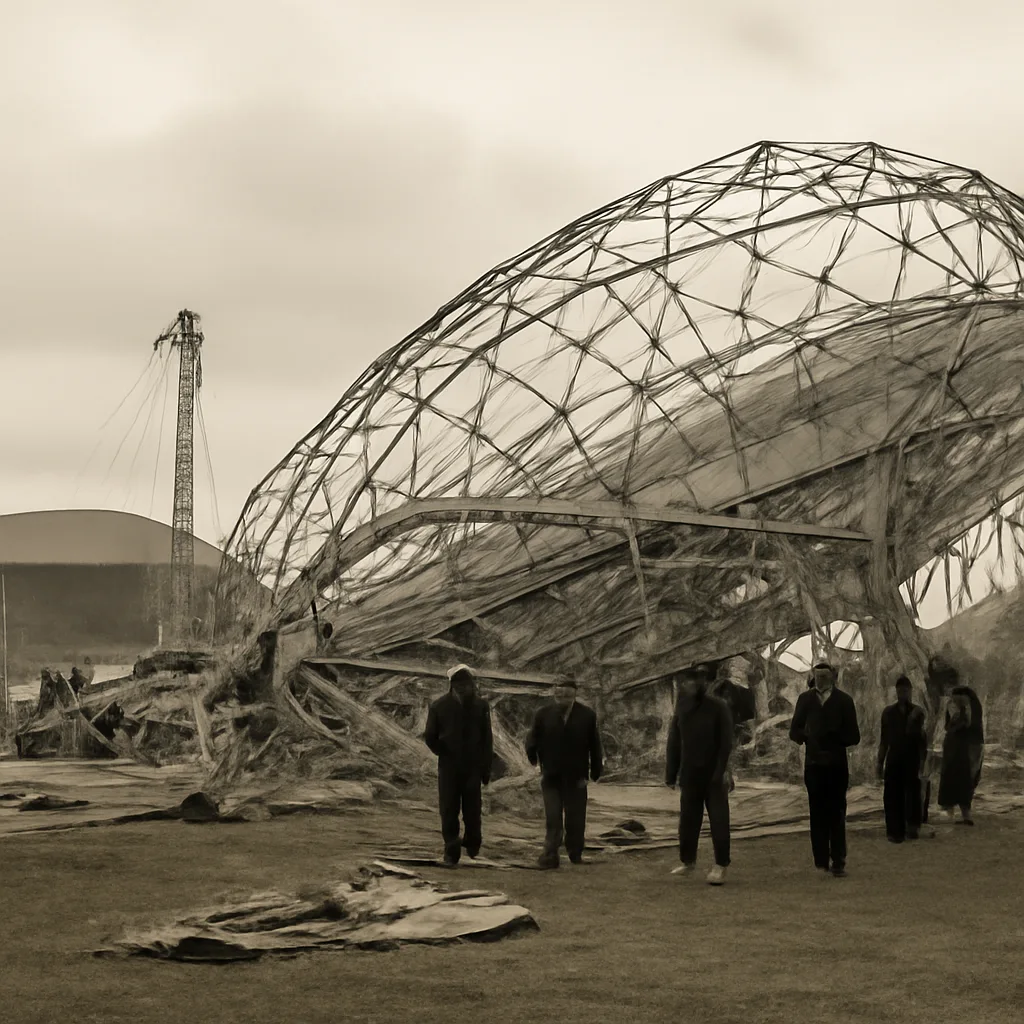
On February 6, 1937, U.S. and German authorities begin formal inquiries into the destruction of the German airship LZ 129 Hindenburg at Lakehurst, seeking causes amid conflicting eyewitness accounts and technical theories.
Scope and participants
The principal investigative body in the United States was the Bureau of Air Commerce (a predecessor agency of the Civil Aeronautics Authority), working alongside the U.S. Navy, which operated the Lakehurst facility. German authorities and the airship’s manufacturer, Luftschiffbau Zeppelin, were also involved to varying degrees, providing technical data and personnel. Investigators examined the wreckage, interviewed surviving crew and passengers, collected eyewitness statements from ground crew and civilian observers, and reviewed maintenance and operational records.
Evidence and technical issues
Key physical evidence included charred and torn fabric, structural components, gas cells, and remains of electrical and mooring equipment. Investigators focused on how the hydrogen-filled ship ignited and how rapidly the fire spread. Central technical issues under scrutiny were the flammability of the materials used in the ship’s outer cover and internal structure, the presence and behavior of hydrogen gas, the ship’s electrical and static-discharge systems, fueling and venting procedures, and potential mechanical failures during approach and mooring.
Eyewitness accounts and competing theories
Eyewitness testimony varied: some witnesses reported a sudden flare near the tail before the fire engulfed the ship; others recalled a softer crack or a smell of burning before flame spread. These divergent observations contributed to several competing hypotheses. One leading theory considered by investigators was that a static discharge ignited accumulated hydrogen leaking from a gas cell. Another hypothesis proposed a spark from the ship’s electrical system or from ground equipment. A third line of inquiry examined whether a smear or contamination on the outer covering—possibly including flammable compounds used in maintenance—might have accelerated flame spread.
Methodology and limitations
Investigators employed forensic examination of wreckage, chemical analysis of fabric samples, metallurgical inspection of fittings and wires, and reconstructions of the ship’s final minutes based on crew logs and instrumentation. However, the intensity of the conflagration destroyed much of the airship’s forward hydrogen cells and significant portions of the structure, limiting direct physical evidence. Moreover, the novelty and complexity of large rigid airship technology meant that investigators relied on a mix of laboratory tests, expert judgment, and interpretation of sometimes-contradictory eyewitness reports.
Public and diplomatic context
The inquiry unfolded under substantial public scrutiny and international diplomatic sensitivity. The Hindenburg was a high-profile German vessel, and the disaster had immediate implications for commercial airship travel and transatlantic aviation relations. Both U.S. and German stakeholders had reasons to emphasize or de-emphasize particular findings: safety regulators sought lessons for preventing similar catastrophes, while manufacturers and airline operators were attentive to potential legal and financial consequences.
Outcome and historical note
The initial phase of investigations starting February 6 brought together technical analysis and testimonial record-gathering that would inform subsequent reports. Over time, the evidence and expert assessments led to conclusions that emphasized hydrogen ignition and rapid fuel-driven fire spread, while debates over specific ignition mechanisms persisted. The Hindenburg disaster and the investigations that followed had lasting effects on public confidence in hydrogen-filled airships and contributed to the end of the era of large passenger rigid airships.
Uncertainties
Some details—particularly the precise ignition source—remained contested among experts and commentators. Where evidence was destroyed by the fire or where eyewitness accounts conflicted, investigators acknowledged limitations and differing interpretations rather than a single unequivocal answer.