
← Back
08/02/2005 • 6 views

Man Walks Away Uninjured After Small Plane Crash
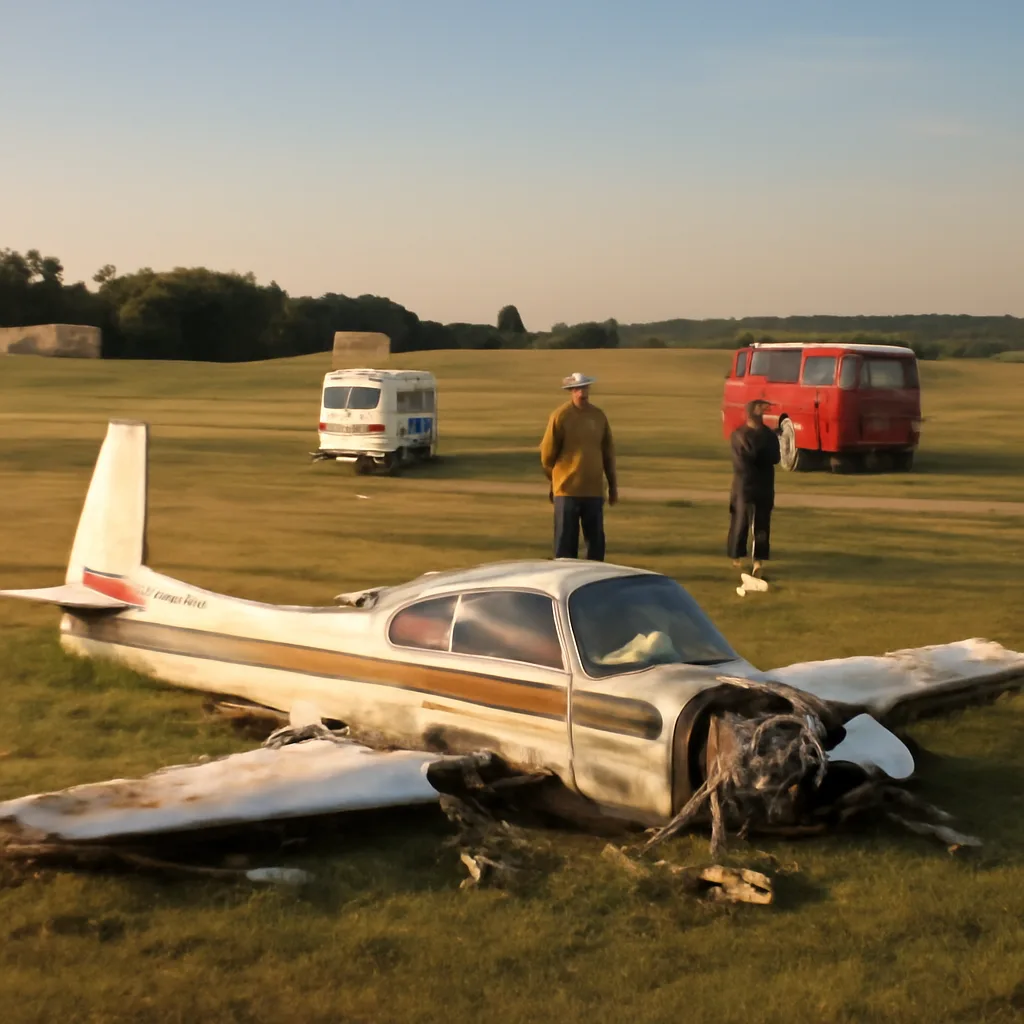
Wreckage of a small single-engine light aircraft on grass near an airstrip, emergency vehicles and responders nearby; no identifiable faces visible.

On August 2, 2005, a single-engine light aircraft crashed during a landing attempt; the pilot survived without serious injury and left the wreckage on foot. Authorities later investigated but reported no life-threatening injuries at the scene.


On August 2, 2005, a single-engine light aircraft was involved in a crash during a landing sequence. The pilot survived and was able to walk away from the wrecked airplane; emergency responders treated him at the scene and transported him to receive further medical evaluation. Local law enforcement and aviation authorities opened an investigation to determine the cause of the accident.

The aircraft, described in contemporaneous reports as a small general aviation plane used for personal or instructional flights, sustained substantial damage on impact and during ensuing ground contact. Witnesses reported seeing the aircraft make an irregular approach before the mishap; however, published accounts vary on the precise flight phase and contributing factors. Weather at the time was reported as a possible factor in some coverage, while mechanical issues or pilot error were also cited as potential causes pending formal findings.

Survivors walking away from small-plane crashes are uncommon but not unheard of in general aviation. Factors that can increase survivability include lower approach speeds, relatively intact cabin structure, use of appropriate restraints (seat belts and, where fitted, shoulder harnesses), and timely response by emergency personnel. In this case, the pilot’s ability to exit the aircraft and seek assistance reduced immediate risks associated with post-crash hazards such as fire or delayed medical complications.

Investigators from the relevant civil aviation authority typically examine such incidents by inspecting the airframe and powerplant, reviewing maintenance records, interviewing witnesses and the pilot, and analyzing any available flight or radio communications. Final determinations—ranging from mechanical failure to human factors or environmental influences—are generally published in an accident report after thorough analysis; those reports can take months to complete. News reports from the days following August 2, 2005, focused on the immediate outcome (the pilot’s survival) and initial statements from local officials while awaiting a detailed investigative conclusion.

The event drew attention because it combined a dramatic aircraft accident with an unexpectedly favorable human outcome. Coverage emphasized the emergency response and the pilot’s condition rather than definitive causes. For readers seeking the final investigative findings, consulting the official accident report filed by the national aviation safety body or the local aviation authority’s database will provide the authoritative conclusion and probable cause determination if and when it was released.

This summary avoids placing unverified details into the record: specific aircraft make and model, the pilot’s identity, and the formal investigative conclusion were either not consistently reported in initial news items or were reserved for the official accident report. Those seeking more granular or legally precise information should refer to contemporaneous local news archives and the civil aviation authority’s published accident documentation for August 2005.

Share this

Email Share on X Facebook Reddit

Did this surprise you?