
01/03/1925 • 6 views
Mussolini Moves to Silence Parliament, Marks End of Italy's Liberal Era
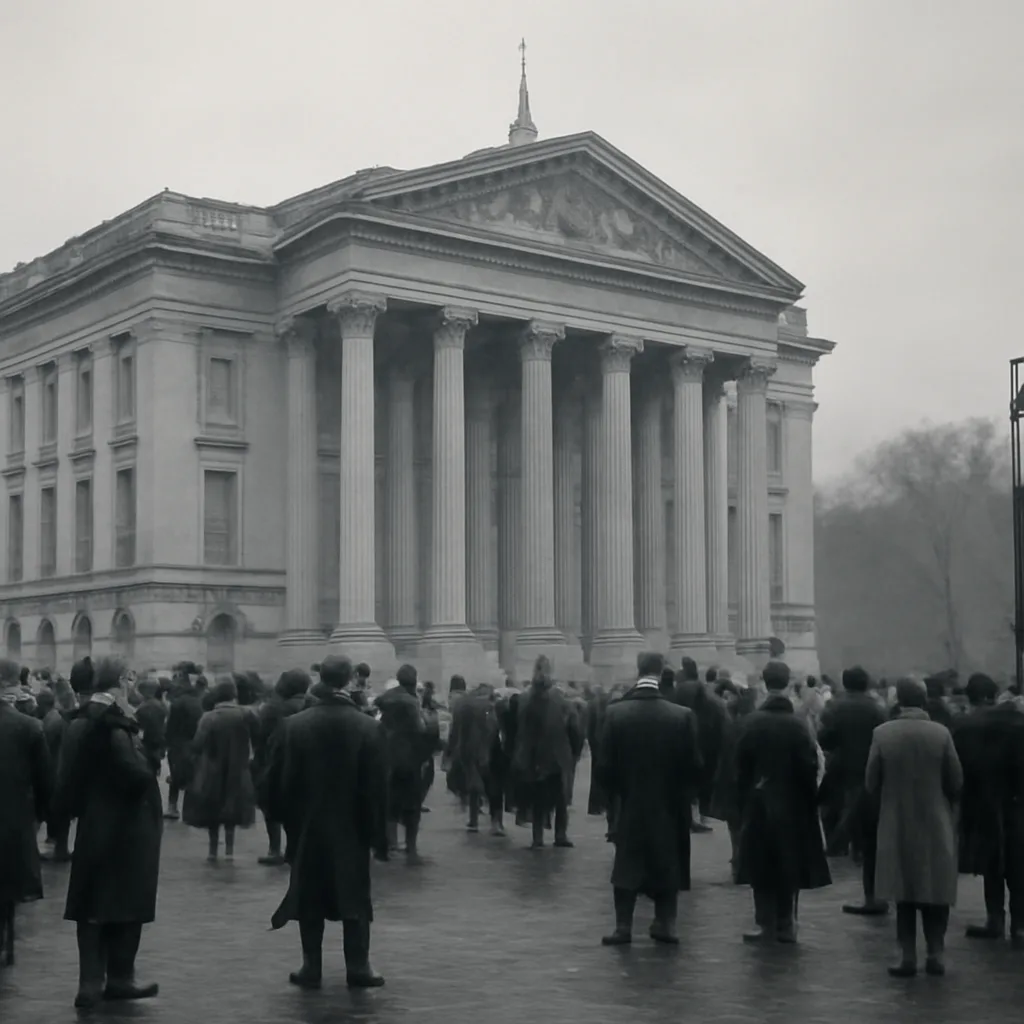
On January 3, 1925, Benito Mussolini announced measures that effectively dissolved parliamentary opposition and signaled the beginning of his dictatorial rule, ending the fragile parliamentary system established after World War I.
Following the upheavals of World War I and a turbulent postwar period, Italy’s parliamentary system struggled with social unrest, economic problems, and rising political extremism. Benito Mussolini, leader of the National Fascist Party, had been appointed prime minister in October 1922 after the March on Rome. For the next two years his government gradually increased pressure on opponents while retaining the trappings of constitutional rule.
Events of January 3, 1925
On January 3, 1925, in a widely reported speech and subsequent measures, Mussolini took responsibility for the failure to control political violence and signaled a decisive turn toward authoritarian rule. He declared that his government would no longer tolerate parliamentary obstruction and launched a campaign to neutralize political opposition. The period that followed saw the suspension of civil liberties, intensified press censorship, and legal and extralegal actions aimed at dismantling the parliamentary safeguards that had persisted since 1919–1922.
Methods and Measures
Rather than an immediate, formal legal abolition of parliament on that exact date, Mussolini’s move in early January 1925 marked the start of systematic steps that removed effective parliamentary power over government. These included tightening laws on public order, expanding the powers of the executive and the police, purging opposition deputies and officials, and using Fascist-controlled militias and the security apparatus to intimidate and suppress rivals. The government also imposed strict controls on newspapers and political associations, undermining independent debate in the legislature.
Consequences
The January 1925 turn accelerated the gradual transformation of Italy from a constitutional monarchy with a parliamentary system into a one-party dictatorship centered on Mussolini. Over the ensuing years, electoral laws, party regulations, and government decrees reduced multiparty competition, and by the late 1920s the Chamber of Deputies had become a largely symbolic body. Political pluralism and many civil liberties were effectively ended, paving the way for full Fascist consolidation of power.
Historical interpretation
Historians treat January 1925 as a pivotal moment rather than a single legal act of dissolution: it represents the point at which Mussolini publicly embraced authoritarian methods and moved openly to neutralize parliamentary opposition. Some contemporary and later observers note that constitutional institutions were not abolished overnight; instead, legal changes, intimidation, and administrative measures progressively rendered parliament powerless. Debates among scholars focus on the timing and mechanisms of this transformation, but most agree that the early months of 1925 marked the decisive shift toward dictatorship.
Legacy
The events of January 3, 1925, are remembered as the moment Italy’s fragile experiment with postwar parliamentary democracy gave way to authoritarian rule. The dismantling of parliamentary checks and the suppression of dissent under Mussolini had lasting effects on Italian political life and contributed to the regime’s ability to pursue aggressive domestic and foreign policies through the 1930s.
Sources and verification
This summary synthesizes widely accepted historical interpretations based on primary contemporary records and extensive secondary scholarship on Fascist Italy. Where precise legal steps and dates are debated, the text indicates that January 1925 is best understood as the pivotal turning point initiating the effective end of parliamentary power rather than a single, uncontested legal dissolution.