
11/04/1996 • 5 views
NASA Launches Mars Pathfinder Spacecraft
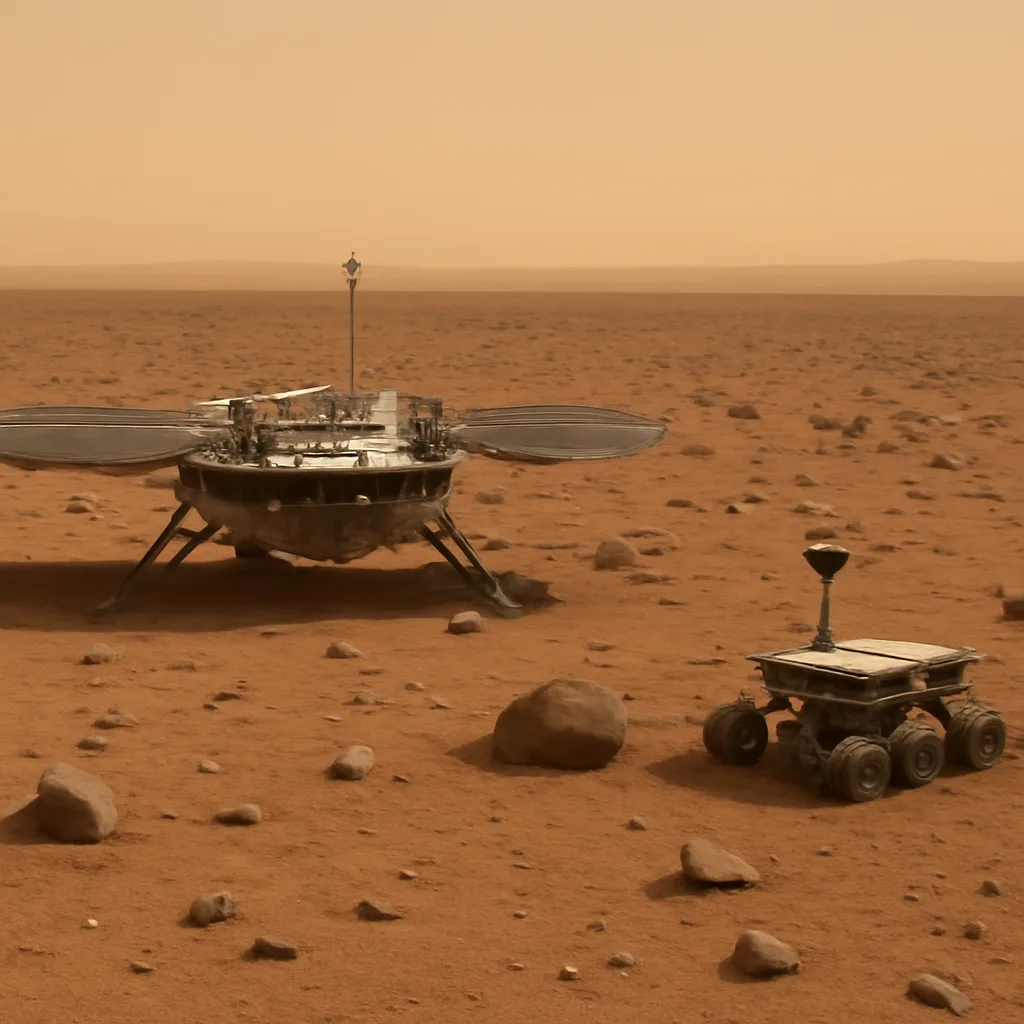
On November 4, 1996, NASA successfully launched the Mars Pathfinder mission—sending an innovative lander and rover system toward Mars to demonstrate low-cost, highly capable surface exploration techniques.
The mission architecture paired an airbag-cushioned lander with a small, six-wheeled rover (later named Sojourner after arrival). Pathfinder’s design emphasized simplicity and redundancy: the lander would enter the Martian atmosphere protected by a heat shield, deploy parachutes, use retro-rockets for final descent, and then inflate airbags to bounce to a halt on the surface. After landing, the airbags would be retracted and petals on the lander would open to expose instruments and the rover.
Pathfinder carried a compact but capable payload including cameras on the lander and rover, instruments for measuring atmospheric and surface properties, and engineering sensors to characterize the landing dynamics and rover performance. The mission’s goals were both scientific—studying Martian rocks, soil, and weather—and technological—validating low-cost, rapid-development methods and testing robotic surface mobility on Mars.
The successful launch on November 4 set Pathfinder on a transit trajectory to Mars that culminated in an August 1997 arrival and landing at Ares Vallis, a site chosen for its relatively smooth terrain and evidence of past water activity. Upon landing, the mission achieved a dramatic and highly visible success: the lander’s cameras returned panoramic images of the surrounding plains, and the rover deployed and began exploring nearby rocks and soil. The mission returned a large volume of data and many images that captured public and scientific interest.
Mars Pathfinder’s rover Sojourner demonstrated the practicality of direct-teleoperation and semi-autonomous navigation across short distances, returning chemical analyses of rocks and confirming the feasibility of inexpensive surface rovers. Pathfinder’s engineering and science results informed the design of subsequent Mars missions, influencing both rover mobility systems and cost-management approaches used in later programs such as the Mars Exploration Rovers and beyond.
Pathfinder stands as a milestone in Mars exploration: it achieved its technical and scientific objectives while operating on a comparatively modest budget, helped rekindle public enthusiasm for planetary exploration through widely publicized images and data, and proved key technologies that shaped future robotic exploration of Mars. Historical accounts note Pathfinder’s role in shifting NASA toward more frequent, focused missions and demonstrating that valuable science could be obtained with streamlined development and innovative landing techniques.