
← Back
01/26/1957 • 6 views

Pentagon Declassifies Photos of 1957 Nuclear Fallout Victims
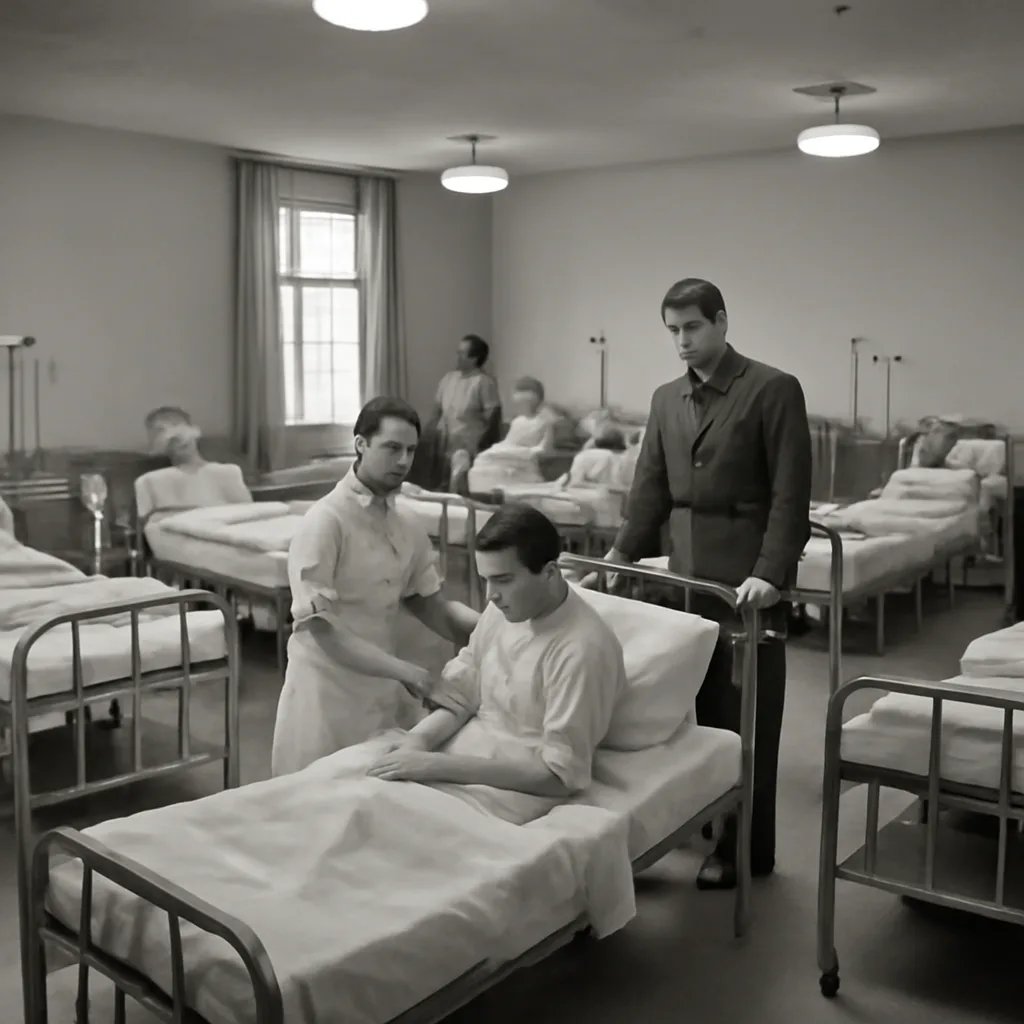
Black-and-white archival hospital ward showing mid-20th-century medical beds and patients receiving treatment; clinicians in period uniforms and monitoring equipment consistent with 1950s medical settings.

The Pentagon released photographs tied to fallout exposure from a January 26, 1957, nuclear test, documenting medical conditions and recovery settings for affected service members and civilians; the images add visual evidence to previously classified records of Cold War testing.


On January 26, 1957, the United States conducted a nuclear test during the Cold War era; in the decades since, related records have remained partially classified. Recently, the Department of Defense made public a set of photographs showing individuals who sustained injuries or medical conditions associated with fallout exposure from that period. The images, released as part of a broader declassification of historical test-era material, provide visual documentation of clinical diagnoses, treatment environments, and the physical effects attributed by contemporaneous medical staff to radiation and particulate fallout.

Context: During the 1950s, the U.S. conducted atmospheric nuclear tests across several continental and Pacific sites. Medical observers and military investigators routinely documented health effects among service members, contractors, and nearby civilians. At the time, official reports emphasized radiation safety measures and medical monitoring, but many operational details, medical records, and photographic files remained restricted for years for reasons of national security and privacy.

What the photos show: The newly released images include clinical and institutional scenes: patients in hospital beds receiving care; skin and soft-tissue conditions consistent with acute and chronic dermatological reactions noted in period medical reports; monitoring equipment and medical personnel in mid-20th-century clinical dress; and exterior shots of support facilities and vehicles associated with test operations. Captions and accompanying archival notes identify dates, unit designations, and medical unit locations in some cases; in other instances, identifying information has been redacted or remains uncertain.

Significance: Photographic evidence supplements written records by conveying the human and medical dimensions of fallout exposure. For historians, public-health researchers, and affected communities, the images can help corroborate timelines of exposure, document the nature of recorded injuries, and inform ongoing assessments of long-term health outcomes linked to Cold War testing. The release also reflects a growing trend toward transparency in declassifying historical government records related to nuclear testing and its consequences.

Limitations and caution: The photographs alone do not establish causal medical conclusions. Medical diagnoses and attributions of cause in the 1950s were made with the scientific knowledge and diagnostic tools of the era; contemporary researchers may interpret the same images differently. Some image captions and file notes remain incomplete or redacted, and where identification is uncertain the Pentagon has withheld personally identifying details to protect privacy. No new medical evaluations of the photographed individuals have been released alongside the images.

Reactions and next steps: Advocacy groups and historians who have tracked Cold War testing welcomed the release as a step toward fuller public accounting. Records requests and historical research efforts are likely to continue as scholars seek to link photographic evidence with medical files, operation logs, and environmental monitoring data. For affected families and veterans, access to visual documentation may assist in claims processes or in reconstructing personal histories; privacy protections, however, constrain the extent of detail publicly disclosed.

Broader historical frame: The 1950s nuclear testing program remains a subject of ongoing study, encompassing technical, environmental, medical, and ethical questions. Declassified photographs do not close those debates but expand the source base for historical research and public understanding. Scholars caution that photographs must be interpreted alongside contemporaneous reports, peer-reviewed research, and archival material to form reliable conclusions about exposure, causation, and long-term effects.

Share this

Email Share on X Facebook Reddit

Did this surprise you?