
← Back
03/29/1966 • 5 views

The Beatles’ Last Public Concert: Candlestick Park, March 29, 1966
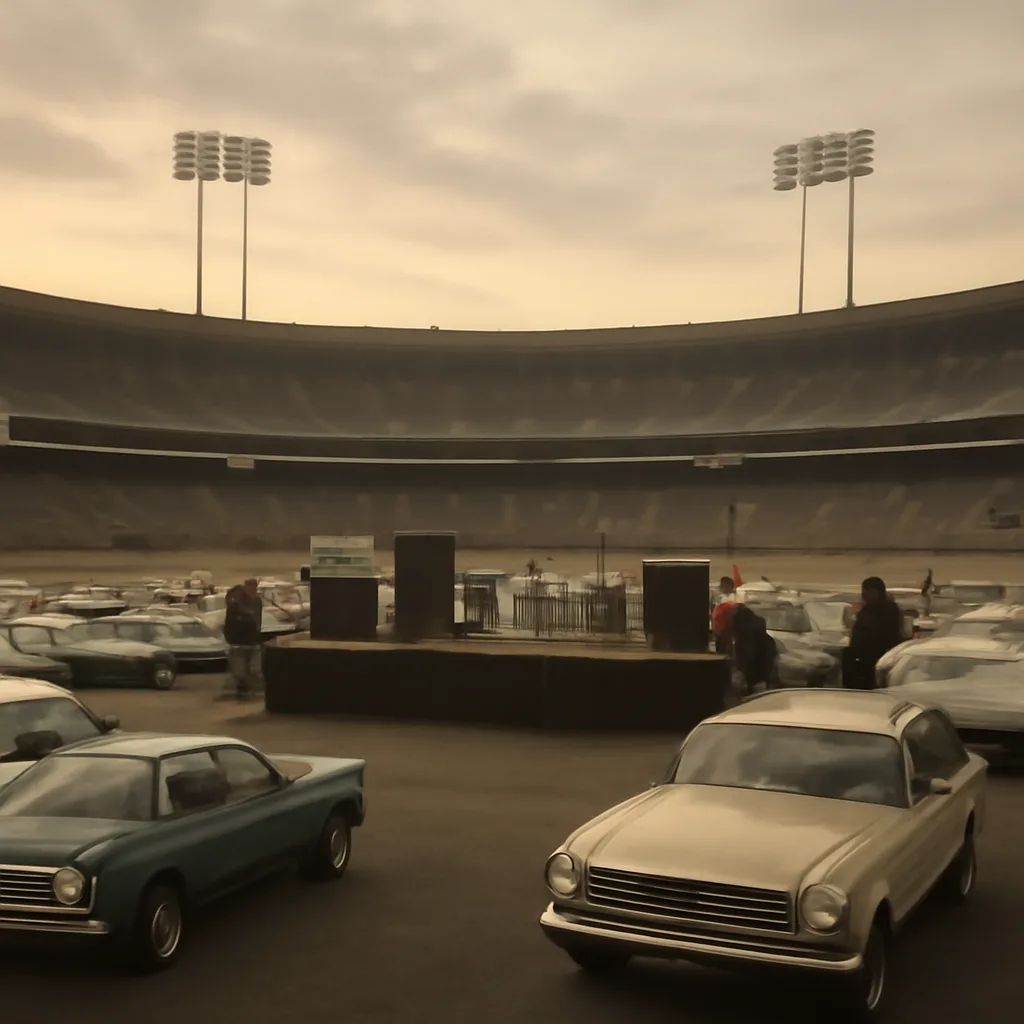
Wide shot of Candlestick Park in 1960s style: a large outdoor stadium with empty stage area, vintage amplifiers and microphone stands, and period-appropriate clothing and cars in the parking lot, evoking a mid-1960s rock concert setting.

On March 29, 1966, The Beatles gave their final official public concert at Candlestick Park in San Francisco, closing a touring era marked by frenzied crowds, short setlists and growing studio focus.


On March 29, 1966, The Beatles performed what is widely recognized as their final official public concert at Candlestick Park in San Francisco. The show marked the end of the band’s touring career, a period that had begun with small-club dates in Liverpool and Hamburg and culminated in stadium appearances before tens of thousands.

Context
By 1966, live performance had become increasingly difficult for the group. Audiences were louder than the amplification technology of the day could handle, making it hard for the band to hear themselves and for audiences to hear subtleties in the music. The Beatles also faced logistical difficulties, aggressive fan behavior, and security concerns. In addition, their music and artistic ambitions were shifting toward studio experimentation—evident in songs they had begun recording and in the directions that would characterize subsequent albums.

The Candlestick Park Concert
The concert took place at Candlestick Park in San Francisco’s Ingleside neighborhood. The Beatles played a short set typical of their 1965–66 tours: a selection of hits and contemporary singles performed in rapid succession. The lineup included songs such as “Twist and Shout,” “She Loves You,” and other crowd favorites from their catalog. Amplification remained limited by the era’s technology; the performance is remembered more for its symbolic significance—the close of a touring chapter—than for audio clarity or lengthy musicianship.

Decision to Stop Touring
The decision to cease touring was influenced by multiple factors. The band members felt constrained by the demands of touring and the limitations it imposed on their evolving studio work. Their increasing interest in studio techniques, multi-layered arrangements, and songs that could not be reproduced live with fidelity led them to prioritize recording. External pressures—security threats, notably John Lennon’s controversial remark in 1966 about more popular than Jesus remarks that provoked hostile responses in parts of the United States, and the physical strain of constant travel—also played parts in the choice to stop public concerts.

Aftermath and Significance
After Candlestick Park, The Beatles continued to make occasional closed or filmed appearances (for example, their 1969 rooftop concert in London, which was an unauthorized public performance specifically for a film project). But March 29, 1966, is generally regarded as the end of their regular, ticketed, mass-audience touring era. Freed from the constraints of live shows, the band concentrated on studio albums—most notably Revolver (1966) and Sgt. Pepper’s Lonely Hearts Club Band (1967)—which explored new production techniques and expanded popular music’s artistic boundaries.

Historical Notes and Sources
Contemporary press accounts, historical biographies, band interviews, concert documentation and scholarly works on rock history consistently identify the Candlestick Park date as The Beatles’ final official public concert. Some details—such as exact setlists or the subjective quality of the performance—vary between accounts, but the concert’s status as the end of the group’s touring era is well established.

Legacy
The end of Beatles touring is a milestone in popular-music history: it signaled a shift in how major rock acts could work, from momentum driven by live appearances to creativity centered in the studio. The decision helped shape the modern album as an artistic statement rather than merely a collection of songs promoted through concerts.

Share this

Email Share on X Facebook Reddit

Did this surprise you?