
04/20/1974 • 6 views
The first streaker disrupts a match at Twickenham, April 1974
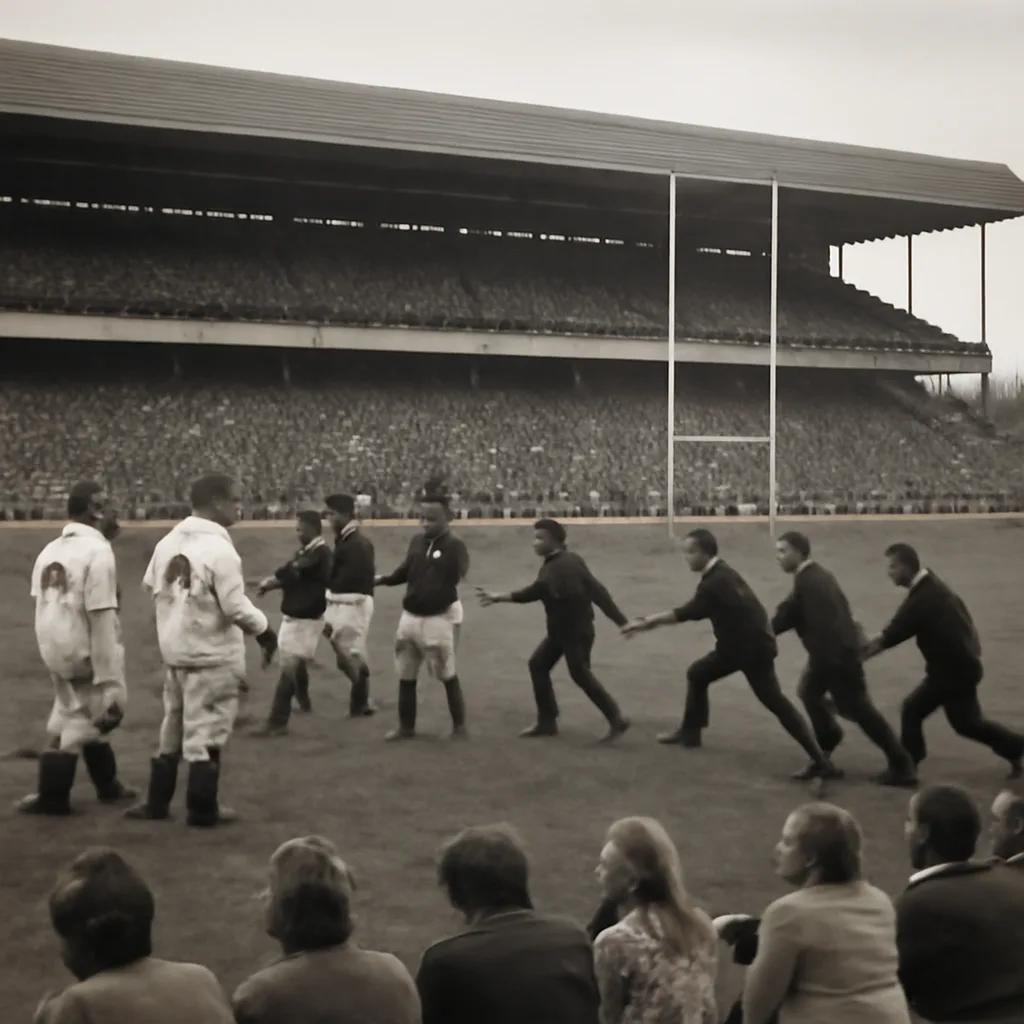
On 20 April 1974 a man ran onto the Twickenham pitch during an England v Wales match, creating one of the earliest recorded instances of streaking at a major sporting event and drawing widespread public and media attention.
The intruder crossed the turf amid play, briefly interrupting the match before being apprehended by stewards. Reports at the time emphasized the novelty and audacity of the act rather than any political motive; it was largely treated as a prank. The match resumed after a short delay. The incident was picked up by national press, which framed it as part of a growing trend of streaking at sporting events during the early 1970s, a phenomenon documented in British and international press coverage of the era.
Streaking as a public phenomenon has earlier antecedents — streak-like acts and public nudity have occurred at various times — but the Twickenham episode is notable for taking place at a high-profile international match and for the extensive media attention it received. The act contributed to changing expectations about crowd behavior at large events and to conversations about stadium security and stewarding that developed through the 1970s and beyond.
Because contemporary reporting focused on the spectacle rather than detailed motive or identity, some specifics remain sparse in public records. Press pieces from April 1974 give consistent accounts of the basic facts — date, venue, and brief interruption — but differ on peripheral details such as the intruder’s background. Later retellings in books and articles about sporting oddities often cite the Twickenham incident as an early and influential example of streaking in Britain.
The episode sits within a decade when similar interruptions occurred at sporting and cultural events internationally, from university campuses to major televised matches, and it helped to popularize the term “streaker” in UK media. While authorities and stadium officials treated such intrusions as breaches of order, public reaction ranged from amusement to disapproval, reflecting broader social debates over public decency and protest methods in the 1970s.
In historical terms, the Twickenham streaking incident is best understood as an emblematic cultural moment rather than a singularly consequential political act. It illustrates how a brief, attention-grabbing disruption at a high-profile venue can reverberate through media coverage and public conversation, shaping perceptions of both spectator behavior and event security. As with many widely reported stunts from the period, precise details about the individual involved remain limited in reliable public sources, but the date, location and basic circumstances are consistently recorded in contemporary accounts.