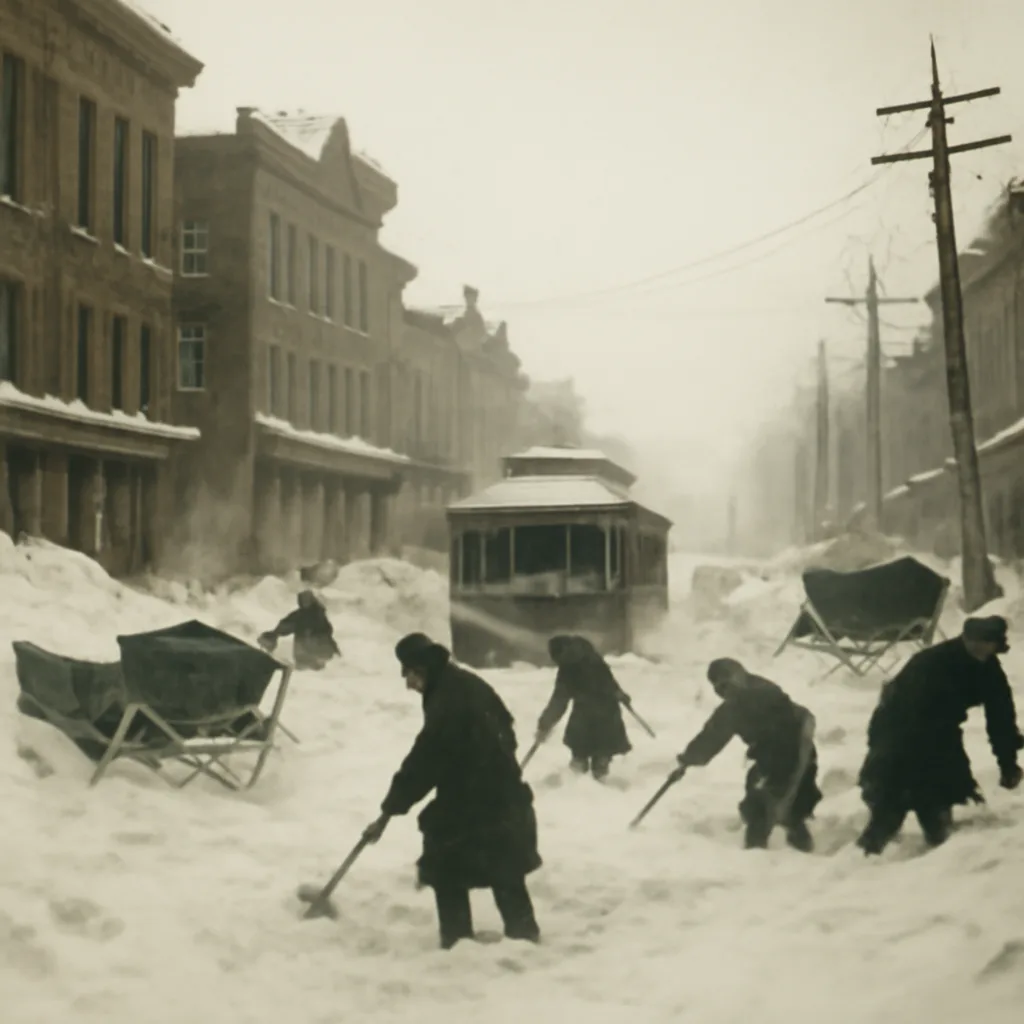
The Great Blizzard of 1888 Immobilizes the U.S. East Coast
From March 11–14, 1888, a massive nor'easter struck the northeastern United States, dumping up to 50 inches of snow, crippling transportation and communications, and killing hundreds in one of the region’s most devastating winter storms.
Overview
The Great Blizzard of 1888 — also called the Great White Hurricane — struck the northeastern United States beginning March 11, 1888, and lasting into March 14. Fueled by a powerful nor'easter, the storm produced extraordinarily heavy snowfall, intense winds, and deep drifts that effectively shut down cities and towns from the mid-Atlantic through New England.
Meteorology and scale
Contemporary reports and later meteorological reconstructions describe a rapidly deepening low-pressure system that drew moist Atlantic air inland and collided with cold continental air. Snowfall totals varied widely by location: some coastal and inland areas reported 20–50 inches, with drifts reported up to 30–40 feet in places where winds piled snow against buildings and fences. Gale- to hurricane-force winds reduced visibility to near zero and created whiteout conditions that made travel nearly impossible.
Impact on transportation and infrastructure
The storm paralyzed rail and road transport. Snow-blocked tracks and broken telegraph lines severed communications, leaving many communities isolated for days. In New York City and other urban centers, streetcars, horse-drawn traffic, and elevated rail services were halted. Ships in harbors were driven ashore or immobilized. The breakdowns exposed the limits of 19th-century infrastructure in extreme weather and prompted later efforts to move critical utilities underground and improve storm preparedness.
Human toll and relief efforts
Estimates of fatalities vary, but contemporary newspapers and later historical accounts attribute hundreds of deaths to the blizzard, caused by exposure, avalanches of snow and ice, collapsed roofs, and accidents during rescue and clearing operations. Rescue efforts relied on local communities, municipal crews, and the limited resources available at the time. Food and fuel shortages occurred in isolated areas. Churches, relief organizations, and neighbors often provided the primary assistance while telegraph and rail services were being restored.
Political and technological consequences
The scale of disruption spurred public debate about urban planning and infrastructure resilience. In New York City, the blizzard highlighted vulnerabilities of aboveground telegraph and cable lines and of surface-level transit. In the following years, municipal leaders and engineers pursued projects to move transit lines and utilities underground and to improve snow-removal equipment and emergency coordination.
Legacy
The Great Blizzard of 1888 remains a touchstone in U.S. weather history for its severity and societal impact. It is frequently cited in studies of historical storms and used as a point of comparison for later severe winter events. While meteorological forecasting was primitive by modern standards, the storm influenced how cities planned for and responded to extreme winter weather.
Sources and limits
This summary is based on contemporary newspaper accounts from March 1888, subsequent historical studies of the storm, and meteorological reconstructions. Specific figures such as snowfall totals and death tolls vary among sources; where numbers differ, historians report ranges rather than a single definitive count.