
07/16/1945 • 4 views
Trinity: First U.S. Atomic Bomb Test in New Mexico, July 16, 1945
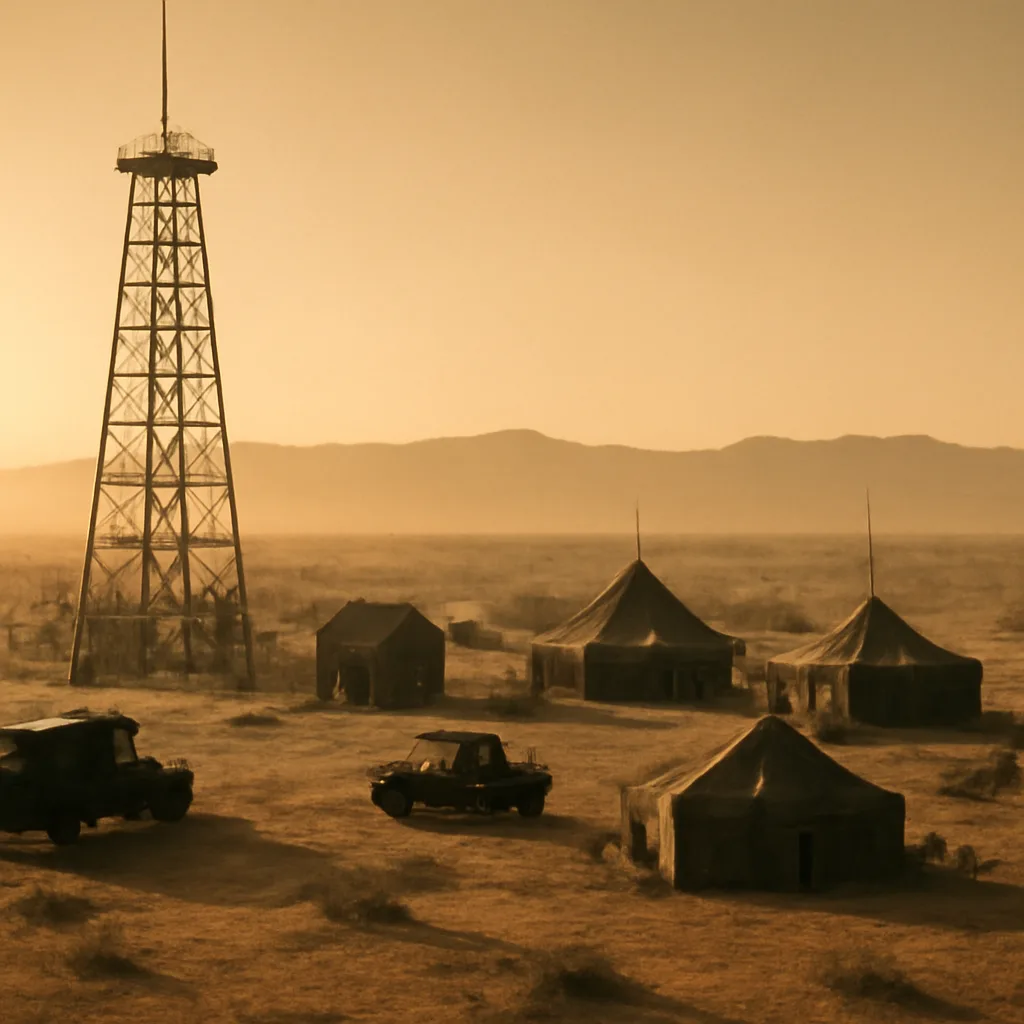
On July 16, 1945, at the Trinity site in New Mexico, the United States conducted the first successful detonation of an atomic bomb, marking a pivotal moment in military technology and the closing chapter of World War II.
Preparations and participants
The Trinity test followed months of laboratory work, engineering, and field tests. The operation involved thousands of people: physicists (including J. Robert Oppenheimer as scientific director), engineers, military officers, and support personnel. The site was selected for its remoteness and relative flatness; facilities were built for instrumentation, observation, and security. In the days before the test, teams installed diagnostic equipment and positioned measurement devices to record blast pressure, thermal radiation, and the radioactive cloud.
The explosion and immediate effects
When the device detonated, observers reported an intense flash of light, a rapidly rising fireball, and a mushroom cloud that rose into the atmosphere. The blast created a crater at ground zero and fused the desert sand into a greenish glassy substance later called trinitite. Instruments measured a yield estimated at roughly 20 kilotons of TNT—sufficient to confirm the weapon’s destructive power and validate the implosion design used for plutonium-based bombs.
Scientific and military significance
Trinity provided empirical confirmation that a plutonium implosion device could achieve a nuclear chain reaction with a military-scale yield. The data gathered—on blast effects, thermal output, and radiation—were used to refine weapon designs and inform military planning. Within weeks of Trinity, U.S. leadership authorized the use of atomic bombs against Japan; two months later, bombs were dropped on Hiroshima and Nagasaki.
Human, ethical, and environmental consequences
Participants and nearby residents later reported varied effects: immediate awe and exhilaration among some scientists and military observers, anxiety and moral reflection among others. The test released radioactive material into the environment; downwind areas received fallout, and concerns about radiation exposure emerged among personnel and local populations. Decades later, studies and compensation programs have addressed some health and environmental impacts, though assessments and claims have been complex and contested.
Legacy and historical context
Trinity is widely regarded as a turning point in modern history: it ushered in the nuclear age, transformed military strategy, and provoked enduring debates over ethics, international security, and arms control. The test’s existence influenced postwar policy, scientific research, and public consciousness about nuclear technology. The Trinity site itself is maintained as a historic landmark, and periodic public access is allowed under management that emphasizes safety and preservation.
Uncertainties and differing perspectives
Historical accounts agree on the date, location, and basic facts of the test, but perspectives differ about motives, decision-making, and long-term consequences. Moral and strategic evaluations remain subjects of scholarly and public debate. Scientific details—such as precise yield estimates—have been refined over time as more data and retrospective analyses became available.
Trinity stands as a concrete, verifiable moment when a new class of weapon was demonstrated, with consequences that extended far beyond the New Mexico desert.