
← Back
11/16/2001 • 5 views

U.S. Links Anthrax Letters to Terrorist Plot After 2001 Attacks
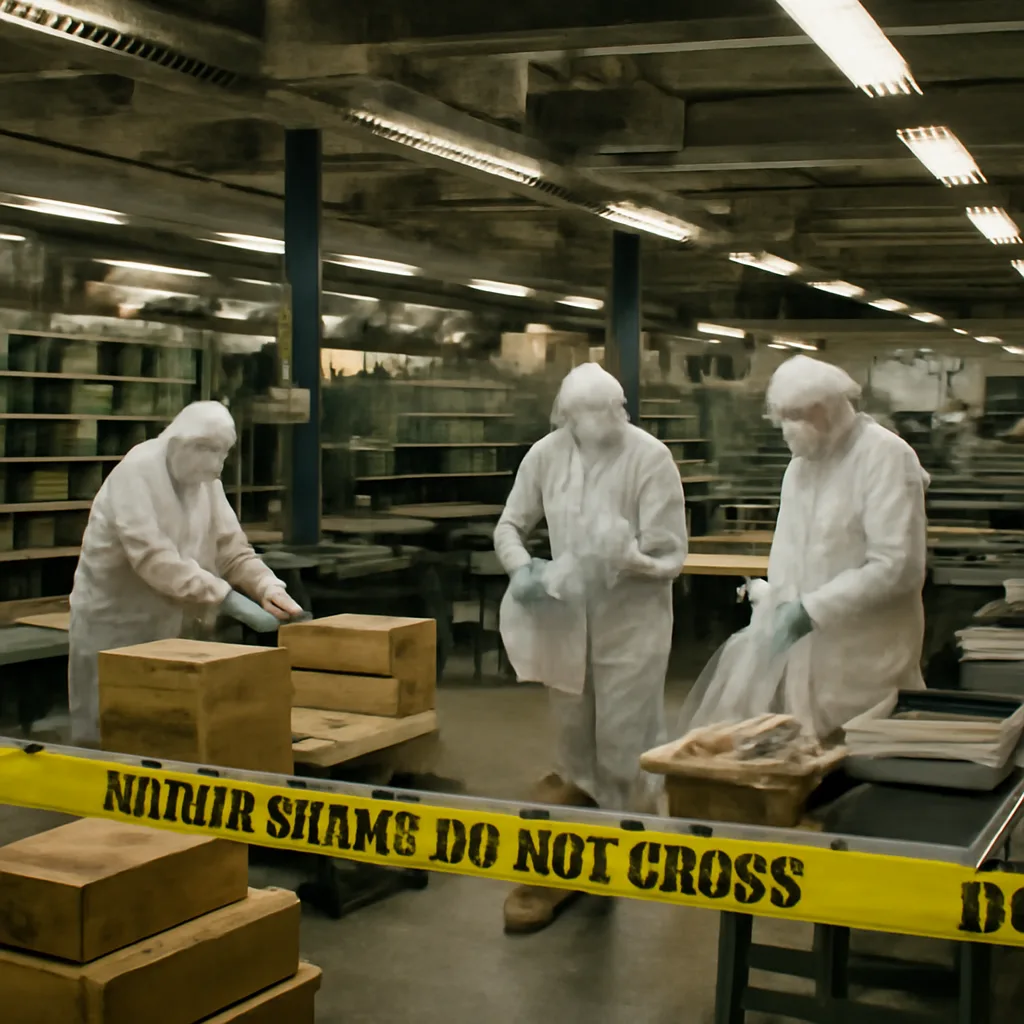
Historic scene of a 2001-era U.S. federal office with personnel in protective gear inspecting a mail-sorting area following anthrax contamination; crates of mail and taped-off sections of the facility are visible.

In November 2001 the U.S. government announced that the anthrax-laced letters mailed after 9/11 were being treated as acts of terrorism, launching a high-profile criminal and public-health investigation into the mailed attacks that sickened and killed several people.


In the weeks after the September 11, 2001, terrorist attacks, the United States confronted a second wave of fear when letters containing Bacillus anthracis spores were mailed to media outlets and two U.S. Senators. On October 4, 2001, the first confirmed anthrax infection from mailed material was reported. By mid-November 2001, federal officials publicly characterized the attacks as acts of terrorism, underscoring the national-security as well as public-health dimensions of the incidents.

The mailed-anthrax episodes occurred from early October through late November 2001. The spores were present in letters addressed to media organizations in New York and Florida and to U.S. Senators in Washington, D.C. The attacks caused five deaths and sickened at least 17 others with inhalational or cutaneous anthrax. Contaminated letters and cross-contaminated facilities prompted widespread decontamination efforts, temporary closures of postal facilities, hospitals, and media offices, and a surge in demand for antibiotics and vaccines.

Investigations involved multiple agencies, including the Federal Bureau of Investigation (FBI), the U.S. Postal Service, the Centers for Disease Control and Prevention (CDC) and other public-health and law-enforcement bodies. Officials conducted forensic analyses of the mailed letters and environmental samples, and pursued traditional criminal investigative techniques alongside scientific testing. The FBI publicly treated the case as a federal terrorism investigation because the letters targeted civilians and public institutions, used a biological agent to cause harm and fear, and had the potential to cause mass casualties.

Public communications were difficult to balance: authorities sought to provide timely guidance on exposures and prophylaxis while limiting panic and protecting investigative leads. The CDC issued guidance on recognizing and treating anthrax, and federal and local health departments managed antibiotic distribution and surveillance for additional cases. The U.S. Postal Service implemented new screening and safety measures at mail-processing centers and distributed information to mail handlers.

The public-health response included diagnosis and treatment of cases, post-exposure antibiotic prophylaxis for potentially exposed individuals, and large-scale environmental sampling and cleanup. Decontamination of affected buildings, including parts of congressional offices and media facilities, proved complex and costly. The episodes also revealed gaps in preparedness for deliberate biological attacks and prompted policy and funding changes to strengthen biodefense, laboratory capacity, and interagency coordination.

The investigation remained a prominent and controversial case for years. In 2008 the FBI announced a conclusion identifying an Army biodefense researcher as the primary suspect, but that finding and the investigative conclusion were met with debate among some scientists, former colleagues, and family members. Legal and scientific reviews, as well as subsequent reporting, questioned aspects of the investigative timeline and the strength of the evidence publicly presented. The case illustrates the technical and legal challenges of attributing biological attacks and the long-term effects such incidents have on public trust, scientific institutions, and policies.

Because some investigative details and assessments have been disputed, historical accounts emphasize confirmed facts—dates of attacks, numbers of cases and deaths, the agencies involved, and the measurable impacts on public health and infrastructure—while noting areas where conclusions have been contested. The 2001 anthrax mailings remain a defining episode in U.S. history of bioterrorism response and policy development.

Share this

Email Share on X Facebook Reddit

Did this surprise you?