
← Back
11/26/1991 • 6 views

Russian Parliament Votes to End the Soviet Union
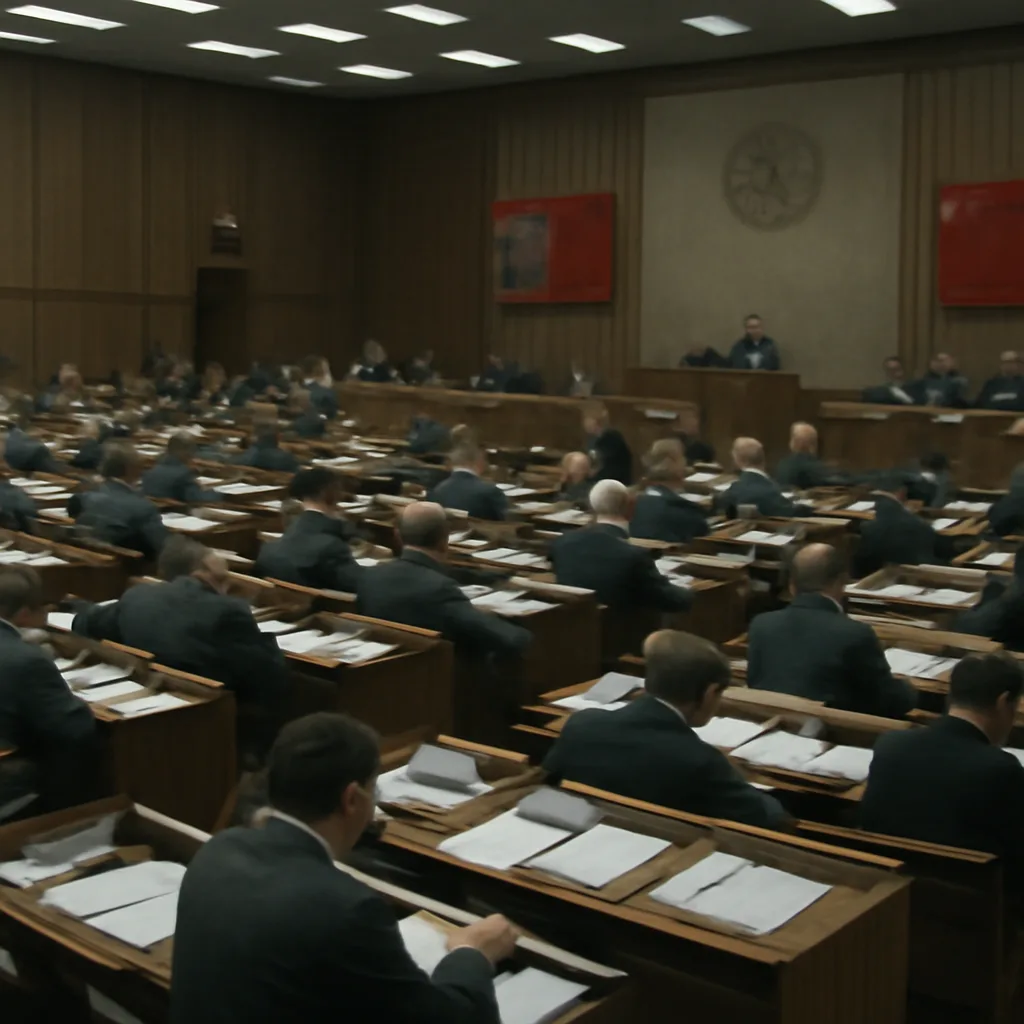
Wide view of a late 1991 Russian parliamentary chamber filled with deputies in Soviet‑era clothing, papers and flags, conveying an intense legislative session addressing the end of the USSR.

On November 26, 1991, the Russian Parliament (Supreme Soviet and Congress of People's Deputies bodies in session) voted to endorse the Belovezh Accords and effectively recognize the dissolution of the USSR, accelerating the end of Soviet institutions across the former union republics.


On 26 November 1991, amid rapid political change across Eastern Europe and the Soviet space, Russia's parliament took a decisive step that helped bring the Union of Soviet Socialist Republics to an end. The Russian legislature moved to recognize and endorse agreements already reached by leaders of several republics, removing legal and political hurdles to the formal cessation of Soviet governance.

Background
By late 1991, the Soviet Union was riven by economic crisis, nationalist movements in constituent republics, and a power struggle between reformers and conservatives. Earlier that month, on 8–10 December 1990 and through 1991, multiple republics had declared varying degrees of sovereignty or independence. In Belarus on 8 December 1991 the leaders of Russia, Ukraine and Belarus met in Belovezhskaya Pushcha and concluded accords declaring that the USSR had ceased to exist and establishing the Commonwealth of Independent States (CIS). Those leaders sought subsequent recognition from their republican legislatures and from Russia’s central institutions.

Parliamentary action
On 26 November, sessions of the Russian parliament (the Congress of People's Deputies and the Supreme Soviet, which were the principal legislative bodies of the Russian Federation within the Soviet framework) voted to endorse steps that effectively dismantled Soviet structures. The votes reflected the Kremlin’s and Russian leadership’s shift away from the Soviet Union toward sovereign Russian institutions and legal acts that would replace union laws. The parliamentary endorsement removed a major legal obstacle to implementing the agreements among republic leaders and signalled Russia’s acceptance of a post‑Soviet political order.

Consequences
The Russian parliament’s approval accelerated the process that led to the formal end of the USSR on 25 December 1991, when Soviet President Mikhail Gorbachev resigned and transferred powers to Russian President Boris Yeltsin. The dissolution produced immediate legal and administrative consequences: central Soviet ministries were dismantled or transferred to successor republics; the Red Army’s command and control across republics began to fracture; and international recognition processes for newly independent states intensified. Economically and socially, the move deepened uncertainties as markets, currencies and welfare systems transitioned from union‑wide arrangements to national frameworks.

Contested legacy
Scholars and contemporaries debate the degree to which parliamentary votes like that of 26 November constituted formal legal closure versus political endorsement of events already unfolding. Some view the parliamentary decision as a necessary domestic ratification that gave legal cover to the leaders’ accords; others see it as largely symbolic, reflecting an irreversible breakdown that had already taken place on the ground. Regardless, the vote is widely regarded as a pivotal moment in Russia’s repudiation of Soviet federal structures and in the wider collapse of the USSR.

Aftermath for Russia and the former Soviet space
Following the dissolution, Russia emerged as the primary successor state, assuming many international obligations and assets while also inheriting complex problems: territorial disputes, control of nuclear weapons, population transfers, and economic collapse. Newly independent republics navigated the diplomatic recognition process and negotiated bilateral arrangements on borders, assets and citizenship. The November parliamentary action is therefore part of a chain of decisions that transformed the political map of Eurasia and set the terms for the post‑Cold War order.

This account summarizes widely documented events and assessments; some legal and procedural details remain subject to historical interpretation and debate among specialists.

Share this

Email Share on X Facebook Reddit

Did this surprise you?