
12/05/1872 • 5 views
Schooner Discovered Adrift Off Atlantic Coast; Crew Missing, Meal Aboard Left Unfinished
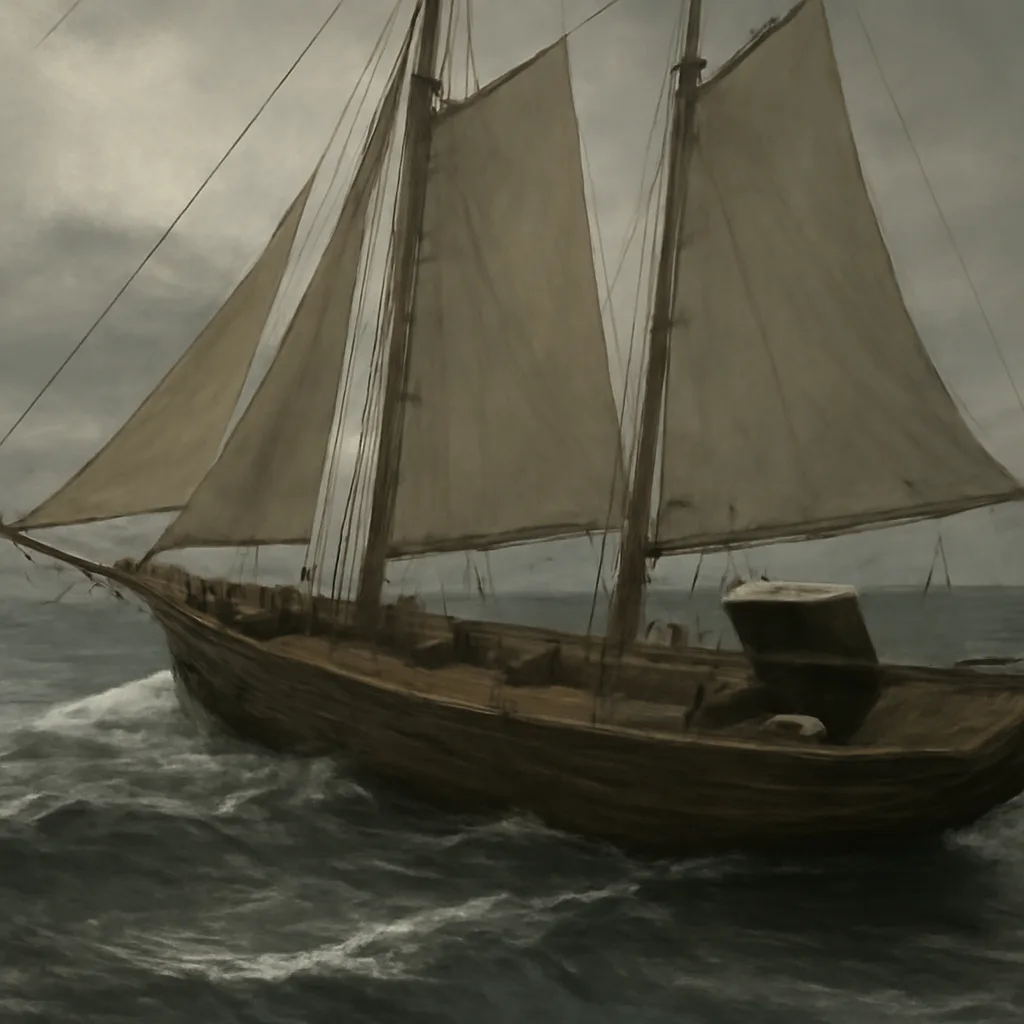
On December 5, 1872, a small merchant schooner was found adrift with its sails partly set and a recent meal still on the table; the crew's disappearance was unexplained and remains a subject of historical inquiry.
Contemporary accounts vary in detail and in the identification of the vessel; some reports describe a coastal merchant schooner engaged in regional trade, while others are less specific. Newspapers of the period relayed immediate speculation ranging from accident to crime to more sensational explanations, but subsequent investigations turned up no definitive cause of the crew’s absence.
Shipboard evidence documented by authorities at the time included personal belongings left aboard, intact navigational instruments, and no clear sign of a struggle. Lifeboats were missing in some accounts and present in others, a discrepancy that reflects the uneven quality of 19th-century reporting and record preservation. Weather records for early December 1872 suggest variable conditions along parts of the Atlantic seaboard, but no singular storm has been conclusively linked to this incident.
The disappearance drew interest from local maritime officials, insurers and the press. Standard procedure—boarding and inspection by nearby vessels or shore authorities—was followed, though forensic practices were rudimentary by modern standards. Without survivors or eyewitnesses, investigators relied on circumstantial evidence and the testimony of crews who discovered the vessel. That evidence did not yield a persuasive, universally accepted explanation.
Historians considering the case note several plausible scenarios consistent with the facts: a sudden evacuation due to perceived but unverified hazard (such as a fire below decks or fear of sinking), a deliberate departure from the ship by the crew (for reasons unknown), or an accident where the crew was separated from the vessel—for example, if a small boat was swamped while attempting to reach shore or another ship. Pirate attack or foul play is less supported by the absence of obvious robbery or violence recorded in surviving reports, though such possibilities were not entirely dismissed at the time.
The episode illustrates limitations of maritime investigation in the 1870s: slow communication, inconsistent documentation, and a tendency for newspapers to mix confirmed facts with conjecture. Over time, the story became one of several 19th-century “mysteries at sea” that attracted public fascination but resisted definitive resolution.
Today the incident is chiefly of historical interest as an example of how seafaring communities coped with unexplained losses and how contemporary reporting shaped durable but sometimes unreliable narratives. No verified account has established the crew’s fate; if any later records—such as logbooks, insurance files, or personal correspondence—have emerged, they have not produced a consensus. As with many maritime disappearances of the period, the most reliable statement is the plain one: a vessel was found largely intact on December 5, 1872, with evidence of a recent meal and no crew aboard, and the reason for their absence remains unknown.