
← Back
12/05/1952 • 6 views

The Great Smog of London, 1952: A Deadly Fog Chokes the City
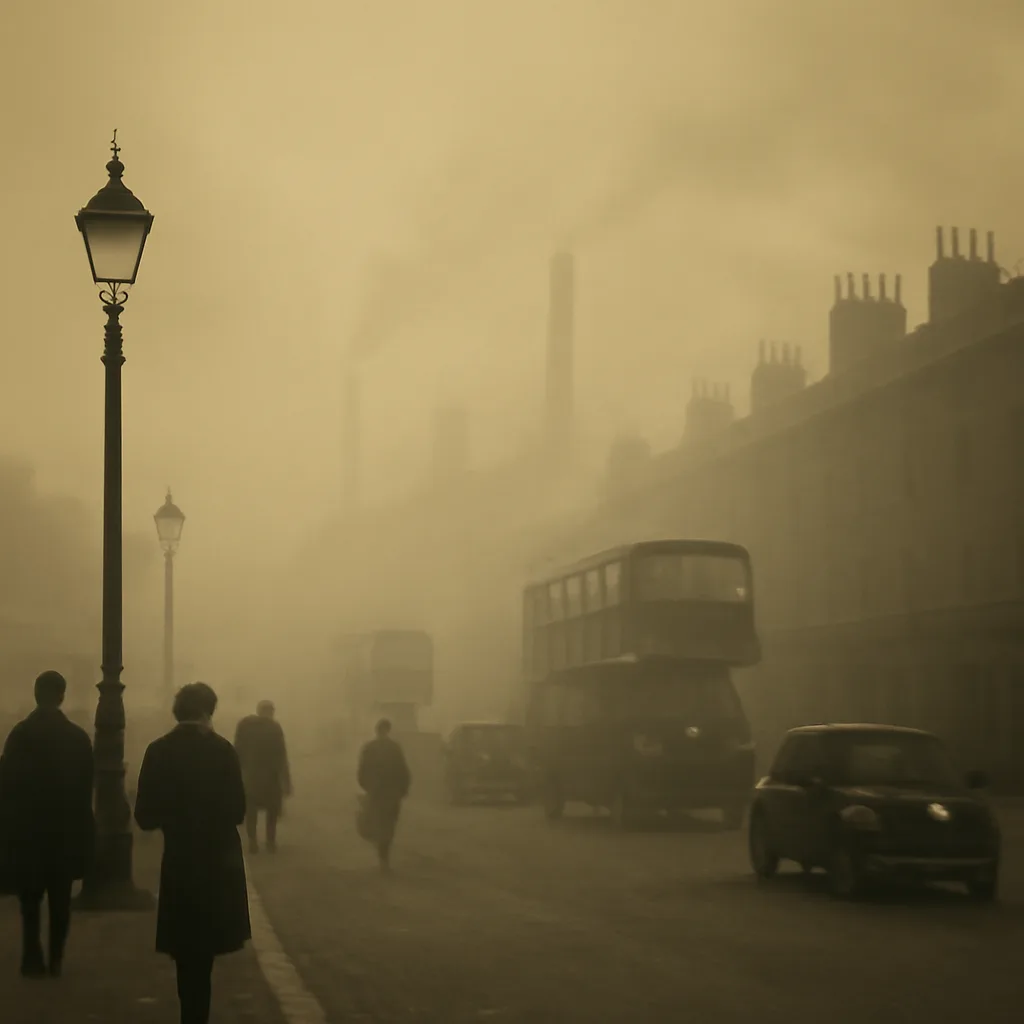
Dense yellow-black smog blanketing mid-20th-century London streets with limited visibility, street lamps glowing through haze and coal-fired chimneys releasing smoke.

In early December 1952 a thick, toxic smog trapped over London for several days, sharply reducing visibility and contributing to thousands of deaths and widespread illness. The disaster exposed the health risks of coal smoke and prompted major changes in British air-pollution policy.


What became known as the Great Smog of London descended on the city on 5 December 1952 and persisted for several days, driven by a combination of cold weather, stagnant air, and heavy domestic and industrial coal burning. A dense mixture of smoke, sulfur dioxide, and suspended particulates formed a yellow-black fog that reduced visibility to just a few metres in many areas, disrupted transport, and penetrated homes and workplaces.

Immediate effects and human cost
Contemporary hospital and coroner records, together with later epidemiological studies, show that the smog caused a sharp rise in respiratory and cardiovascular illness. Estimates of the death toll vary: early official counts recorded around 4,000 excess deaths in the weeks after the event; subsequent long-term studies increased the estimate to about 12,000 excess deaths attributable to the smog and its health consequences. Tens of thousands more suffered acute illnesses and exacerbations of chronic conditions such as bronchitis and emphysema.

Contributing factors
Several interlocking factors made the disaster possible. A high-pressure weather system produced a temperature inversion that trapped pollutants close to the ground. In postwar Britain, many households relied on low-grade coal for heating; power stations and some industries also emitted large quantities of smoke and sulfurous gases. London's street layout and dense population amplified exposure. At the time, there were limited controls on air emissions, and public-health understanding of air-pollution impacts was still developing.

Government response and policy change
The scale of illness and mortality focused public attention and political will. In 1954 Parliament passed the Clean Air Act, which introduced smoke-control areas, relocated power stations away from cities, and promoted smokeless fuels. These measures, along with shifts from coal to cleaner energy sources in later decades, substantially reduced visible smoke in British cities and lowered some pollution-related health risks.

Legacy and ongoing relevance
The Great Smog is widely regarded as a turning point in environmental and public-health policy in the United Kingdom because it linked urban air pollution directly to premature deaths on a large scale. It also stimulated research into the health effects of airborne particles and sulfur compounds, informing later air-quality standards worldwide. While regulatory changes cut smoke pollution from domestic coal, modern urban air quality remains a concern due to vehicle emissions, industrial sources, and secondary pollutants; contemporary assessments use the 1952 smog as a historical lesson in the human costs of poor air-quality management.

Uncertainties and sources
Different studies use varied methods to estimate the death toll and to separate immediate fatalities from later excess mortality, which accounts for the range of published figures. The general sequence of events, meteorological causes, and policy outcomes are well documented in government reports, medical literature, and historical accounts from the period.

The Great Smog stands as a stark example of how weather and emissions can combine to create acute public-health emergencies—and of how such disasters can catalyse lasting policy change.

Share this

Email Share on X Facebook Reddit

Did this surprise you?