
← Back
12/05/1952 • 4 views

The Great Smog of London, 1952: a deadly air disaster
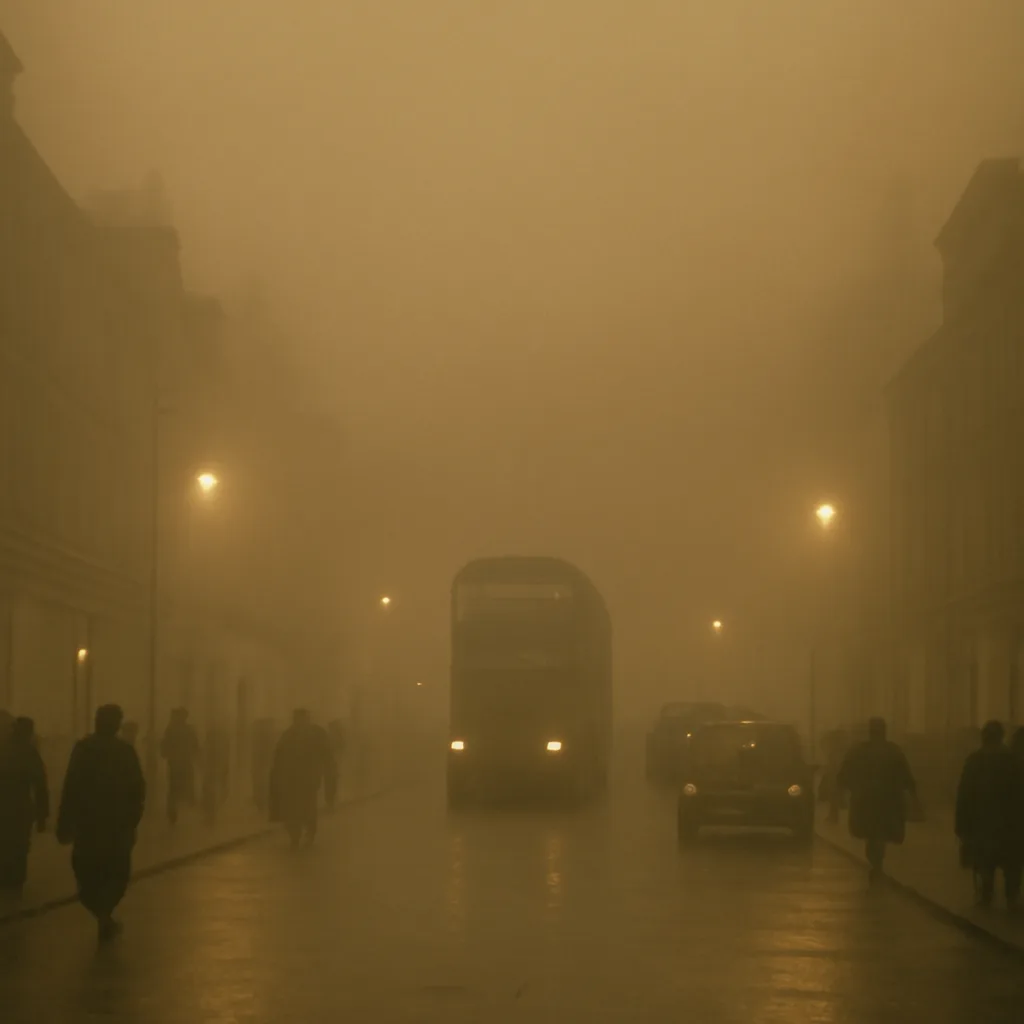
Dense 1950s London street scene shrouded in thick smoke-like smog, with reduced visibility, indistinct figures in period clothing and 1950s vehicles, gas lamps and shopfronts partially obscured.

From December 5–9, 1952, an extreme fog mixed with coal smoke blanketed London, causing acute respiratory and cardiovascular deaths; official tallies and later studies estimate thousands of excess deaths and widespread illness.


Overview
From December 5 to December 9, 1952, London experienced an intense, persistent smog event when a period of cold, stagnant air trapped smoke from widespread domestic coal burning and industrial emissions. The resulting pollutant-laden fog reduced visibility to a few metres in places, disrupted transport and communications, and overwhelmed hospitals and morgues.

Immediate human impact
At the time, London’s public health response recorded several hundred immediate deaths attributed to the smog and many more cases of severe respiratory distress. Contemporary government figures cited roughly 4,000 deaths in the week of the smog; subsequent medical-epidemiological studies in the 1970s and later elevated the estimated excess mortality to around 4,000–12,000 for the winter period, with a commonly cited figure near 12,000 when accounting for both acute and short-term excess deaths linked to the event. Tens of thousands more were reported to have suffered exacerbated respiratory or cardiac illness.

Causes and conditions
The event resulted from a combination of meteorological and human factors. A temperature inversion—a layer of warmer air above cooler air near the surface—trapped pollutants close to the ground. London in the early 1950s relied heavily on low-quality, sulfur-rich coal for domestic heating and for numerous industrial processes; emissions from power stations, factories and vehicle traffic contributed additional particulates and sulfur dioxide. The stagnation of air prevented dispersion, allowing concentrations of smoke, soot and sulfurous gases to build to dangerous levels.

Health mechanisms
Medical assessments linked the smog’s harms to high concentrations of fine particulate matter and sulfur dioxide, which inflame the respiratory tract, exacerbate chronic lung disease and can precipitate heart attacks. Vulnerable groups—older adults, infants, and people with chronic bronchitis, asthma, or cardiovascular disease—were disproportionately affected. Hospitals reported surges in admissions for bronchitis, pneumonia and heart failure; ambulance and mortuary services were strained.

Societal and economic effects
The smog disrupted daily life: road and rail travel slowed or halted, flights were diverted, schools and businesses closed in many areas, and visibility in the West End and East End alike fell drastically. The event drew national attention to urban air pollution as a public-health and economic problem.

Aftermath and policy
Public and political reaction to the crisis contributed directly to policy change. The Clean Air Act 1956—passed by the UK Parliament a few years later—introduced measures to reduce smoke emissions, including smokeless zones and restrictions on domestic coal burning in urban centres, relocation or modification of polluting industry and incentives to switch to cleaner fuels. Over subsequent decades these measures, alongside technological and fuel changes, significantly reduced the frequency of pollution episodes of this magnitude in the UK.

Historical assessment and uncertainty
Estimates of the death toll vary because contemporaneous record-keeping, diagnostic criteria and statistical methods differed from later epidemiological analyses. Early official counts were lower; later retrospective studies using excess-mortality methods produced higher figures. Attribution of all excess deaths to the smog involves assumptions about baseline mortality and the extent to which the event hastened deaths in frail individuals. Nonetheless, consensus among historians and public-health researchers is that the 1952 smog caused a major, acute spike in mortality and illness and served as a pivotal moment in modern air-pollution policy.

Legacy
The Great Smog remains a widely cited example of the human health consequences of air pollution and of how environmental disasters can drive legislative and technological change. It shaped public awareness of urban air quality and influenced clean-air policy both within the UK and internationally.

Share this

Email Share on X Facebook Reddit

Did this surprise you?