The 1938 Orson Welles Broadcast and a Wave of Mass Perception
On October 30, 1938, Orson Welles’s radio adaptation of H. G. Wells’s The War of the Worlds prompted widespread reports of panic and belief in an actual Martian invasion—an episode long cited as an example of mass hallucination and media influence, though the extent of the panic remains debated.
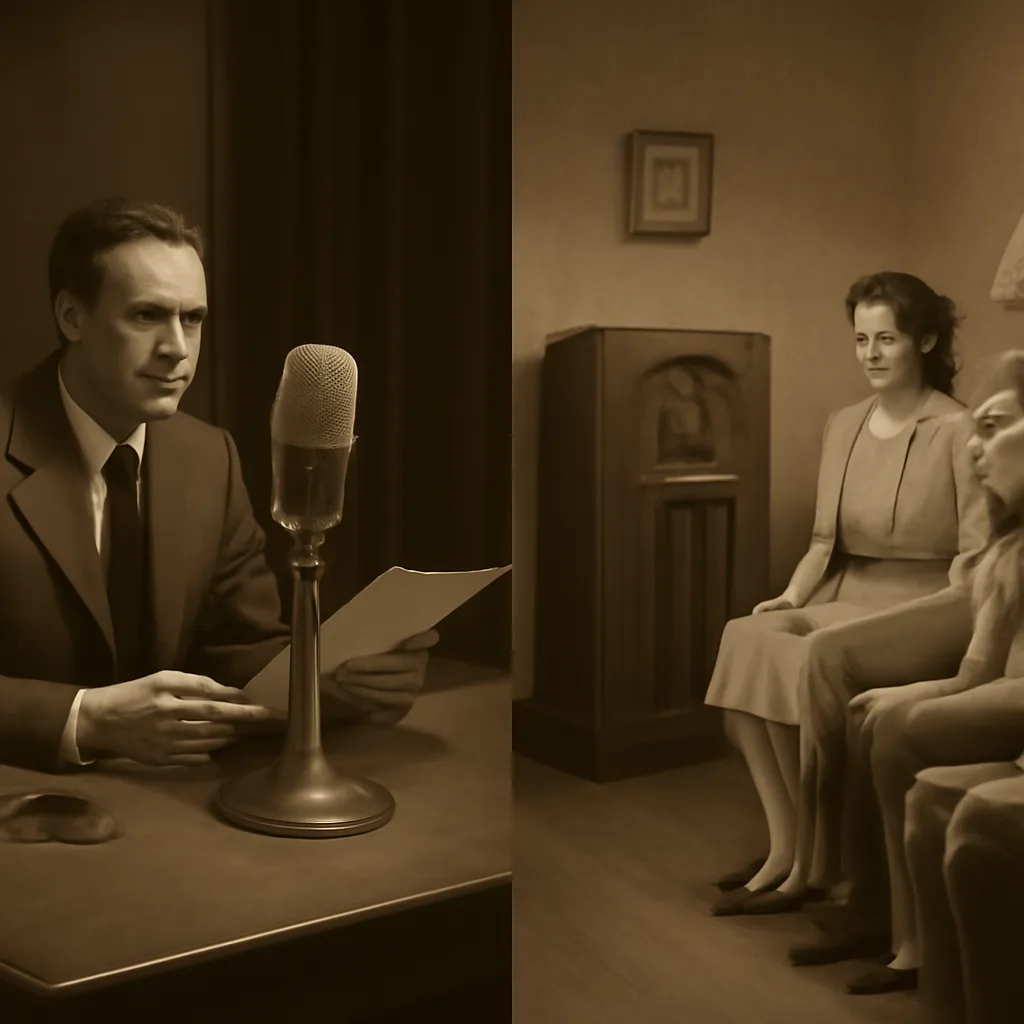
On the evening of October 30, 1938, the CBS radio program Mercury Theatre on the Air, directed and narrated by Orson Welles, dramatized H. G. Wells’s novel The War of the Worlds in a realistic news-bulletin format. The broadcast interspersed dramatic scenes with simulated news updates, including reports of meteor-like objects and an alleged invasion. Because radio was a dominant mass medium and many listeners tuned in late, contemporary accounts described listeners who believed an actual invasion was underway and who reacted with fear.
Newspapers the next day ran dramatic headlines about mass hysteria, traffic congestion, and frantic phone calls to police and newspapers. The scale of the panic reported by many newspapers—stories of people fleeing homes, rioting, and widespread surrender—helped solidify the episode in public memory as a quintessential case of mass hallucination or mass psychogenic response driven by media. Radio and print coverage, along with Welles’s later fame, amplified the narrative.
However, historians and media scholars have since questioned the scale and character of the alleged panic. Subsequent research indicates that newspapers, which viewed radio as a commercial competitor, had incentives to exaggerate the story. Contemporary police records, listener surveys, and internal network reports suggest that while some listeners were frightened and some called authorities, the number of people who truly believed they were witnessing an extraterrestrial invasion was smaller than early reports claimed. Scholars such as Princeton’s Hadley Cantril, whose 1940 study The Invasion from Mars treated the event seriously, argued for significant public reaction, while later researchers have emphasized methodological problems and media amplification.
The episode is therefore important for two overlapping reasons. First, it reveals how realistic media formats can produce intense emotional responses in some audience segments, especially when familiar news conventions are used to convey fictional events. Second, it demonstrates how secondary reporting and competition between media outlets can reshape and magnify an event’s perceived impact. The 1938 broadcast contributed to policy and industry discussions about broadcast responsibility, public communication, and the need for clearer disclaimers in dramatizations.
Today the Orson Welles broadcast is studied in communications, psychology, and cultural history as a complex case: part example of immediate public fear, part example of retrospective exaggeration. It remains a cautionary tale about how collective perception can be shaped by both the content of media and how other media narrate the response. While it is inaccurate to present the incident as unambiguous mass hallucination on the scale once claimed, it nonetheless illustrates real instances of listener distress and the broader social dynamics that can turn isolated reactions into what appears to be mass belief.