12/29/1852 • 10 views
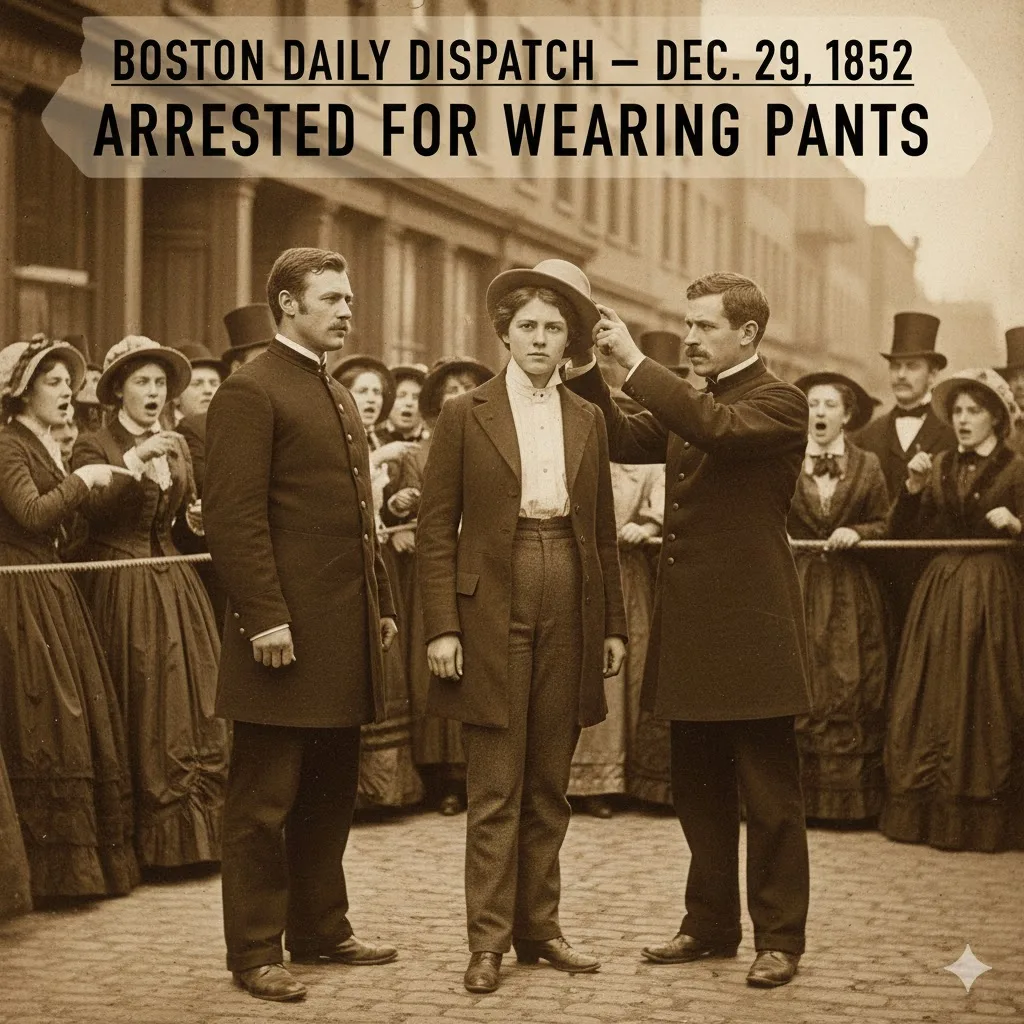
The arrest of Emma Snodgrass
The arrest of Emma Snodgrass on December 29, 1852, is a fascinating example of how "scandalous" fashion was once a legal battlefield.

Who was Emma Snodgrass?
Emma was an 18-year-old woman from a respectable family in New York (her father was reportedly a well-known police captain). She became a 19th-century sensation not for a crime of violence, but for her persistent refusal to wear dresses.
The "Crime" in Boston
On that cold December day in 1852, Emma was spotted wandering around Boston wearing a pair of trousers, a frock coat, and a hat.
The Arrest: Constables took her into custody under the charge of "appearing in public in male attire."
The Motive: When questioned, Emma didn't claim a political or "suffragette" motive. She simply stated that she preferred the freedom of movement and the ability to find work that pants provided. She had been working as a clerk in a local store, a job she couldn't have easily secured as a woman in a gown.
The Punishment: Because of her father's status, she was often dealt with leniently—usually "sent home" to New York. However, she was a serial offender. She was arrested multiple times in New York, Albany, and Boston.
The Social Context: "Anti-Bloomer" Fever
Emma’s arrests happened at a peak of cultural anxiety regarding gender roles.
The Bloomer Suit: Just a year earlier, Elizabeth Smith Miller and Amelia Bloomer had introduced "bloomers" (loose trousers gathered at the ankles under a short skirt). Even this modest change was met with vicious ridicule and harassment.
Police Discretion: Most cities had vague laws against "indecent exposure" or "vagrancy." Police used these broad powers to arrest women like Emma, arguing that dressing as a man was a form of "deception" or "fraud."
The "Pant-alettes" Controversy: Medical experts of the time actually debated whether the weight of heavy Victorian skirts (which could weigh up to 15 pounds) was making women chronically ill, yet the law remained rigid.
A Forgotten Pioneer
Emma Snodgrass eventually disappeared from the headlines, with some accounts suggesting she eventually traveled West, where gender lines were slightly more blurred by the necessity of frontier life. While she didn't set out to be a revolutionary, her "absurd" arrests highlighted the extreme legal control exerted over women's bodies and choices.
It took nearly another century for trousers to become socially acceptable for women in the West.