01/02/1920 • 10 views
The Palmer Raids: A Nation Afraid of Ideas
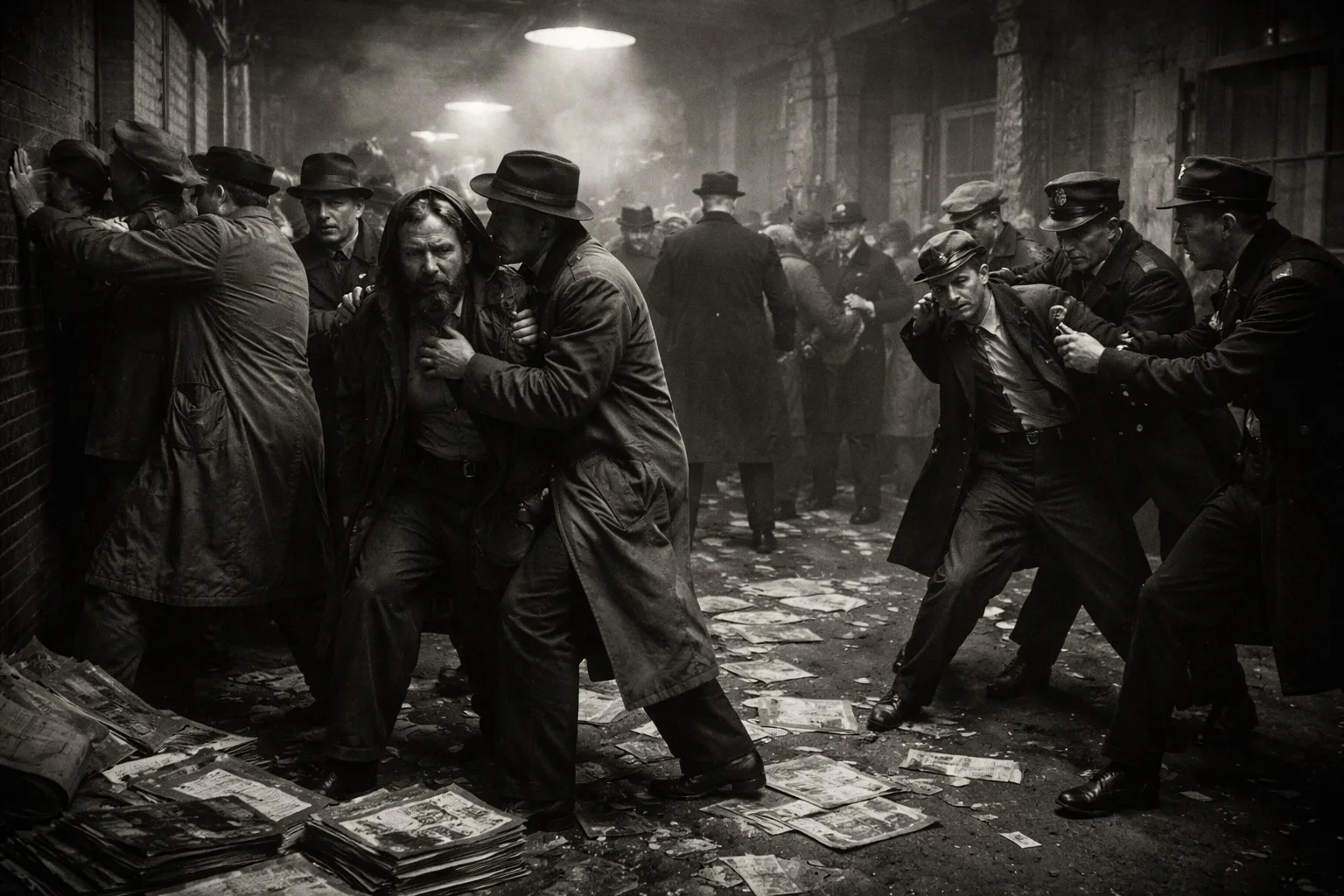
The United States in the late 1910s was exhausted and terrified.

Socialism, anarchism, and communism were no longer abstract theories. They were perceived as infections.
Into this atmosphere stepped Attorney General A. Mitchell Palmer, a man who had already survived an assassination attempt when an anarchist bomb exploded outside his Washington, D.C. home in 1919. The blast shattered windows, injured neighbors, and killed the bomber himself. Palmer was unharmed—but politically transformed.
He became convinced that America was under siege from an invisible enemy living inside its borders.
January 2, 1920: The Raids Begin
On the night of January 2, federal agents launched coordinated raids across more than 30 U.S. cities. They targeted union halls, social clubs, boarding houses, newspapers, and private homes—anywhere radical ideas were suspected of being discussed.
The arrests were indiscriminate.
Over 6,000 people were seized
Many were beaten during arrest
Most were denied access to lawyers
Some were held in overcrowded, unsanitary jails for weeks or months
Many were never formally charged with a crime
The primary offense was belief.
Being an immigrant, attending a labor meeting, owning leftist literature, or speaking a foreign language could be enough to land someone in custody.
The Machinery of Fear
The raids were made possible by a young and ambitious Justice Department official: J. Edgar Hoover. At just 24 years old, Hoover ran the newly formed General Intelligence Division, which compiled massive lists of suspected radicals using informants, mail surveillance, and questionable evidence.
Hoover’s files did not distinguish between violence and dissent.
Pacifists, union organizers, journalists, and political philosophers were all grouped together as existential threats. The legal theory was simple and dangerous: radical ideas would inevitably lead to radical action.
Therefore, suppressing ideas was framed as prevention.
Deportation Without Justice
Hundreds of those arrested were deported, often without fair hearings. One infamous case involved the transport ship USAT Buford, nicknamed “The Soviet Ark,” which carried 249 alleged radicals—including anarchist Emma Goldman—out of the country.
Some deportees had lived in the U.S. for decades. Some barely understood why they were being expelled. Others were sent to nations they had never seen, or to regimes that would imprison or kill them.
Citizenship offered no real protection. Even American-born radicals were jailed, harassed, or driven underground.
Public Applause—and Then Doubt
Initially, the Palmer Raids were popular. Newspapers praised them. Politicians applauded them. Palmer was seen as a defender of American values, and he even positioned himself as a potential presidential candidate.
But cracks soon appeared.
Judges began dismissing cases due to lack of evidence. Lawyers exposed illegal searches, forged warrants, and abuse of prisoners. Journalists started asking why a free country was imprisoning people for opinions rather than actions.
One Justice Department lawyer, Louis F. Post, quietly reviewed deportation cases and overturned hundreds of them. For this, he was accused of being a radical sympathizer himself.
The irony was not lost on history.
Collapse and Legacy
By late 1920, the raids had largely collapsed under legal scrutiny and public criticism. Palmer’s political ambitions failed. The promised revolutionary uprising never materialized.
But the damage was done.
The Palmer Raids established:
The normalization of surveillance on political beliefs
The precedent for guilt by association
The idea that fear could temporarily suspend constitutional rights
They also laid the groundwork for future government overreach—McCarthyism, COINTELPRO, post-9/11, and MAGA using ICE to deport tens of thousands. Surveillance programs all echoed the same logic first tested here.
The Quiet Horror
What makes the Palmer Raids especially disturbing is not just the scale—but the silence.
There were no battlefields.
No formal declarations.
No enemy uniforms.
Just thousands of people disappearing into jails because the government decided that thinking differently was dangerous.
January 2, 1920, was not the day America defended itself from a revolution.
It was the day it proved how easily fear can turn freedom into a suspect.