
← Back
10/30/1938 • 6 views

The 1938 Phantom Radio Panic: First Large-Scale Reported Mass Hallucination?
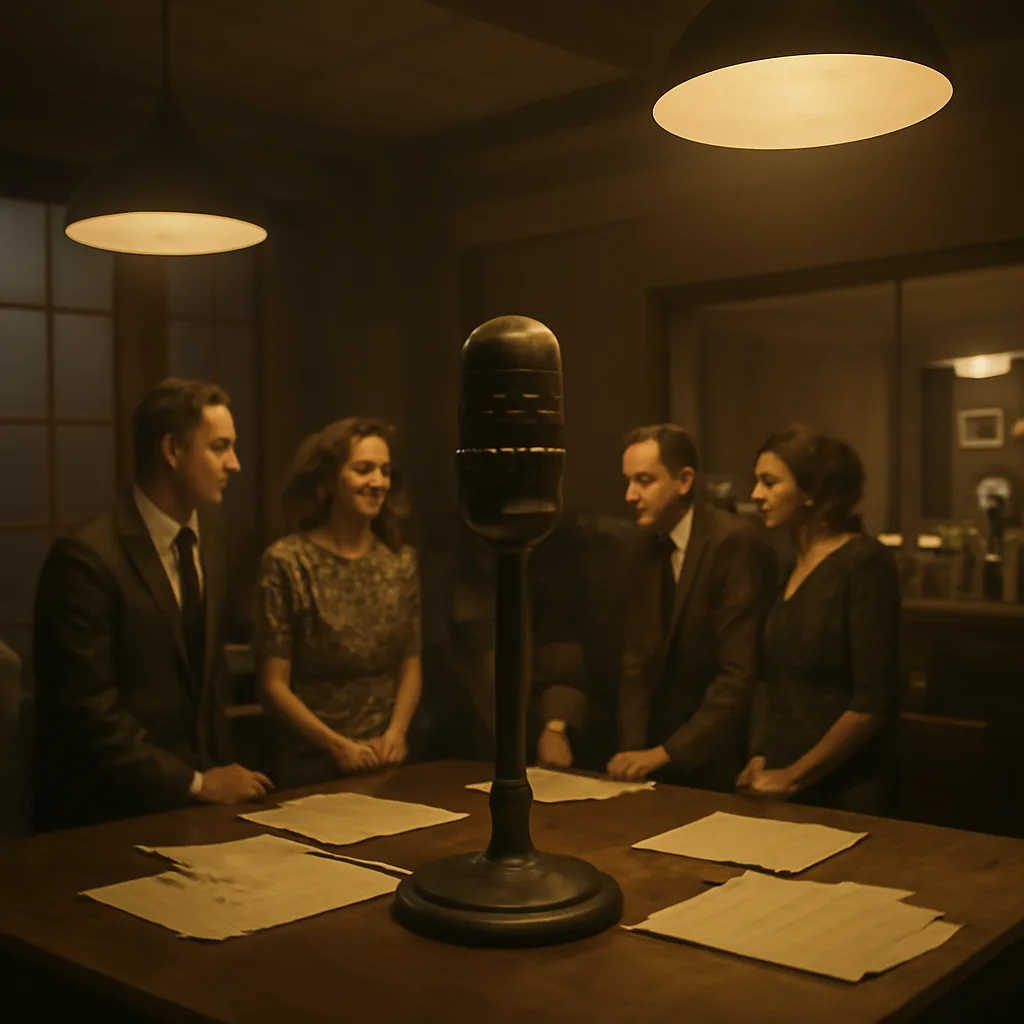
A 1930s radio studio with a microphone, scripts, and actors in period clothing gathered around, with a dimly lit control room and radio equipment visible in the background.

On October 30, 1938, Orson Welles’s radio adaptation of The War of the Worlds prompted widespread reports of panic and supposed mass hallucination—later debated by historians as exaggerated media reaction and social contagion rather than literal shared visions.


On the evening of October 30, 1938, the CBS radio program Mercury Theatre on the Air broadcast an adaptation of H. G. Wells’s The War of the Worlds, directed and narrated by Orson Welles. The program, presented in the style of simulated news bulletins, interrupted musical interludes with reports of a Martian invasion in New Jersey. Within hours newspapers and some local authorities reported that segments of the listening public had panicked: people fled homes, called police in droves, and some claimed to have seen strange lights in the sky or imagined invasion scenes.

Contemporary press accounts depicted the broadcast as triggering a mass hallucination or nationwide panic. Headlines and editorials seized on lurid anecdotes—drivers abandoning cars, people fainting on sidewalks, clergy calling for calm. Many newspaper reports were sensational, and in the immediate aftermath investigators and moral guardians decried the program as irresponsible. Radio regulators and Congress held hearings; Welles and CBS defended the broadcast, noting disclaimers and arguing that any confusion was limited.

Subsequent scholarship has cast doubt on the scale and character of the supposed mass hallucination. Researchers studying archival materials, listener surveys, and police records conclude that although some listeners were frightened and some local incidents occurred, the extent of panic was likely exaggerated by newspapers that sought to discredit radio competition and sell papers. Many communities reported no disturbances at all. Where people reported seeing lights or invasion phenomena, explanations range from misperception of ordinary events (aircraft, searchlights, automobile headlights) to the natural amplification of rumor and fear in tightly connected local networks.

Historians treating the event as an episode of social contagion emphasize psychological and social context. In 1938 the United States was facing economic uncertainty and geopolitical anxiety—newsreels, newspapers, and radio already made threat salient. The program’s realistic format, combined with listeners tuning in late and missing opening announcements, increased the chance of interpretive error. Rather than a literal shared hallucination—that is, a spontaneous, uniform perceptual event arising in multiple people at once—the most plausible accounts describe a patchwork of individual misperceptions, rumor-driven reports, and local panics amplified by national press coverage.

The War of the Worlds broadcast remains an important case study in media effects, mass psychology, and the interaction between reporters and audiences. It illustrates how modern communication technologies can produce rapid spread of fear and how institutional incentives (newspapers competing with radio) can shape public narratives. While some eyewitness claims from 1938 describe vivid sensory experiences, the best-supported historical interpretation treats these as ordinary perceptual errors and socially mediated reports rather than evidence of a previously undocumented mass hallucination phenomenon.

The episode prompted broadcasters to adopt more explicit disclaimers and spurred regulatory attention to broadcast practices. It also entered cultural memory as a cautionary tale about the persuasive power of media. Scholars continue to revisit the event, parsing contemporary documents to separate documented incidents from later embellishment. The 1938 broadcast thus stands at the intersection of media history and social psychology: an instance of real local alarm and social contagion whose reputation as a monumental mass hallucination has been substantially revised by later research.

Share this

Email Share on X Facebook Reddit

Did this surprise you?