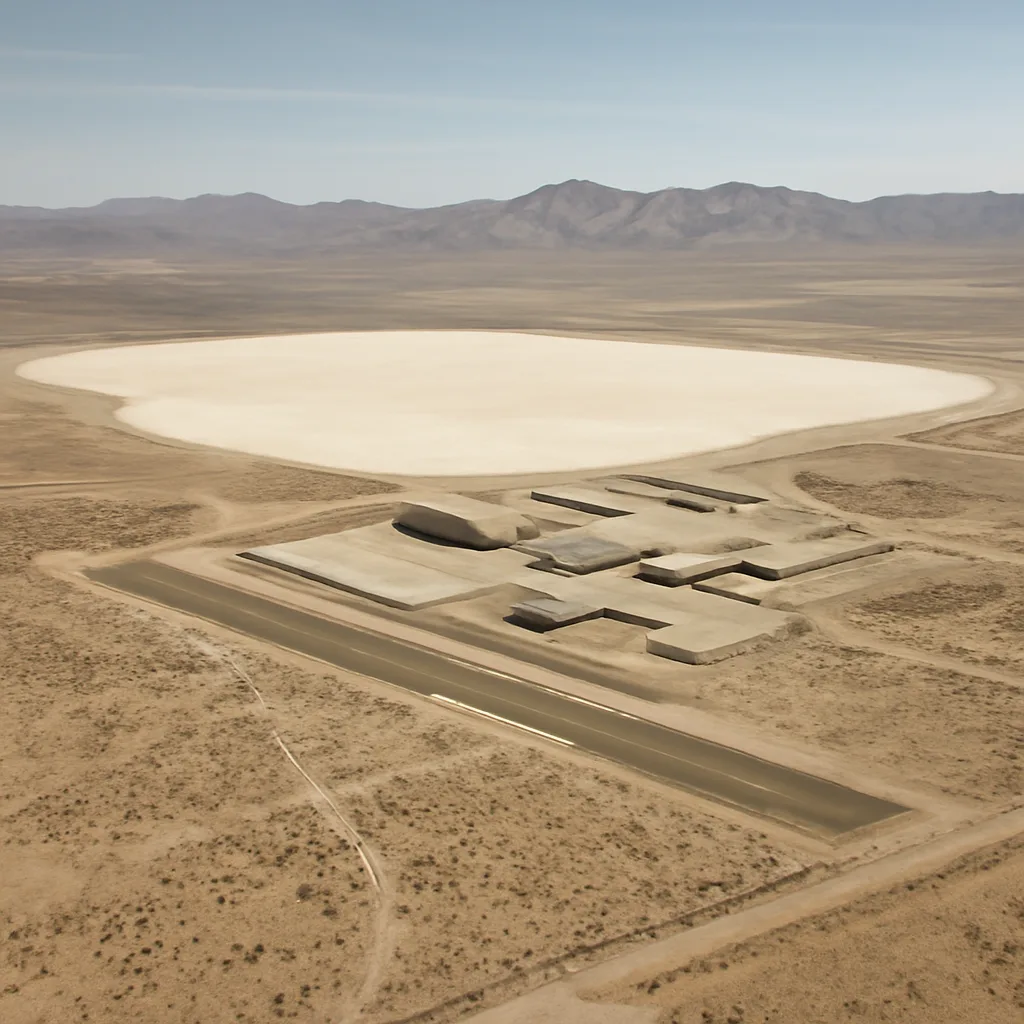
U.S. Government Publicly Acknowledges Area 51’s Existence
On October 3, 2013, the U.S. government officially acknowledged the existence of Area 51 in response to a Freedom of Information Act lawsuit, confirming the facility’s role in testing and development of classified aircraft programs while leaving many operational details redacted.
On October 3, 2013, the Central Intelligence Agency released a set of declassified documents that explicitly acknowledged the existence of the facility commonly known as Area 51, a remote test site in southern Nevada long associated with secrecy and speculation. The release was the result of a Freedom of Information Act (FOIA) request and subsequent litigation by George Washington University’s National Security Archive, which sought historical records related to the U-2 reconnaissance aircraft program and CIA facilities.
The newly released documents included a CIA history of the U-2 program, a declassified map, and internal correspondence that referred to the Groom Lake test site by name and location. Groom Lake is a dry lakebed in the Nevada Test and Training Range; earlier public references to the base were indirect, euphemistic, or absent from official records. The CIA files described operational use of the site during the 1950s and 1960s for flight testing and training associated with highly classified programs, and contained photographs and a facility map that placed the base at its known coordinates.
The 2013 acknowledgement did not, however, lift the veil on current operations. Large sections of the documents remained redacted, and the CIA emphasized that details related to ongoing national security activities, specific technologies, and personnel would remain classified. The release addressed historical facts—chiefly confirming that the site existed and was used for testing U-2 aircraft and related projects—but avoided discussing later programs often speculated about in public discourse. In short, the declassification clarified that Area 51 was a real, official CIA facility involved in Cold War-era aircraft development while continuing to protect sensitive operational details.
Public reaction to the disclosure mixed relief and renewed curiosity. For decades, the base had served as a focal point for conspiracy theories and popular culture depictions involving extraterrestrials or secret weapons. Scholars and journalists treated the CIA’s statement as a corrective: many rumors conflated popular myth with the real history of clandestine aviation testing. Historians note that secrecy around advanced aeronautical projects was a commonplace Cold War practice, intended to shield technological edge and operational security.
The 2013 release also highlighted the role of FOIA litigation in reconstructing Cold War history. Researchers credit sustained archival efforts and legal pressure with forcing greater transparency about institutions and programs that were once wholly secret. At the same time, the case underscored limits to declassification: agencies routinely withhold information for national security reasons, and many details about specific programs and timelines remain sealed.
Today, Area 51 continues to occupy a peculiar place in American memory: simultaneously a confirmed government test site with a documented role in the development of reconnaissance aircraft and a cultural symbol for secrecy. The CIA’s 2013 acknowledgment resolved the question of the facility’s existence in official records, while leaving open questions about the full scope of activities that have taken place there over subsequent decades.
Sources for this summary include the CIA’s 2013 declassified documents released under FOIA and reporting by academic and journalistic institutions that covered the release and its historical context. Where records remain redacted or disputed, this summary notes the limits of publicly available documentation rather than asserting uncertain specifics.