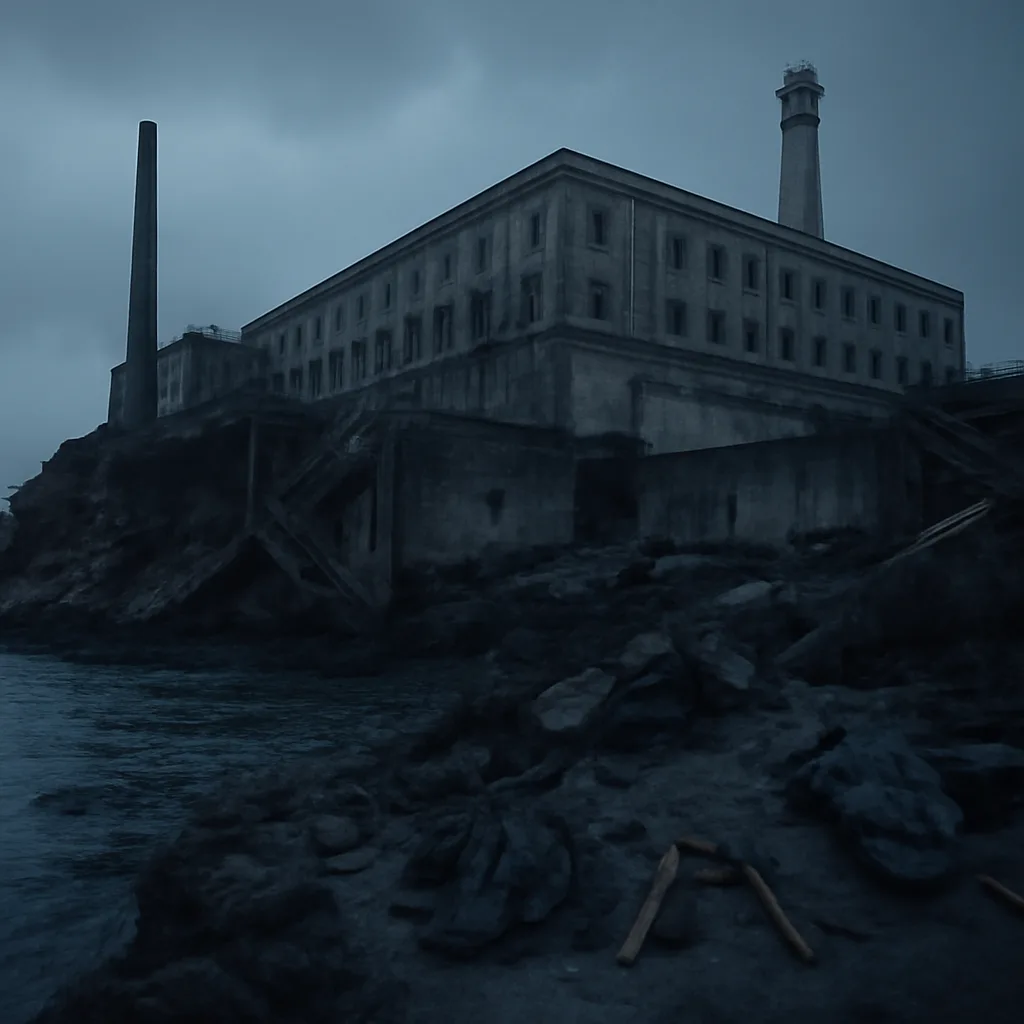
Three inmates vanishing from Alcatraz in daring 1962 escape attempt
On the night of October 3, 1962, inmates Frank Morris and brothers Clarence and John Anglin left their cells at Alcatraz, climbed through vents and a service corridor, and disappeared into San Francisco Bay in a makeshift raft; their fate remains officially unknown.
On October 3, 1962, three inmates—Frank Morris and brothers Clarence and John Anglin—executed a planned escape from the federal penitentiary on Alcatraz Island, the maximum-security facility in San Francisco Bay. The men had been incarcerated for bank robbery and related charges and were housed in the prison’s D Block. Their departure set off one of the most famous manhunts in U.S. prison history and has continued to generate debate and investigation for decades.
Preparation and method
The escape was the product of months of clandestine work. The prisoners is alleged to have fashioned crude tools from spoons and other materials to widen ventilation ducts and remove the back wall of their cells’ heating vents. Using papier-mâché heads and painted cardboard to simulate sleeping inmates in their beds, they covered the empty bunks to delay discovery. From their cells they entered a utility corridor behind D Block, climbed to the roof, and descended the exterior to reach the island’s shoreline.
Accounts from the time and later examinations indicate they constructed a flotation device and paddles from raincoats and other available materials. Pieces of a makeshift raft and other evidence consistent with an attempted water crossing were later found on nearby Angel Island and along the San Francisco shoreline. The escape prompted an immediate search of the island and a coordinated multi-agency response across the Bay Area.
Search, official ruling, and uncertainty
At dawn on October 4 guards discovered the empty cells and the dummy heads, and the escape was reported. Coast Guard vessels, Navy ships, local police, and prison personnel conducted extensive searches of the bay and surrounding beaches. No conclusive evidence that the three men reached the mainland alive was found. The official investigation by the U.S. Marshals Service concluded that the men likely drowned in the strong currents and cold water of the bay, given the absence of definitive proof of survival.
However, the case has never been closed to public interest or independent inquiry. Over the years investigators, journalists, and family members have pursued leads suggesting the possibility that the escapees may have survived. Reported sightings, alleged correspondence and photos, and later tips have produced sporadic claims of post-escape activity, but none have been universally authenticated. In 2018 the U.S. Marshals Service stated that the search file remained open for investigative leads, while reaffirming the lack of conclusive evidence of survival. The uncertainty surrounding the escape has sustained ongoing fascination and periodic renewed investigations.
Context and legacy
Alcatraz, operated as a federal penitentiary from 1934 to 1963, was intended to hold prisoners considered particularly dangerous or escape-prone. The October 1962 escape occurred less than a year before the prison’s closure in 1963. The incident has had a lasting cultural impact: it has been the subject of books, documentaries, and dramatizations, and it contributed to public perceptions of Alcatraz as both inescapable and the site of an extraordinary, unresolved event.
Because many evidentiary details are limited or disputed, historians and law-enforcement sources remain cautious about definitive claims. The broad outline of the escape—the use of vents, a utility corridor, dummy heads, and a makeshift raft on the night of October 3, 1962—is well-documented. The ultimate fate of Morris and the Anglin brothers, however, has not been established to the satisfaction of official agencies and remains a matter of enduring debate and investigation.