
← Back
12/18/1972 • 6 views

U.S. launches massive bombing campaign over North Vietnam in December 1972
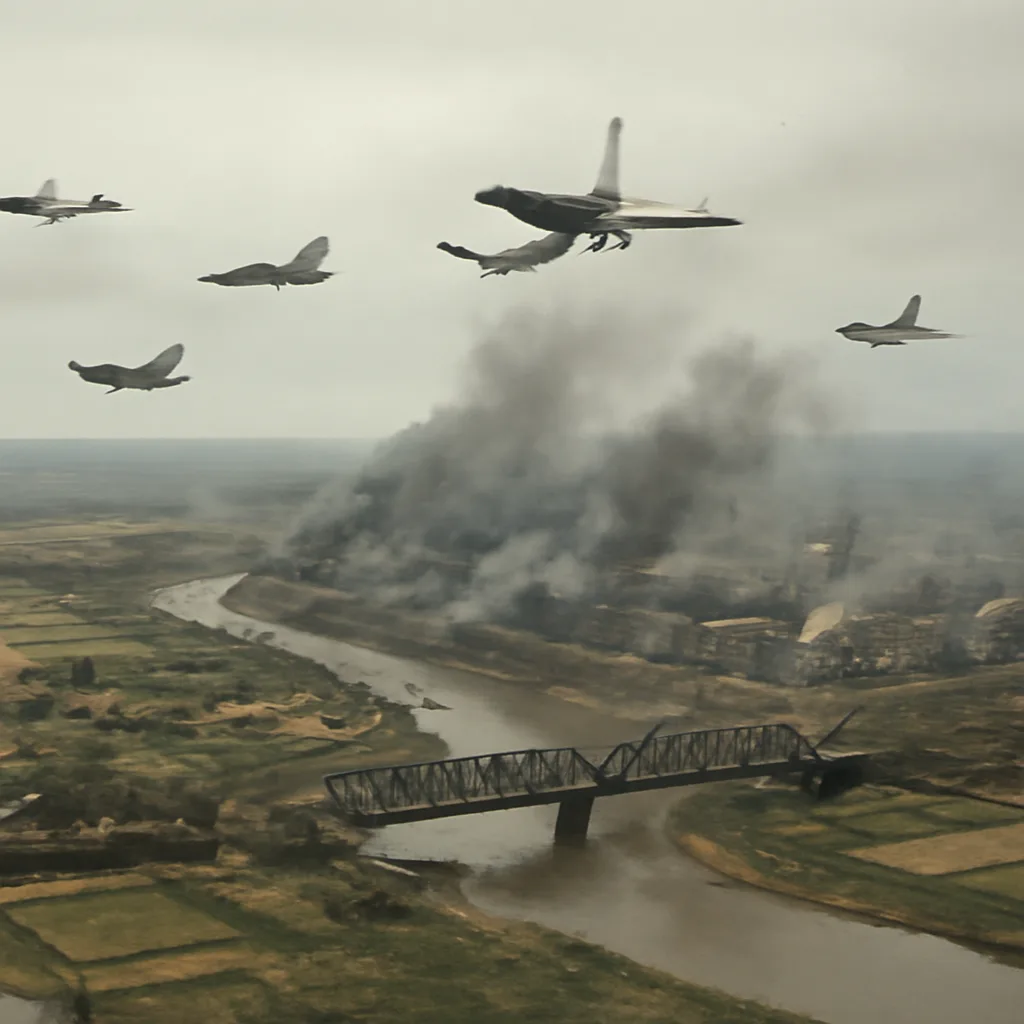
U.S. military aircraft over a river valley with damaged bridges and railway lines in North Vietnam during a late-1972 bombing campaign; smoke rising from industrial targets, no identifiable faces.

From December 18, 1972, the United States resumed an intensive air offensive against North Vietnam—part of the final major bombing operations of the Vietnam War intended to pressure Hanoi during peace negotiations.


On December 18, 1972, the United States initiated one of the largest concentrated bombing efforts of the Vietnam War, a campaign aimed at compelling North Vietnam to accept U.S. terms during final Paris peace negotiations. The operation followed a period of stalled diplomacy and was intended to demonstrate U.S. resolve by striking military, transportation and industrial targets across North Vietnam.

The December strikes were the culmination of a series of escalations in late 1972. Earlier that year, negotiations in Paris had produced tentative progress but failed to yield a comprehensive settlement. In mid-December, after reported breakdowns and perceived obduracy by North Vietnamese negotiators, U.S. policymakers ordered intensified aerial attacks. Targets included rail lines, bridges, airfields, petroleum storage, and other infrastructure the U.S. considered vital to North Vietnamese warfighting capacity and logistics.

The campaign involved sustained sorties by U.S. Air Force and Navy aircraft, employing conventional ordnance and, in some strikes, heavy ordnance intended to disable hardened targets. Nighttime and around-the-clock operations sought both to disrupt military movement and to inflict damage that would raise the cost of continued resistance in Hanoi. North Vietnamese air defenses—anti-aircraft artillery and surface-to-air missiles—responded, resulting in aircraft losses on both sides and damage to urban areas near targeted infrastructure.

The bombing provoked international concern and domestic debate in the United States. Critics argued that renewed large-scale air attacks risked civilian casualties and undermined diplomatic channels; supporters contended the pressure was necessary to secure an end to American involvement on terms acceptable to U.S. policymakers and allies. Reports from the period indicate significant damage to transportation networks and industrial sites, complicating North Vietnam’s logistics and civilian life.

Historians note that the December 1972 bombing campaign helped produce renewed movement in the Paris negotiations. Within weeks, negotiators reached terms that led to the January 1973 Paris Peace Accords, which provided for a ceasefire and the withdrawal of U.S. combat troops, though the accords did not end fighting between North and South Vietnam. The bombing remains a subject of debate: some scholars view it as decisive leverage that secured concessions, while others argue its military necessity and moral justification are fraught, given civilian harm and the limited long-term effect on the conflict’s ultimate outcome.

Contemporary accounts and declassified documents provide the basis for understanding these events, but assessments differ on the scale of strategic effectiveness versus political and humanitarian costs. The December 1972 bombing stands as one of the last major U.S. air campaigns in Vietnam and a pivotal moment linking military pressure to diplomatic developments at war’s end.

Note: Exact specifics—such as the total number of sorties on December 18 alone, ordnance tonnage, and casualty figures—vary between primary sources and secondary analyses; those figures are reported differently across archival records, official summaries, and scholarly studies.

Share this

Email Share on X Facebook Reddit

Did this surprise you?