
06/15/1935 • 4 views
First Public Demonstration of Radar Tracking, June 15, 1935
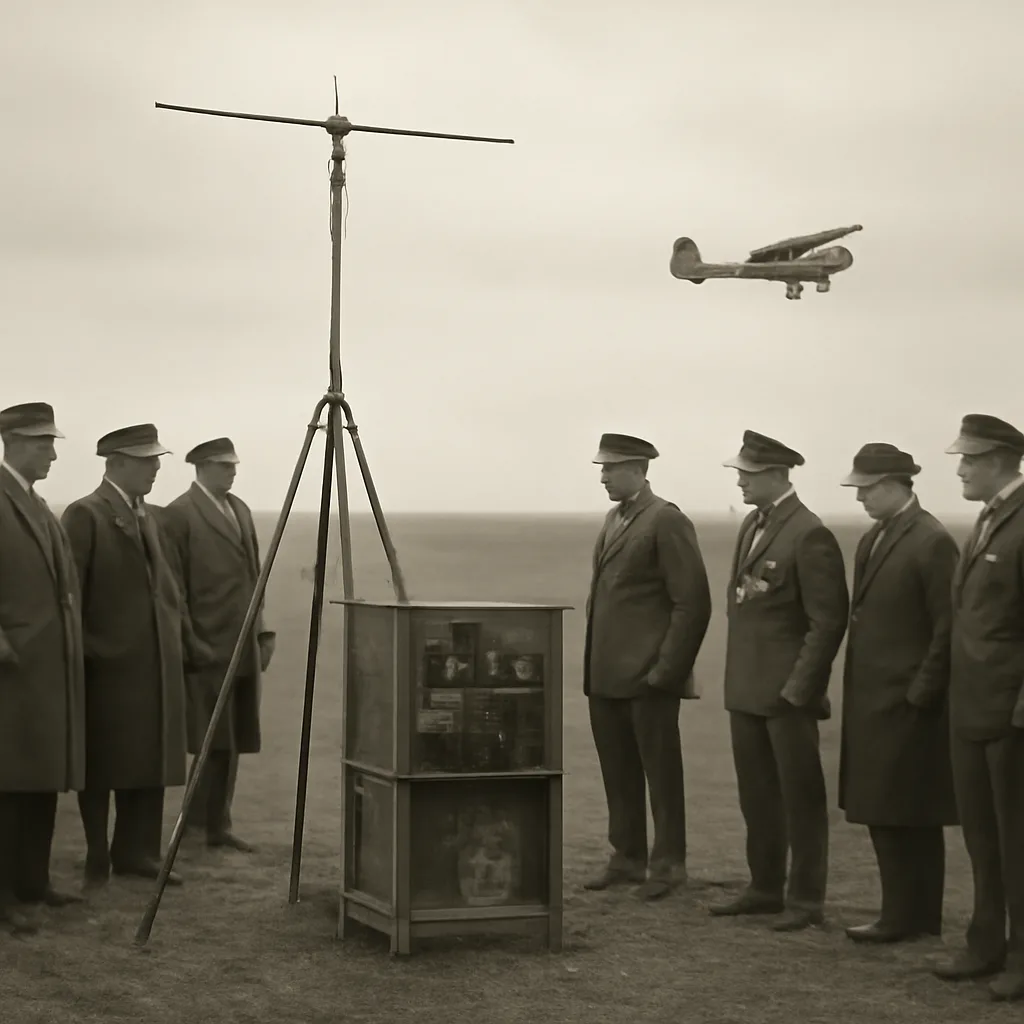
On 15 June 1935 British researchers publicly demonstrated that radio echoes could track aircraft, marking a pivotal step in radar development that would soon transform air defense and aviation.
Background
Throughout the early 1930s researchers in several countries had been exploring the use of radio waves to detect objects at a distance. British work at institutions such as the Radio Research Station at Slough and experimental efforts by scientists including Robert Watson-Watt and his colleagues had shown promise. The technique relied on transmitting radio energy and observing returned echoes; by measuring the time delay and the direction of the returned signal, operators could infer distance and bearing to an aerial target.
The demonstration
On 15 June 1935 a demonstration took place that intentionally showcased the tracking capability to an audience of military and government representatives as well as members of the press. The exercise used radio equipment to detect an aircraft and to display its position, proving in practice that radio echo techniques could provide timely information about aircraft movements. Contemporary accounts emphasize the demonstration’s impact on skeptical officials: it transformed radio echo detection from laboratory curiosity to a credible tool for air defence planning.
Impact and significance
The 1935 demonstration did not by itself create all aspects of modern radar, but it served as a crucial inflection point. In Britain it helped persuade officials to fund further development, leading to rapid progress in the late 1930s and the deployment of operational systems before and during World War II. Comparable research was underway internationally, but the public nature of the 15 June demonstration made the capability visible and politically salient in the United Kingdom.
Technical and historical notes
Terminology and precise technical details varied by source. At the time of the demonstration the acronym "RADAR" had not yet been adopted; that term (an acronym for "Radio Detection And Ranging") would appear later in the 1940s. Early systems differed from wartime and postwar radars in frequency, power, display methods and mobility. Multiple teams in Britain and elsewhere contributed incremental advances, so the 15 June demonstration is best understood as a key public milestone within a broader, multi‑person, multi‑institution effort.
Caveats
Historians note that similar radio‑detection experiments and demonstrations occurred in other countries and that progress was collective rather than the result of a single inventor. Sources sometimes differ on precise technical claims or on the attribution of particular innovations; where details are disputed, the consensus view presented here focuses on the demonstration’s role in convincing officials of the practicality of using radio echoes for tracking aircraft.
Legacy
The public demonstration of radio echo tracking on 15 June 1935 is remembered as an important moment in the transition of radar from experimental science to applied defense technology. Its influence on policy and funding decisions contributed to the development of operational radar networks that would play a decisive role in later air defence and aviation systems.