
← Back
01/21/1994 • 6 views

Pentagon Acknowledges Cold War-Era Secret Tunnel Network
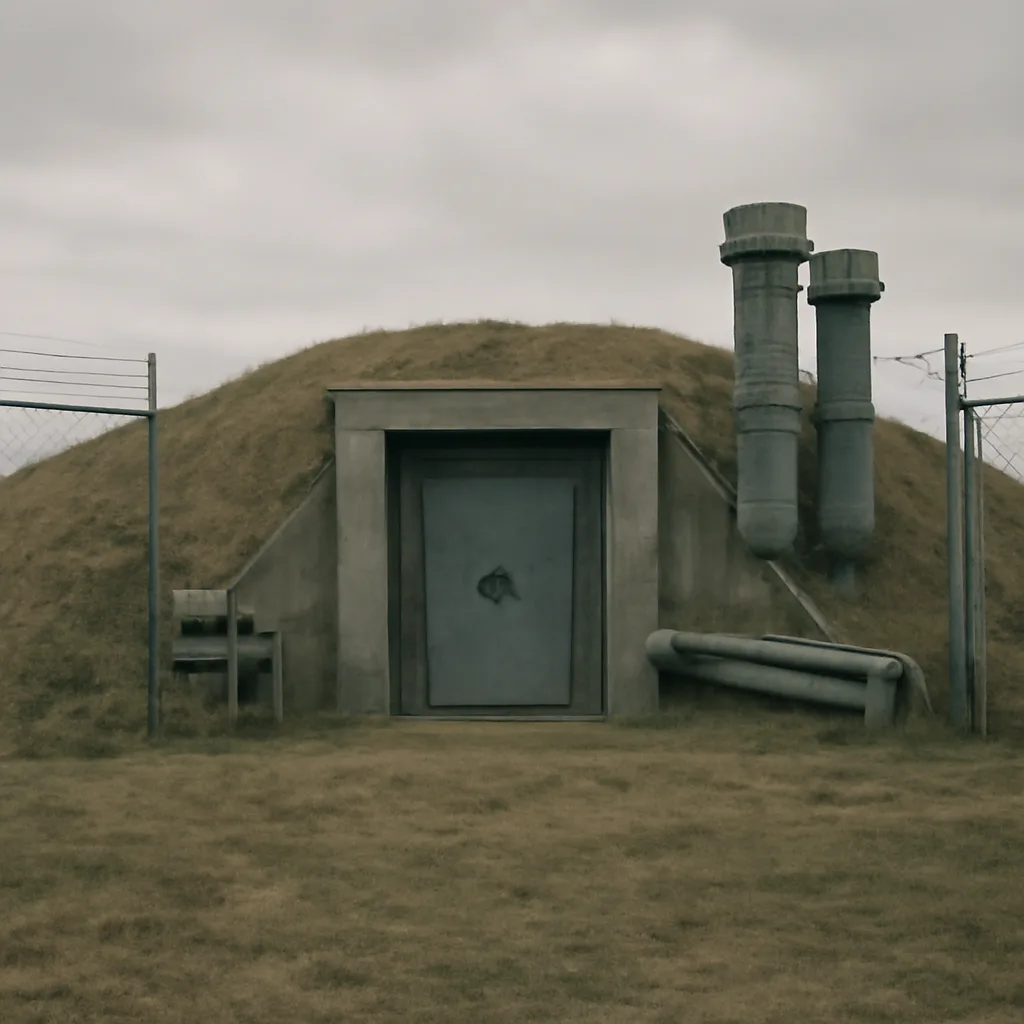
Concrete entrance to a Cold War-era military underground facility with a reinforced sealed door set into a grassy embankment, utility conduits and weathered signage nearby.

In January 1994 the Pentagon publicly confirmed the existence of a network of Cold War-era tunnels beneath military and government sites, long suspected by researchers and local communities but rarely admitted in official records.


In late January 1994, the Pentagon acknowledged the existence of a network of underground tunnels constructed during the Cold War beneath several American military and government sites. The admission followed decades of scattered reports, local investigations, and declassified documents that hinted at subterranean facilities built for command continuity, secure communications and protection from nuclear blast and fallout.

Origins and purpose
Construction of hardened underground facilities accelerated in the 1950s and 1960s as U.S. defense planners prepared for the possibility of nuclear war and other strategic contingencies. Plans and contracts from the period show investments in reinforced rooms, tunnel access shafts, ventilation and life-support systems, and secure cabling that linked command centers, research facilities and critical infrastructure. These structures were intended to preserve continuity of government, protect high-value personnel and maintain military command-and-control under attack.

The 1994 acknowledgment
The Pentagon’s 1994 acknowledgment did not name every location or disclose full technical details, citing security concerns and classification. Instead, officials described the tunnels as legacy Cold War infrastructure—some decommissioned, some retained for contingency use, and others transferred to local control or demolished. The statement was notable because it validated long-standing local and journalistic reports about subterranean construction at particular bases and research complexes.

Public reaction and scrutiny
The announcement prompted renewed scrutiny from historians, journalists and municipal authorities. Community interest had been sustained by anecdotal reports—unmarked entrances, sealed concrete doors, and odd utility layouts—plus occasional partial declassifications of project files that referenced underground work. Scholars of Cold War infrastructure used the Pentagon’s acknowledgment to press for more complete declassification, arguing that understanding these facilities matters for military history, local land use, and environmental remediation.

Classification and secrecy
Many of the planning documents and technical specifics for hardened facilities remained classified for years after 1994. Officials and some historians have emphasized that secrecy was driven less by immediate wartime necessity in the post-Cold War era than by concerns about revealing construction techniques, locations and vulnerabilities. This classification complicated efforts by local authorities to assess environmental risks or repurpose properties when bases closed or were realigned.

Legacy and present-day status
By the 1990s the strategic context that produced the tunnel networks had shifted significantly. Some subterranean spaces were repurposed for archives, storage or other benign uses; others were sealed and abandoned. Decommissioning raised challenges, including identifying hazardous materials, ensuring structural stability, and reconciling incomplete records about the tunnels’ extent. In some cases municipal governments undertook surveys as part of base-closure processes.

Historical significance
The Pentagon’s admission in 1994 served as an important checkpoint in the public record of American Cold War preparedness. It confirmed that subterranean infrastructures were a material part of national defense planning and highlighted tensions between legitimate needs for national security and democratic imperatives for transparency, local oversight and environmental stewardship. Researchers continue to rely on declassified documents, oral histories and engineering records to map the full scope and function of these facilities.

What remains uncertain
Precise inventories of all tunnel locations, original design specifications and operational doctrines remain incomplete in publicly available sources. The extent to which specific tunnels were intended for particular roles—such as continuity of government versus research protection—varied among sites and often depended on contemporaneous classification. Where disputes exist, historians emphasize the difference between confirmed records and local claims that remain unverified.

Contextualizing the revelation
The 1994 acknowledgment fits within a broader pattern of post–Cold War reassessments: governments worldwide began to re-evaluate, document and sometimes disclose legacy wartime preparations. For scholars and communities studying Cold War material culture, the Pentagon’s statement opened new avenues for research while underscoring the challenges of fully disentangling secrecy from historical record.

Share this

Email Share on X Facebook Reddit

Did this surprise you?