
07/24/1983 • 5 views
The Pine Tar Incident: George Brett's 1983 Home Run Overturned
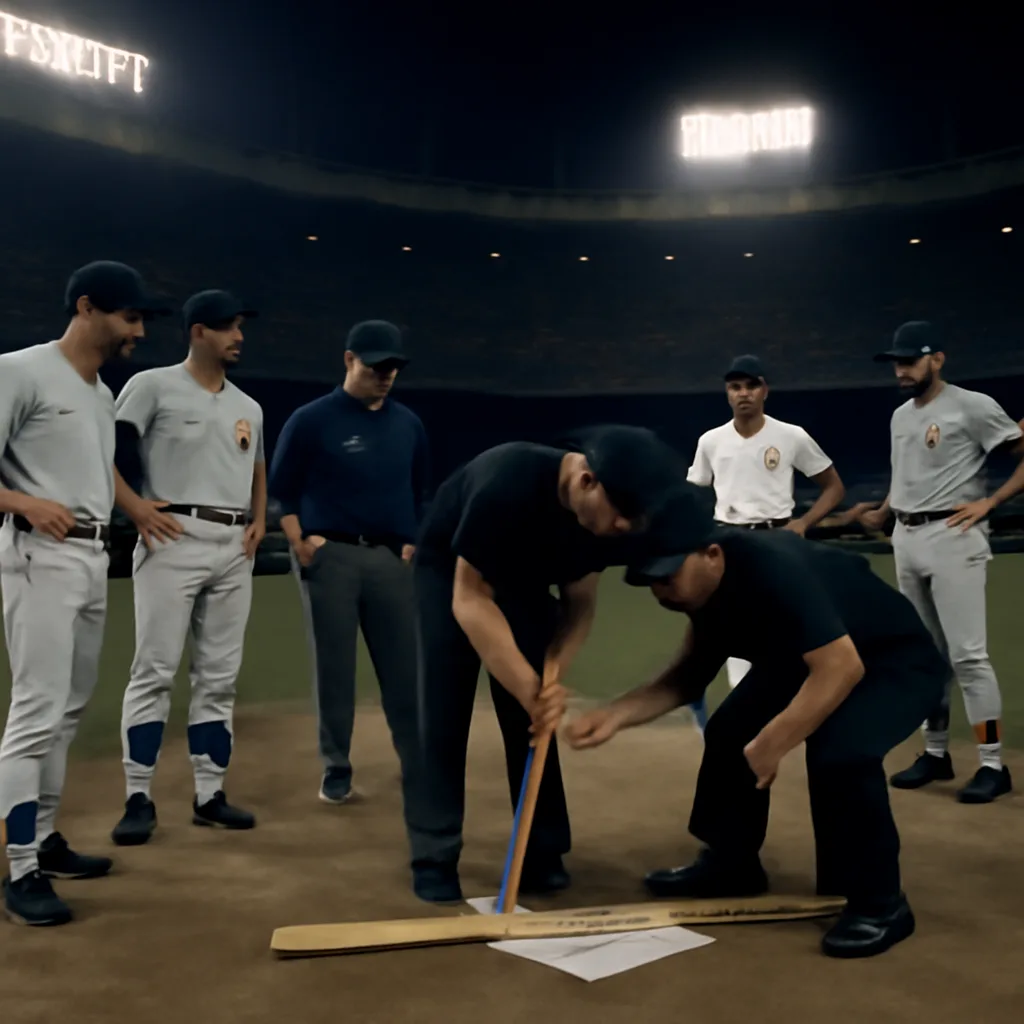
On July 24, 1983, a routine ninth-inning home run by Kansas City Royals slugger George Brett was nullified after Yankees manager Billy Martin contested excessive pine tar on Brett’s bat, triggering a controversial ejection and an unprecedented protest that altered the game's outcome.
The ruling provoked an immediate and dramatic reaction. George Brett charged out of the dugout toward the umpires in a near-physical confrontation, later scuffled with intervening teammates and officials, and was ejected. The Royals filed an official protest with American League president Lee MacPhail, arguing that the spirit of the rule did not support nullifying a batted-ball result after the fact. MacPhail reviewed the rulebook and the circumstances and on August 18, 1983, he upheld the protest, ruling that the umpires had misapplied the rule. MacPhail determined that the penalty for excessive pine tar was to remove the offending portion of the bat’s grip, not to retroactively cancel the play. He ordered the game resumed from the point after Brett’s home run, with the Royals leading 5–4.
Major League Baseball resumed play on August 18, 1983, at Yankee Stadium before a small crowd; play resumed with the home run already counted and the score 5–4. The completion of the game proceeded without incident: the Royals ultimately won 5–4 when their reliever, Dan Quisenberry, preserved the lead.
The incident had immediate and lasting impact. It highlighted ambiguities in equipment rules and the limits of in-game enforcement. Umpires and league officials reviewed procedures for handling equipment violations, and the incident became emblematic of gamesmanship and managerial tactics — Billy Martin’s challenge was widely viewed as an attempt to win by exploiting a technicality.
Culturally, the “Pine Tar Incident” entered baseball lore because of the theatrical elements: Brett’s furious sprint from the dugout, the unusual nature of the appeal, and the rare overturning of an on-field call by the league president. The dispute also illustrated how rules written for one purpose (preventing excessive grip substances) can be interpreted to produce an outcome arguably at odds with competitive fairness.
Historians and baseball observers continue to cite the incident when discussing rule interpretation and the evolution of officiating. The ruling by Lee MacPhail is often noted as an example of administrative correction when an on-field application of the rule produced an unintended consequence. The original bat remains a notable artifact associated with the event; photographs and game footage preserved the moment Brett charged out of the dugout, ensuring the episode’s place in the sport’s collective memory.
While the technical specifics of the pine tar rule have been revised since 1983 and modern enforcement practices differ, the core episode remains a widely recounted example of how a small equipment infraction can escalate into a significant and controversial moment in sports history.