
← Back
05/27/1912 • 5 views

1912 Paper Reveals First Documented Case of Staged Scientific Fraud
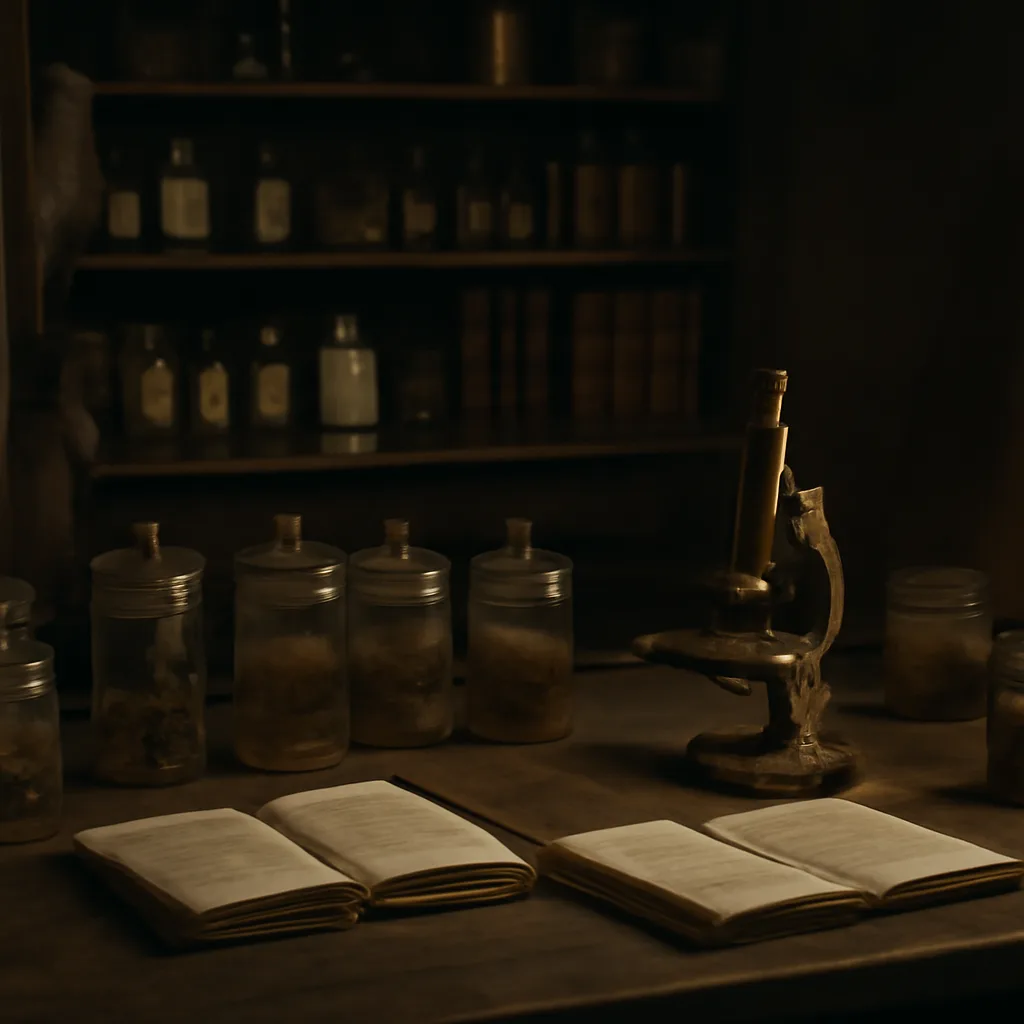
Early 20th-century laboratory table with glass specimen jars, microscopes, and scattered field notes under gaslight; no identifiable faces.

On May 27, 1912, contemporaneous reporting exposed a case in which data and specimens had been intentionally manipulated to support a scientific claim, prompting debates about research integrity that predate modern misconduct policies.


On May 27, 1912, newspapers and scientific correspondents reported the exposure of what is widely regarded by historians as the first well-documented instance of staged scientific fraud. The case involved a researcher whose published claims rested on manipulated specimens and falsified observations; when colleagues examined the evidence more closely, inconsistencies led to public disclosure and professional censure. The episode occurred in an era when formal codes of research conduct and institutional oversight were minimal, so reactions hinged on reputation, public opinion and the norms of particular scholarly communities.

Background

At the turn of the 20th century, scientific disciplines were professionalizing rapidly. Laboratories, learned societies and specialized journals proliferated, but standardized procedures for peer review, data archiving and misconduct investigations were not yet established. Scientific disputes commonly played out in print and at meetings; accusations of error or deception could ruin careers but were adjudicated informally.

The exposure

Contemporaneous accounts describe how anomalies in specimens and repeated failures to replicate key observations prompted independent investigators to scrutinize the original materials and field notes. They found evidence that samples had been altered and that some observations reported in the published paper could not be substantiated by the available records. Press coverage amplified the story, framing it as an ethical as well as scientific failing. Because institutional mechanisms for formal inquiry were weak or absent, censure came mainly through professional ostracism, retraction or the withdrawal of support by patrons and publishers.

Impact and significance

The 1912 case mattered in several ways. First, it highlighted vulnerabilities in scientific practice of the period: reliance on trust, the difficulty of verifying specimens, and uneven standards for documentation. Second, it contributed to evolving discussions about the responsibilities of journals, societies and institutions to verify claims and to respond to allegations of misconduct. Though the incident did not immediately produce uniform rules, it became part of a historical record that later reformers and historians cite when tracing the origins of research-integrity policies.

Historical context and caution

Historians note that claims about “the first” instance of something as complex as scientific fraud should be treated cautiously. Earlier examples of questionable conduct exist in letters, published reports and contested priority disputes, but the 1912 exposure stands out because of the combination of documentary evidence, public reporting and lasting professional consequences. Records from the period are uneven, and contemporary descriptions sometimes reflect disciplinary rivalries or differing standards of evidence. Where details are disputed by surviving sources, scholars identify those points as uncertain.

Legacy

The episode is often used in retrospectives to illustrate how scientific norms and institutional safeguards developed in response to practical problems. It predates, by decades, formal misconduct policies and national research-regulation frameworks, but it contributed to an accumulating awareness that trust must be backed by reproducibility, transparent documentation and communal oversight. Modern procedures for peer review, specimen curation and institutional inquiry evolved later, in part to address problems exemplified by early cases like the 1912 exposure.

Conclusion

The May 27, 1912 exposure remains a touchstone in histories of research integrity: an early documented instance where manipulation of data and specimens was revealed, triggering professional rebuke and prompting reflection on how scientific communities should safeguard truth. While historians continue to debate particulars and to search archival sources for earlier parallels, the episode is instructive for understanding how expectations about evidence and accountability in science were formed over time.

Share this

Email Share on X Facebook Reddit

Did this surprise you?